The Best Gym Bag for Functional Fitness and CrossFit in Australia
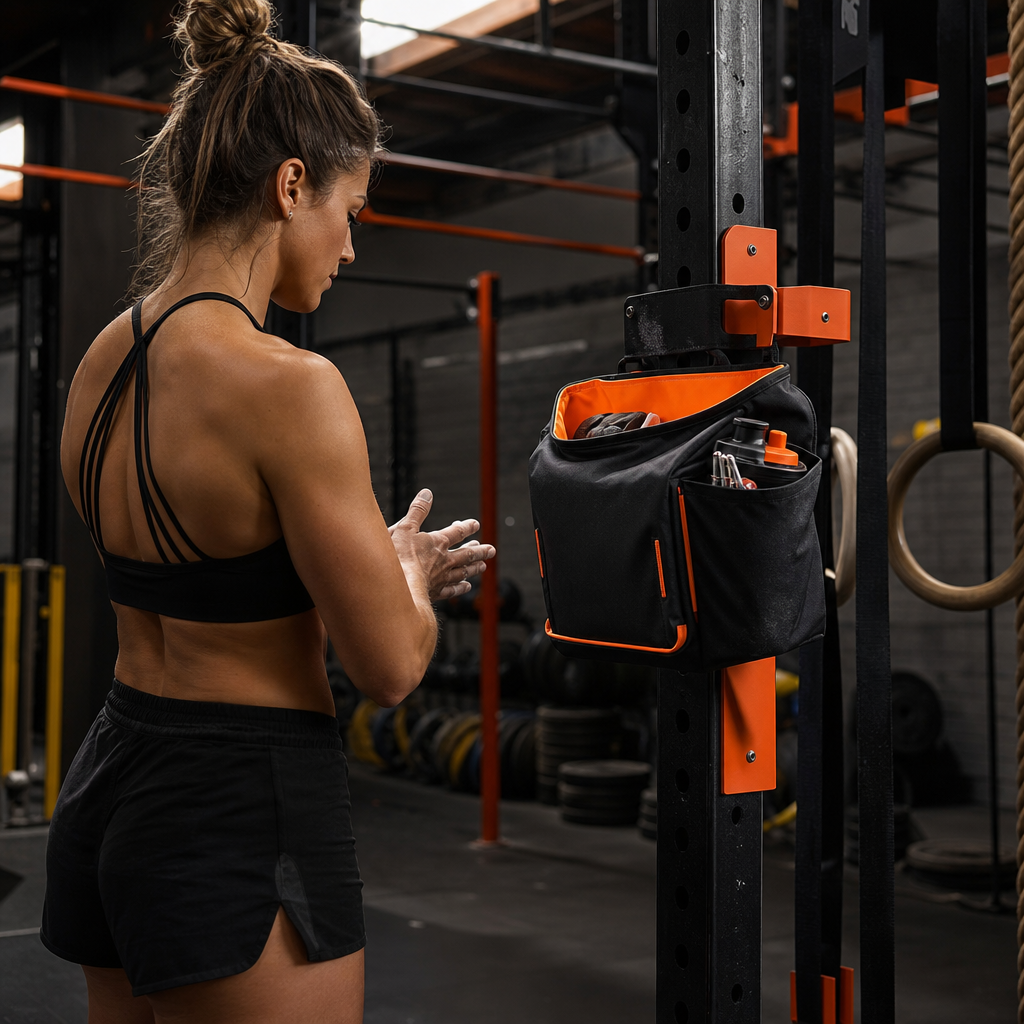
The best functional fitness gym bag keeps essential gear organised, accessible and off the floor. For CrossFit and HIIT sessions, choose a compact bag with durable construction and secure rig mounting. A magnetic attachment is especially useful because it keeps your phone, keys, grips and earphones within arm's reach between sets.
Functional training creates storage problems that ordinary gym bags were never designed to solve. You move between racks, lifting platforms, cardio machines and open floor space. A conventional duffel stays behind, occupies a bench or becomes another obstacle on the floor.
This guide explains what to look for in a CrossFit gym bag in Australia, where magnetic mounting helps, and how to judge durability without getting distracted by oversized compartments and marketing claims.
Functional fitness storage at a glance
| Measure | HoldIt data | Source |
|---|---|---|
| Maximum recommended magnetic load | 4kg | HoldIt product data supplied for this article |
| Average customer review rating | 4.8 out of 5 | HoldIt customer data from 895+ verified reviews, supplied for this article |
| HoldIt community size | 10,000+ members | HoldIt community data supplied for this article |
| Reduction in identified tripping hazards during an internal box audit | 40% | NSW CrossFit Box Equipment Audit, HoldIt internal data supplied for this article |
Key takeaways
- A standard duffel transports equipment, but it does not solve floor clutter during training.
- Magnetic mounting keeps frequently used items off the floor and within arm's reach.
- Check the rig material before relying on a magnet. Aluminium and some stainless steels will not provide a secure hold.
- Choose a bag around what you use between sets, not everything you might carry to the gym.
- Seams, zips, attachment points and abrasion resistance matter more than decorative pockets.
- HoldIt recommends a maximum load of 4kg for its magnetic system, based on its supplied product data.
Summary table: standard duffel versus magnetic functional bag
| Feature | Standard gym duffel | Magnetic functional bag |
|---|---|---|
| Primary job | Carry clothing and equipment to the gym | Keep session essentials accessible at the station |
| Position during training | Floor, wall, locker or bench | Attached to a compatible steel upright |
| Access between sets | May require walking back to the bag | Gear remains within arm's reach |
| Floor clutter | Adds another item to the training area | Keeps the bag elevated when mounted correctly |
| Bench use | Often occupies shared bench space | Bench stays clear |
| Best suited to | Showers, clothing changes and bulky equipment | CrossFit, HIIT, strength work and station-based training |
| Main limitation | Poor access once training begins | Requires a compatible magnetic surface and sensible load |
Why floor clutter is a problem in CrossFit boxes
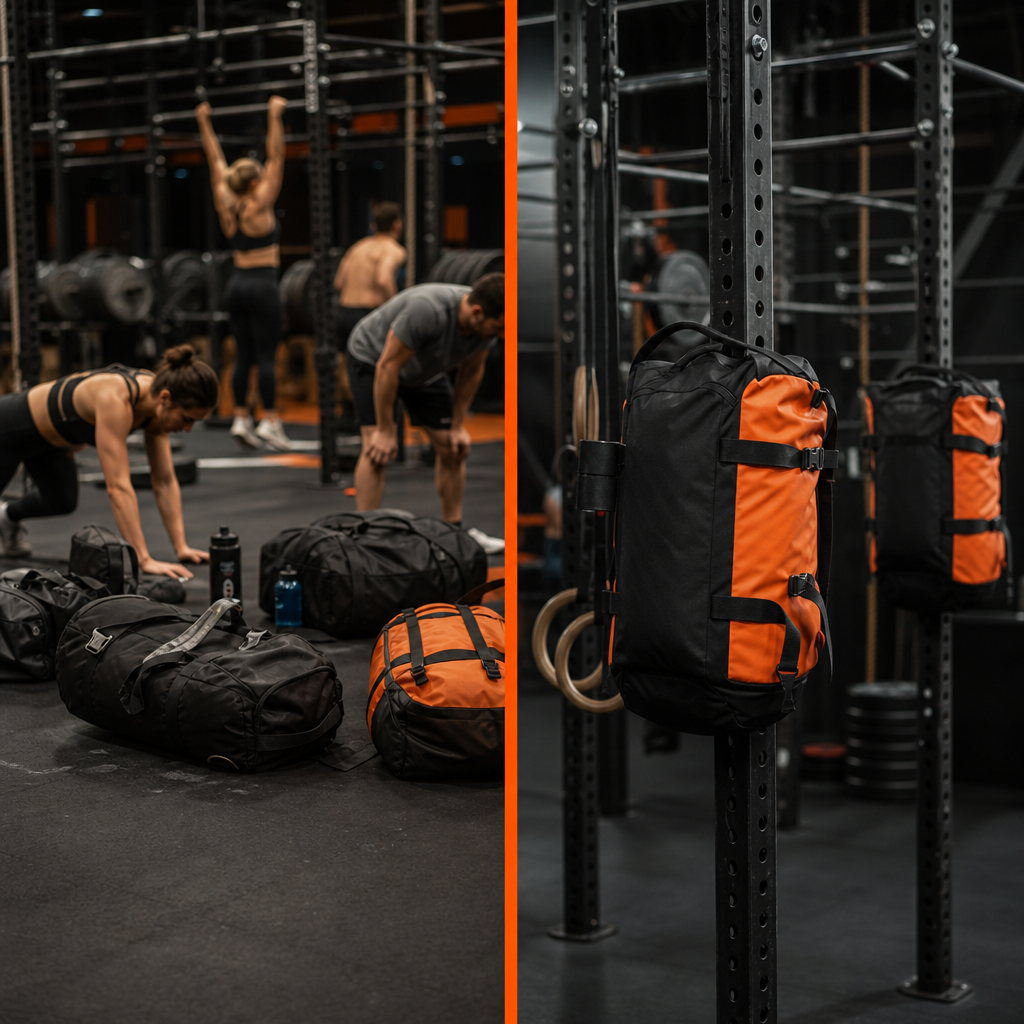
Floor clutter matters because functional training involves fast transitions, loaded carries and equipment moving through shared space. A bag beside a rig can obstruct feet, plates, sleds or other members. Even when nobody trips, navigating around personal gear interrupts movement and makes the training area harder to manage.
Safe Work Australia identifies poor housekeeping and objects in access areas as factors that can contribute to slips, trips and falls. A CrossFit box is not an office corridor, but the basic control principle still applies: keep movement paths clear and store items away from active work areas.
The problem becomes more obvious during group sessions. Members may rotate between barbells, rowers and pull-up stations while coaches need clear sightlines. Bags placed beside uprights can blend into rubber flooring, particularly when the room is busy.
Putting a duffel against the wall is better than dropping it beside a barbell. It still separates you from the items you use during training. That leads to repeated walks for grips, earphones, tape or a phone timer. Leaving the bag on a bench simply moves the obstruction to shared equipment.
Our position is direct: the gym floor is not a storage solution. A premium duffel may carry gear well, but price and branding do not change where it sits during the session.
Internal case study: NSW CrossFit Box Equipment Audit
HoldIt's supplied internal audit data recorded a 40% reduction in identified tripping hazards after magnetic bags were introduced at a NSW CrossFit box. This was an operational audit, not an independent controlled study, and HoldIt has not supplied the sample size or full assessment method. The result should therefore be read as internal evidence, not an industry benchmark.
The useful lesson is the mechanism behind the result. Moving personal bags from active floor space to rig uprights removes potential obstructions rather than asking members to remember better bag placement. Environmental controls usually work more consistently than reminders alone because the preferred behaviour becomes the easiest option.
How mounting a bag on the rig changes a session
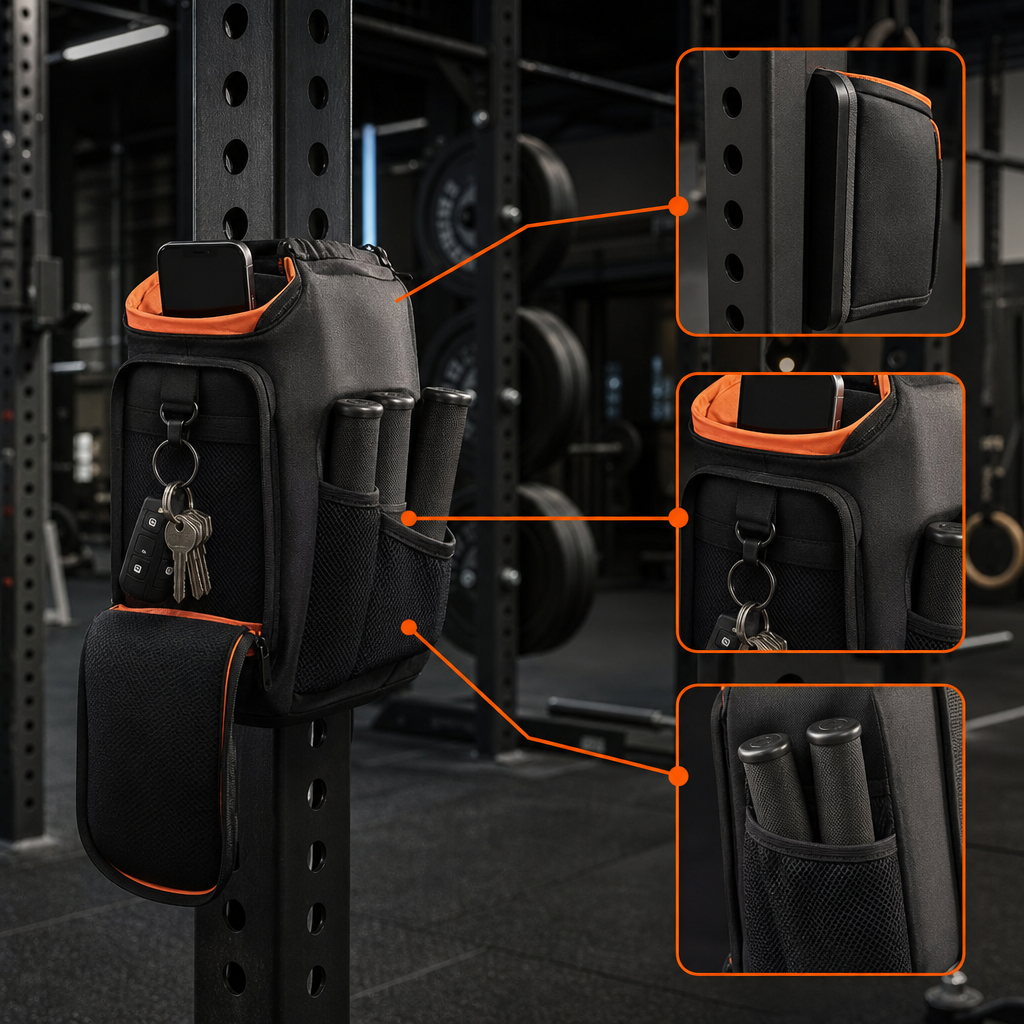
A rig-mounted bag creates a fixed home for small essentials at the station where you train. The bag snaps onto a compatible steel upright, remains visible and keeps the bench clear. This reduces searching between sets while allowing the bag to move with you when the session changes zones.
That matters in functional fitness because a workout rarely stays in one place. You might warm up at a cable station, complete strength work in a rack, then move to a conditioning area. A portable magnetic attachment can follow that sequence without permanent hooks or changes to the facility.
A regular gym-goer in HoldIt's supplied customer account trained 4 to 5 times per week and repeatedly lost track of their phone and keys. Their bag was either unattended on the floor or balanced on a bench, where it could slide off.
They attached the HoldIt magnetic bag hook to cable-machine and squat-rack uprights. The user reported regaining focus during the first session and estimated that they stopped wasting 5 to 10 minutes per session searching for items or walking back to their bag. This is a self-reported customer outcome, not a controlled time study, but it describes a common source of friction clearly.
A second supplied account came from a commercial gym with no bag hooks around its free-weight stations. The member used a portable magnetic hook across rack uprights, cable towers and compatible dumbbell rack frames. One hook moved with them, so they did not need management approval or permanent infrastructure.
Check the mounting surface first
A strong magnet only works when the surface is suitable. Most painted carbon-steel rack uprights are candidates, but construction varies between manufacturers and facilities.
Use this check before loading the bag:
- Place the unloaded attachment against a flat section of the upright.
- Confirm that it sits flush rather than across a weld, bolt or raised label.
- Apply light downward pressure to test for sliding.
- Add gear gradually while staying below the manufacturer's recommended load.
- Recheck the position after barbell drops or other vibration-producing work.
Do not assume every metal-looking surface is magnetic. Aluminium will not provide a magnetic hold, and some grades of stainless steel respond weakly or not at all. Curved, dirty or heavily textured surfaces can also reduce contact.
Avoid mounting over controls, cables, ventilation openings or emergency equipment. Ask the coach or gym manager if equipment-use rules are unclear.
What durability does a functional fitness gym bag need?
A functional fitness bag needs reinforced attachment points, reliable zips, abrasion-resistant fabric and seams that tolerate repeated loading. It should also retain its shape well enough for one-handed access. Durability is not simply thick material. The complete load path, from magnet or hook to stitching, must remain secure.
CrossFit and HIIT environments are hard on equipment. Bags contact powder-coated steel, rubber flooring, chalk, sweat and rough accessories. They also get moved more often than a duffel placed in a locker.
Inspect the complete load path
Start where the bag connects to its mounting system. Look for reinforcement around clips, loops and webbing. A strong magnet means little if the fabric connection can tear away from the bag.
Then inspect:
- stitching around loaded attachment points
- zip movement around corners
- webbing for fraying or pulled fibres
- the magnet housing for cracks or movement
- interior seams exposed to keys or sharp-edged accessories
- dirt between the magnet and mounting surface
A magnetic face should remain clean. Trapped grit can affect contact and may mark a rack's finish. Wipe both surfaces before mounting, particularly in a chalk-heavy box.
Internal case study: HoldIt Rig Grip Analysis
The supplied HoldIt Rig Grip Analysis found that the magnetic system maintained its hold through vibrations caused by heavy barbell drops. No independent test protocol, vibration measurement or comparative result was supplied, so it would be misleading to present this as a universal laboratory rating.
The practical conclusion is narrower. A correctly mounted bag on a compatible steel surface can remain attached during ordinary lifting activity. Users should still test their exact station, respect the 4kg maximum recommended load and check the mount after strong impacts.
That conclusion aligns with customer feedback supplied by HoldIt:
"Every CrossFitter needs this. Stays stuck to the rig even when we drop heavy deadlifts. Unbelievable." - James W., SA.
A testimonial reflects one customer's experience. It does not replace checking surface compatibility and load placement in your gym.
What should you pack for CrossFit or HIIT?
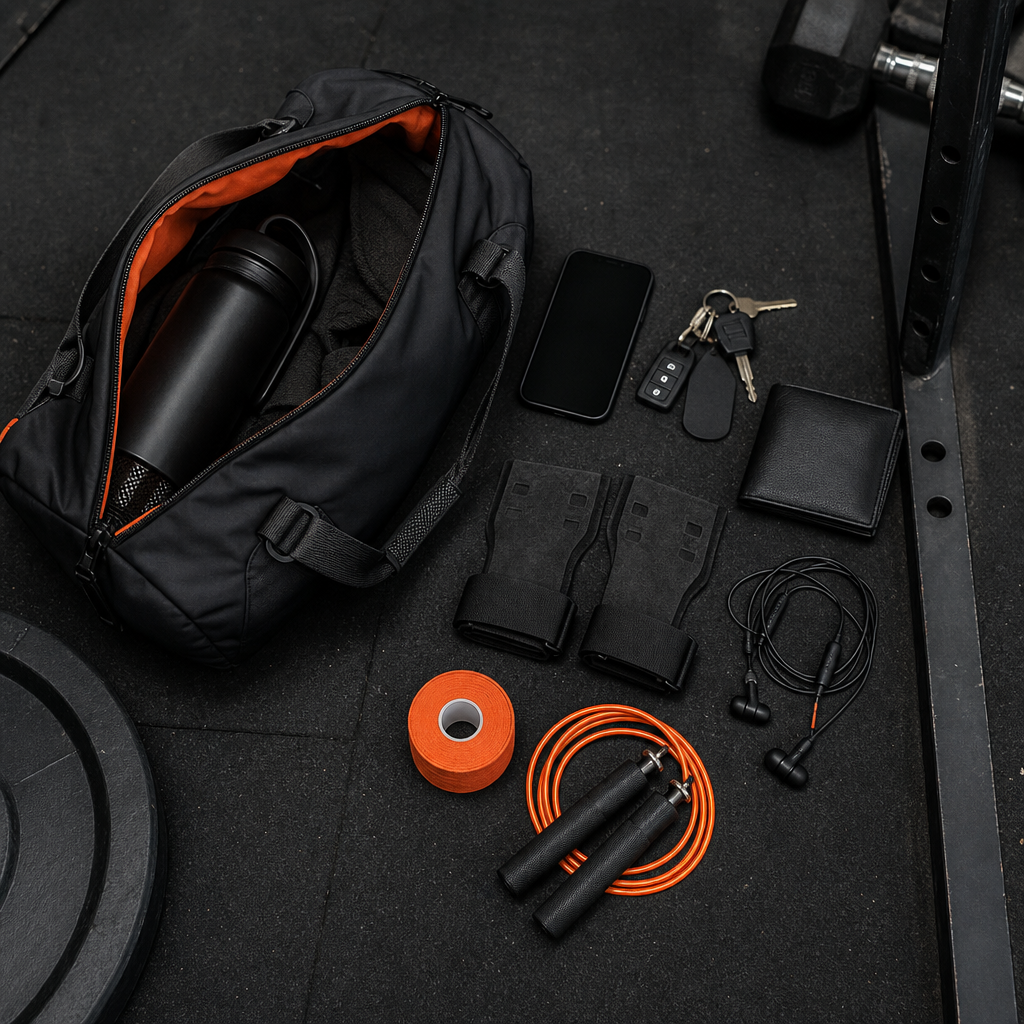
Pack the items you use during the session, not everything you could possibly need. For most members, that means a phone, keys, wallet, earphones and selected lifting accessories. Clothing, towels and shower gear can remain in a locker or separate duffel if the facility provides secure storage.
A practical functional fitness setup could include:
- phone and earphones
- keys and wallet
- hand protection or lifting grips
- tape or a small roll of strapping tape
- skipping rope
- compact wrist wraps
- a small snack if required for the session
Keep dense items low and close to the mounting point. This reduces the tendency for the bag to pull away or swing. Do not overload external loops simply because space remains inside the main compartment.
A water bottle deserves separate consideration. Large insulated bottles add substantial weight and can shift during movement. If the mounting system includes a suitable bottle holder, confirm the combined load remains within the product limit. Otherwise, place the bottle in an approved location beside the station without obstructing a walkway.
Do you still need a conventional duffel?
Possibly. A conventional bag remains useful when you carry shoes, work clothes, toiletries or post-training gear. The mistake is expecting that transport bag to work efficiently at the rack.
A two-part setup often makes more sense. Leave bulky items in the locker and take a compact magnetic bag to the training station. Each bag then has a specific job rather than one oversized duffel doing both jobs poorly.
Why litre capacity is the wrong buying metric
The best bag for CrossFit is not necessarily the bag with the highest litre capacity. Capacity measures how much gear fits inside, but it says nothing about access, floor placement or interruptions between sets. For serious training, useful positioning often matters more than carrying another pair of shoes.
This is where most gym-bag comparisons miss the point. They compare compartment counts, shoulder straps and total volume. Those features matter while travelling to the gym. They are less useful once the workout starts and the bag is sitting several metres away.
Purpose-built beats adapted. A floor bag, regardless of its brand or quality, does not solve floor hygiene, bench clutter and access to your phone. A magnetic setup addresses those problems through placement rather than another internal pocket.
We have also seen how quickly small interruptions accumulate. The supplied account from a member training 4 to 5 times weekly involved an estimated 5 to 10 minutes of wasted movement per session. The important insight is not the precise time, which was self-reported. It is that disorganisation has a repeat cost.
The best setup creates a default location for essential gear. Your phone goes back into the same pocket. Keys remain attached to the same clip. Grips stay within arm's reach. The system becomes your training partner because it removes decisions rather than adding them.
How to choose the best bag for CrossFit in Australia
Choose according to your training environment, mounting surfaces and actual equipment list. Confirm the manufacturer's load guidance, inspect attachment-point construction and test access with one hand. Australian buyers should also consider local support, clear product information and their rights under the Australian Consumer Law if a product develops a fault.
Use this checklist before buying:
Confirm where you will mount it
Walk through your usual session. Identify the rack uprights, cable towers or other approved steel surfaces you actually use. If the box relies on timber, aluminium or non-magnetic frames, a magnetic product may not suit every station.
List your between-set essentials
Empty your current gym bag and separate station essentials from travel items. If you only need a phone, keys, wallet, earphones and grips, a large duffel creates more bulk than value.
Check the stated load guidance
HoldIt's supplied maximum recommended load is 4kg. That is a ceiling, not a target. The mounting surface, load position and physical condition of the product still matter.
Look beyond the magnet
Assess stitching, hardware, zip quality and the connection between the bag and attachment. The weakest component determines whether the system remains useful over time.
Review care and support information
A good supplier should explain compatible surfaces, loading and maintenance. The ACCC states that products sold to Australian consumers come with automatic consumer guarantees. Those rights apply independently of any additional warranty offered by a seller.
The HoldIt range is designed around station access rather than maximum luggage capacity. For box-wide enquiries, contact HoldIt through the contact page and outline your rig type, member requirements and preferred quantity. We'll sort it.
References
These references support the article's guidance on floor safety, functional training environments and Australian consumer rights. HoldIt product limits, customer outcomes, review data and internal case studies are identified separately as business data supplied for this article rather than independent research.
- Safe Work Australia, Slips, trips and falls.
- Safe Work Australia, Model Code of Practice: Managing the work environment and facilities.
- CrossFit, CrossFit Level 1 Training Guide.
- Australian Competition and Consumer Commission, Consumer rights and guarantees.
- HoldIt internal data supplied for this article: NSW CrossFit Box Equipment Audit, HoldIt Rig Grip Analysis, product load guidance, verified review data and anonymised customer accounts.
FAQ_SCHEMA_JSON
Get exclusive training tips & early access
Join 5,000+ athletes who train smarter.
Frequently Asked Questions
What size gym bag is best for CrossFit?
Choose a compact bag that fits your phone, keys, wallet, earphones and the lifting accessories you regularly use. A large duffel is only necessary if you also carry shoes, clothing or shower gear. For station use, access and secure placement matter more than maximum litre capacity.
Will a magnetic gym bag attach to every CrossFit rig?
No. It needs a compatible ferromagnetic surface with enough flat contact area. Painted carbon-steel uprights commonly work, while aluminium and some stainless-steel structures may not. Test the unloaded attachment first and avoid mounting across welds, bolts, labels or heavily textured surfaces.
How much weight can the HoldIt magnet carry?
HoldIt's supplied product data recommends a maximum load of 4kg. Do not treat this as a target or assume it applies equally to every surface. Dirt, curvature, paint texture, vibration and poor positioning can affect the hold.
Can the bag stay on the rig during heavy deadlifts?
HoldIt's internal Rig Grip Analysis found that the system maintained its hold through vibrations from heavy barbell drops. Users should still test their own rig, remain within the recommended load and recheck the attachment after strong impacts.
What should I keep in a HIIT gym bag?
Keep session essentials close to the station, such as a phone, keys, wallet, earphones, tape, grips and a skipping rope. Store bulky clothing and shower items separately.
Does a magnetic functional bag replace a duffel?
Not always. A magnetic bag is designed for access during training, while a duffel is useful for transporting bulky clothing, shoes and toiletries. The two bags can serve different purposes.
How should I clean and inspect a magnetic gym bag?
Follow the manufacturer's care instructions. Remove chalk and grit from the magnetic face, then inspect seams, webbing, clips, zips and the magnet housing. Stop using the attachment if components loosen, crack or show significant damage.
Related Articles
The Best Gifts for Personal Trainers in Australia: Practical and Unique Ideas
How to Wash Gym Clothes in Australia: A Complete Guide to Keeping Activewear Fresh and Long-Lasting
How to Fit the Gym Into a Busy Schedule in Australia: A Practical Guide to Training Around Work and Life
Your gear deserves better
Keep it clean, organised, and always within reach. The HoldIt bag system is built for athletes who take training seriously.