The Ultimate Guide to Gym Accessories in Australia: Elevate Your Workout
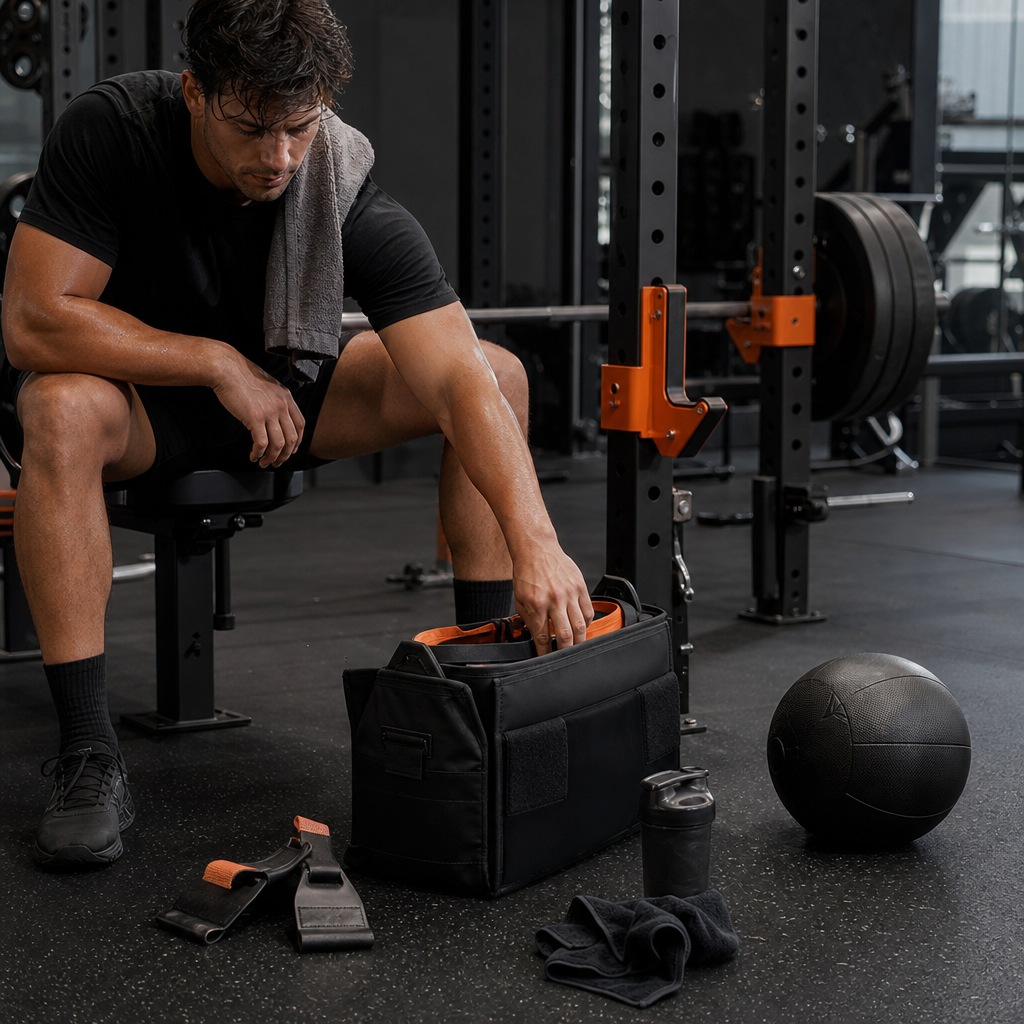
The best gym accessories improve grip, hydration, hygiene, recovery and organisation without adding unnecessary bulk. Start with a towel, reliable bottle and purpose-built gear storage. Then add grips, straps, a belt or recovery tools when your training creates a clear need. Quality, fit and ease of use matter more than accessory count.
Introduction
Choosing gym accessories should be practical. Each item needs to solve a recurring problem, support a specific exercise or remove friction between sets. If it cannot do one of those things, it probably does not belong in your kit.
This guide explains what Australian gym-goers should prioritise, how to judge quality and which products deserve a permanent spot in your kit. It covers commercial gyms, home setups, strength training, general fitness and recovery.
HoldIt accessory snapshot, based on HoldIt business data: The HoldIt crew includes 10,000+ community members. HoldIt products have an average customer rating of 4.8 out of 5 across 895+ verified reviews. The HoldIt magnet has a maximum recommended load of 4kg.
Key takeaways
The right gym accessories make training simpler, safer and more consistent. Build your setup around problems you actually experience rather than copying somebody else's kit. Prioritise reliable materials, simple maintenance and products that remain accessible during a session. A smaller, organised kit generally beats an overloaded duffle.
- Start with hydration, hygiene and secure storage before buying specialised lifting gear.
- Choose grips, straps and belts according to the exercise, load and limitation involved.
- Keep your phone, keys and earphones off the floor and within arm's reach.
- Buy recovery tools only when you understand how and when you will use them.
- Check fit, construction, warranty terms and cleaning instructions before purchasing.
- Home gym accessories should improve safety or exercise options without creating clutter.
Gym accessory summary table
Gym accessories fall into a few practical categories. This table helps identify the problem each category solves and the quality signals worth checking. It is a better buying framework than choosing products because they are popular, heavily promoted or included in somebody else's training video.
| Category | Primary purpose | Useful examples | What to check |
|---|---|---|---|
| Organisation | Keep essentials secure and accessible | Purpose-built bag, magnetic hook, phone pocket | Attachment strength, access, size and cleanability |
| Grip support | Reduce grip-related interruption | Lifting grips, straps, chalk | Fit, stitching, material and permitted gym use |
| Hygiene | Manage sweat and shared surfaces | Gym towel, washable pouch | Absorbency, drying speed and wash instructions |
| Hydration | Make drinking convenient | Water bottle, shaker | Seal, mouthpiece, material and ease of cleaning |
| Joint support | Add support for specific lifts | Wrist wraps, knee sleeves, lifting belt | Correct sizing, stiffness and intended movement |
| Recovery | Support post-training routines | Roller, massage ball, mobility band | Firmness, portability and appropriate use |
| Home training | Expand safe exercise options | Bands, mat, collars, storage | Load suitability, floor grip and available space |
How should you choose gym accessories?
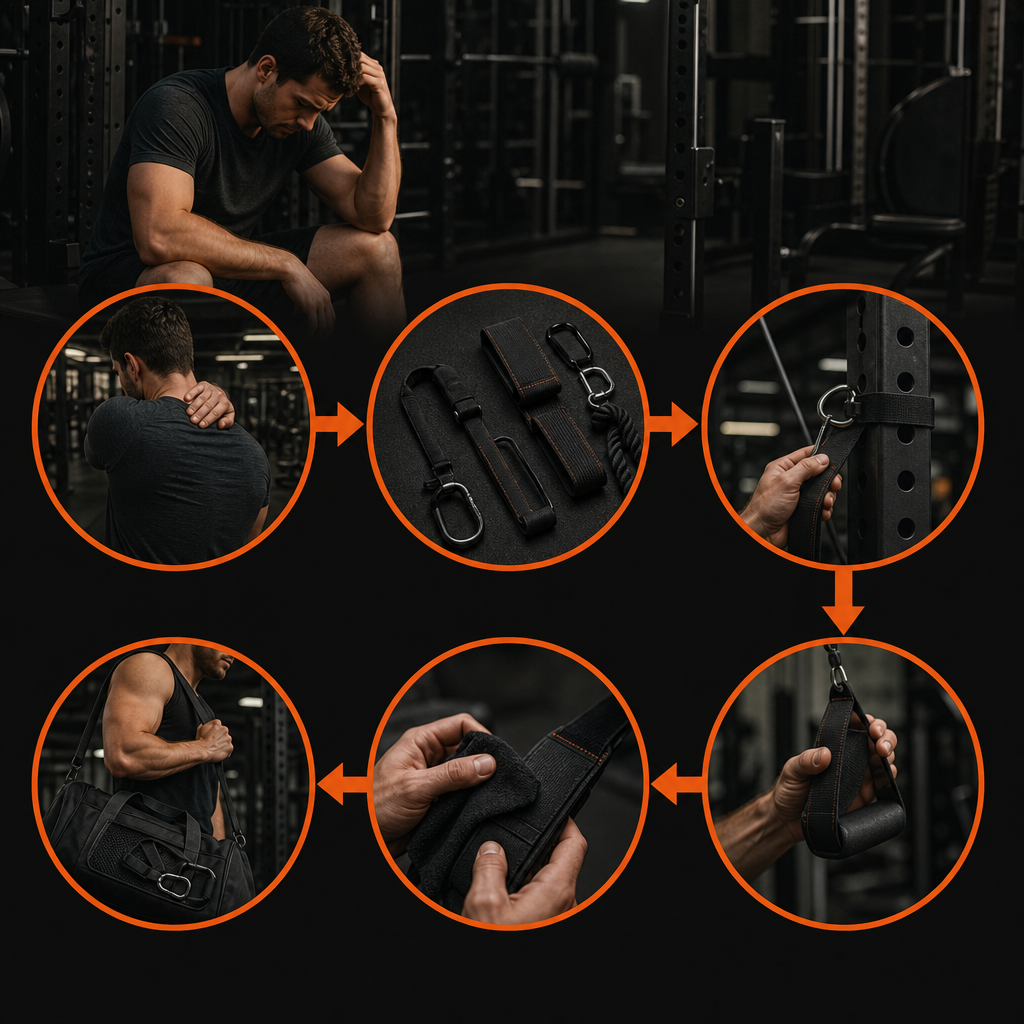
Choose gym accessories by identifying repeated friction in your training. Write down what interrupts a normal session, then buy the simplest product that removes that problem. Consider compatibility, fit, cleaning and storage before price. An accessory is worthwhile when it is used consistently, not when it merely looks good in your bag.
A useful selection process starts with four questions:
- What specific problem does it solve? Examples include sweaty hands, an unsecured phone or an uncomfortable bar position.
- Will it work with your training environment? Some gyms restrict loose chalk, large bags or equipment attached to machines.
- Can you use it quickly? Complicated accessories often stay packed away because setup takes too long.
- Can it be cleaned and stored properly? Sweat-exposed gear needs a realistic maintenance routine.
Fit matters for anything worn on the body. Wrist wraps, knee sleeves, lifting belts and grips should follow the manufacturer's sizing guide. Do not assume your usual clothing size applies.
For online purchases, review the returns policy, warranty and product description. The ACCC explains that products sold in Australia come with consumer guarantees, including that they must be of acceptable quality and fit for any disclosed purpose. These rights operate independently of a retailer's voluntary warranty.
Price should be considered across the accessory's expected use, but a higher price does not automatically mean better construction. Look for reinforced stitching, reliable closures, clear load guidance and replaceable parts where relevant. Avoid vague claims that never explain the product's materials or intended application.
Which gym accessories are genuinely essential?
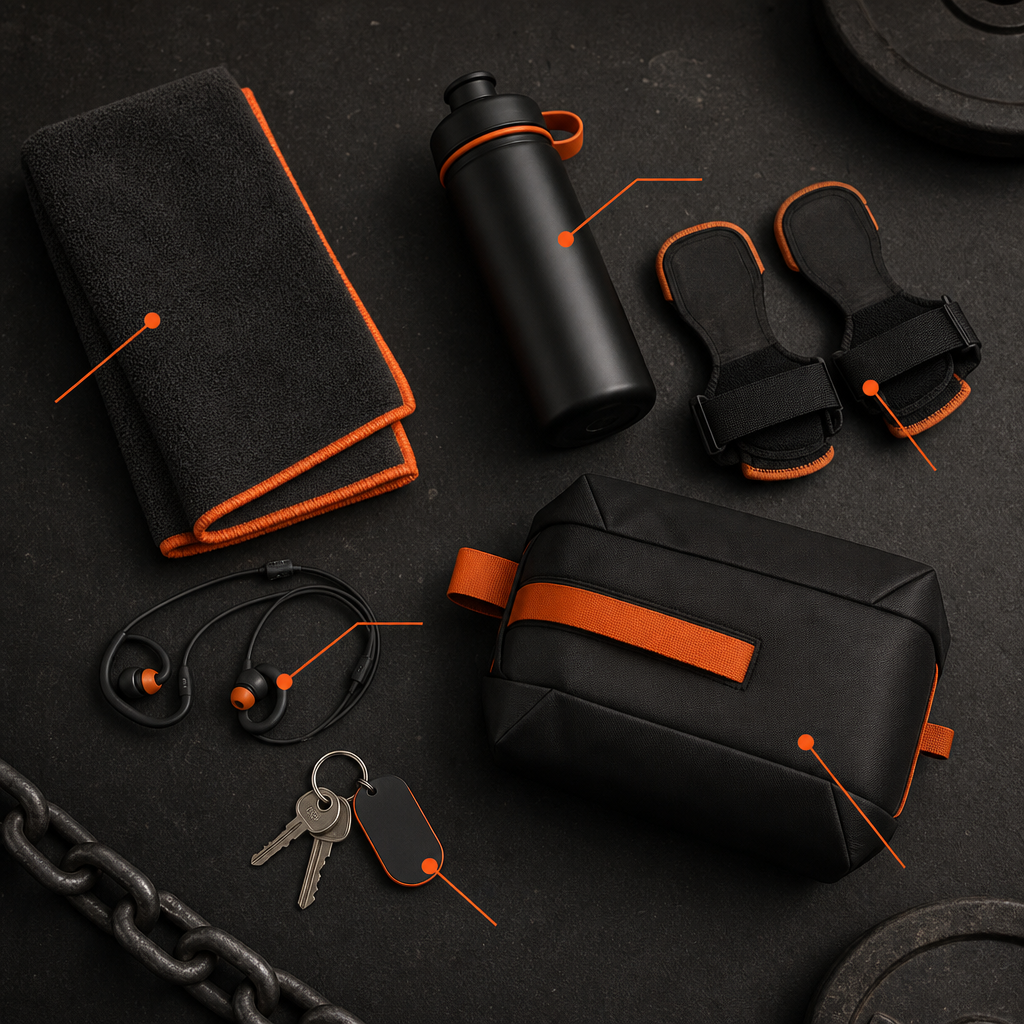
Most people only need a dependable water bottle, towel, secure storage and any exercise-specific support they regularly use. Earphones and a phone may also be part of the setup, but they need a safe location. Build from that base instead of filling an oversized bag with accessories that rarely leave it.
A gym towel
A towel manages sweat and gives you a barrier between your body and shared equipment. Choose a size that covers the bench without becoming cumbersome. The fabric should absorb moisture, tolerate frequent washing and dry before your next session.
Carry the used towel separately from clean grips, wraps and clothing. Wash it after training rather than leaving it compressed in a closed bag. If your gym provides surface-cleaning products, follow its instructions before and after using equipment.
A water bottle or shaker
A bottle needs to seal properly, fit your preferred holder and come apart for cleaning. Wide openings make hand washing easier. Shakers also need removable inserts or mixing components that do not trap residue.
Hydration needs vary with exercise intensity, conditions and the individual. Australian heat can also change how a session feels, particularly in non-air-conditioned spaces. Drink according to your needs and seek qualified advice if a medical condition affects fluid intake.
Purpose-built storage
A standard duffle carries equipment to the gym. It does not solve what happens once you reach the rack. The bag still ends up on a high-traffic floor, occupies a bench or gets left against a distant wall.
That is why I prefer purpose-built storage. A HoldIt Grip snaps onto your station, keeps the bag off the floor and places essentials within arm's reach. Your bench stays clear, and you can focus on training rather than searching for your keys.
Most gym-goers do not need a huge duffle. A phone, wallet, keys, earphones, water bottle and a few lifting accessories do not require luggage designed for a week away. Right-sized storage reduces clutter and makes missing items obvious.
You can compare the available HoldIt Grips or browse the broader HoldIt shop.
Earphones and small personal items
Earphones can help control distractions, but loose cases are easy to misplace. Keep the case, keys and wallet in one zippered location. Avoid placing a mobile on the floor, on weight plates or near moving machine components.
The same principle applies to jewellery, access cards and car keys. Small objects need a consistent home. Good organisation is not exciting, but it prevents avoidable interruptions between sets.
When should you use grips, straps, wraps or a lifting belt?
Use lifting accessories when they address a defined limitation without hiding poor technique. Grips and straps can assist grip-intensive pulling. Wrist wraps can support the wrist during suitable pressing movements. A belt can provide tactile feedback for bracing. None of these products automatically correct positioning, programming or load selection.
Lifting grips and straps
Grips and straps both connect the hand more securely to a bar or handle, but they feel different in use. Straps wrap around the implement. Grips usually place a protective material between the palm and bar, then secure around the wrist.
They may be useful when target muscles can handle more work than the hands can maintain. However, using support for every pulling set can reduce opportunities to train unsupported grip. Match the tool to the session rather than treating it as compulsory.
Check stitching and wrist comfort before loading the accessory. Replace it when material becomes thin, torn or unreliable. A cosmetic mark is different from damage at a load-bearing seam.
Wrist wraps and knee sleeves
Wrist wraps should provide the level of stiffness needed for your training without cutting circulation or restricting positioning unnecessarily. Knee sleeves should sit securely without folding behind the knee.
Neither product guarantees injury prevention. Pain that persists, worsens or changes movement deserves assessment from an appropriately qualified health professional. Do not tighten an accessory to conceal symptoms and continue loading the area.
Lifting belts
A belt is not a passive shield for the lower back. It gives the lifter a surface to brace against. That makes correct placement, breathing and technique important.
Choose a width and closure that suit your movements. A very rigid belt may work for one lifting style while becoming awkward during another. Test range of motion before committing to the heaviest available option.
What recovery accessories are worth buying?
Recovery accessories are worthwhile when they support a repeatable routine and are used for an appropriate purpose. A massage ball, roller or mobility band can be practical and portable. They should complement sensible training loads, sleep, nutrition and professional care when needed, not become a way to ignore persistent pain.
Foam rollers and massage balls
A roller covers broad areas, while a ball applies pressure to a smaller location. More pressure is not automatically better. Choose a firmness you can control and avoid aggressively rolling directly over joints or an acute injury.
Healthdirect recommends including warm-up and cool-down activity around exercise. Recovery tools can form part of that routine, but they are optional. Gentle movement may be more useful than carrying several tools without a plan.
Mobility bands
A light band can assist warm-ups, controlled mobility work and some rehabilitation exercises. It can also become damaged quietly. Inspect bands for cracks, thinning and cuts before stretching them near your face.
Do not attach a band to an unstable object or sharp edge. At home, use an anchor designed for the surface and direction of force. In a commercial gym, follow the facility's equipment rules.
Hot and cold products
Reusable hot and cold packs are convenient, but application depends on the situation and the person. Follow the product instructions and protect the skin from direct contact where directed. Seek medical advice for significant injuries rather than relying on an accessory to determine treatment.
What is the best gym equipment for home in Australia?
The best gym equipment for home in Australia fits the available space, supports your actual programme and can be stored safely. Start with a mat, resistance bands and secure storage if they match your training. Add weights or larger equipment only after checking floor capacity, clearance, noise and household access.
For a compact setup, consider:
- A non-slip exercise mat suitable for the flooring underneath.
- Resistance bands with clearly identified resistance and undamaged anchors.
- Weight collars compatible with the bar being used.
- A stable storage solution that prevents equipment rolling or becoming a trip hazard.
- A timer or simple training log.
- A bottle and towel dedicated to the training space.
Measure the room with equipment in its working position, not just its stored position. A bench may fit against a wall but still lack clearance once a bar, plates and the lifter are added.
Floor protection also deserves attention. Dropping weights can damage surfaces and disturb other occupants. Mats do not make every floor suitable for heavy lifting. If you are uncertain about structural capacity, obtain relevant professional advice.
Australian garages can become hot, humid or dusty. Store fabric accessories away from moisture and inspect metal equipment for corrosion. Rubber products should be kept according to manufacturer instructions and away from conditions that accelerate deterioration.
How should gym accessories be cleaned and maintained?
Clean gym accessories according to their materials and manufacturer instructions. Wash towels and suitable fabric items promptly, empty bottles after use and allow damp equipment to dry fully. Inspect load-bearing accessories for damage. Maintenance protects hygiene, reduces odour and helps identify products that should be replaced before they fail.
Use this basic routine:
After each session
- Empty the bottle or shaker and separate its components.
- Remove the damp towel and clothing from the bag.
- Wipe accessories that contacted shared surfaces.
- Let grips, wraps and sleeves air dry where their care instructions allow.
- Check that keys, earphones and cards are back in their assigned compartment.
Regular inspection
Look at stitching, hook-and-loop fasteners, buckles, magnets, straps and anchors. Stop using an item if damage affects its ability to carry or secure a load. Do not repair load-bearing gym gear with general adhesive and assume its original capacity remains unchanged.
Clean magnetic attachment surfaces so debris does not interfere with contact. Use the product only on suitable metal surfaces and stay within the stated maximum recommended load. For HoldIt, that maximum recommended load is 4kg, according to HoldIt's product data.
Always check product-specific care instructions before machine washing or applying cleaning chemicals. Materials that look similar may use different coatings, adhesives or internal components.
The overlooked accessory is a better system
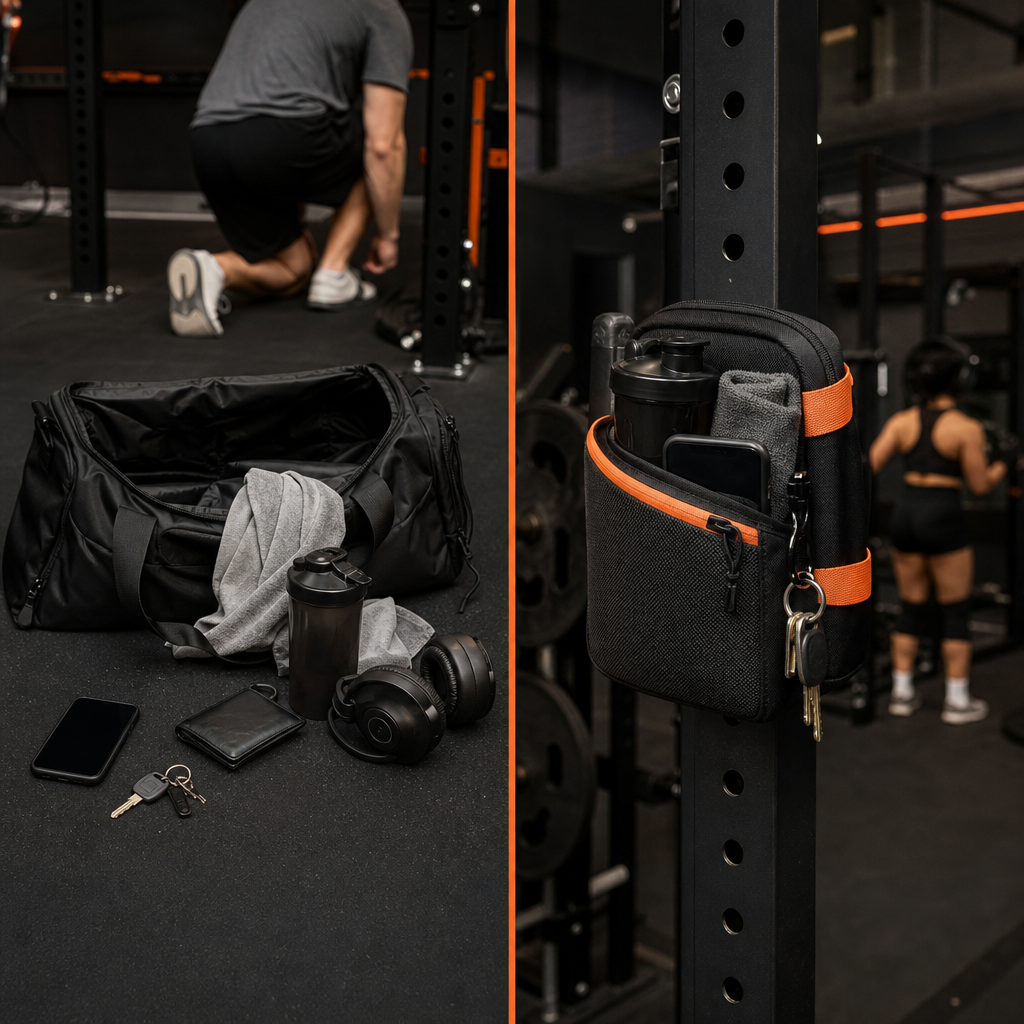
My view is simple: gym organisation is a performance issue, not a cosmetic one. Each unnecessary search, relocation or bag adjustment breaks the rhythm of training. Purpose-built storage solves a problem that conventional bags leave untouched. The goal is not carrying more gear. It is keeping essential gear sorted throughout the session.
Case study: reclaiming focus between sets
A regular gym-goer training 4 to 5 sessions each week gave us direct feedback about repeatedly losing track of their phone and keys. Their bag was left on the floor or balanced on a bench, where it could slide off. The interruptions were creating genuine frustration.
They attached a HoldIt magnetic bag hook to the upright of a cable machine and squat rack. The bag remained elevated, secure and within arm's reach throughout each working set.
The customer reported reclaiming focus in the first session. They estimated that removing misplaced-item searches and unnecessary movement saved 5 to 10 minutes per session. Those figures are the customer's own estimate supplied directly to HoldIt, not a controlled study.
This feedback also serves as a genuine, paraphrased HoldIt Grip testimonial: the user said the product immediately reduced distractions and stopped the repeated search for personal items. It has not been converted into an invented quotation or embellished with an unsupported result.
Case study: solving storage without waiting for the gym
Another commercial gym member found no dedicated bag hooks near the free-weight stations. Bags accumulated along walls and on benches. The member wanted a portable solution that did not require changes to the facility.
They moved one HoldIt hook between rack uprights, cable towers and suitable dumbbell rack frames. According to HoldIt's product guidance, the magnet has a maximum recommended load of 4kg. One portable attachment covered the different zones in that member's session.
The important result was control. The user no longer had to choose a station based on nearby bag storage. Their gear stayed off the floor without relying on fixed gym infrastructure.
This is where most gym accessory guides miss the point. They catalogue straps, shakers and towels but treat the bag as transport only. I see the bag as part of the working setup. If it cannot remain accessible without occupying the floor or bench, the storage problem is unresolved.
HoldIt's average rating is 4.8 out of 5 across 895+ verified reviews, based on the company's own review data. Readers can inspect current customer reviews rather than relying on a single selected comment.
Buying fitness gear in Australia
When buying fitness gear in Australia, prioritise clear product specifications, realistic delivery information, accessible support and Australian Consumer Law protections. Check dimensions, materials, compatibility and care instructions before ordering. Reviews can reveal recurring usability issues, but they should be assessed alongside product details rather than used as the only buying signal.
Australian buyers should check whether a displayed price includes GST and whether delivery estimates apply to their suburb. For HoldIt orders, products are dispatched from Sydney within 48 hours according to the business's fulfilment information. Delivery time after dispatch can still depend on the carrier and destination.
Be cautious when a seller provides no business identity, contact method or meaningful specifications. Claims such as "professional grade" have little value unless the product explains its construction and intended use.
If you are comparing the best gym accessories in Australia, shortlist products using three filters:
- Frequency: Will you use it during most relevant sessions?
- Friction: Does it remove a repeated interruption or limitation?
- Failure consequence: What happens if it slips, tears or opens unexpectedly?
Spend more attention on items that bear load or secure valuables. A decorative shaker and a lifting strap do not carry the same failure consequences.
Need help deciding whether HoldIt fits your training setup? Contact HoldIt with your usual equipment, bag contents and training environment. We'll sort it.
References
These references support the consumer, exercise and recovery guidance in this article. Product ratings, community figures, load guidance and customer outcomes are identified separately as HoldIt business data or direct customer feedback. No independent source is used to imply that a gym accessory can prevent injury or replace qualified care.
- Australian Competition and Consumer Commission, Consumer rights and guarantees
- Healthdirect Australia, Warm up and cool down
- World Health Organization, Physical activity
- HoldIt business data supplied for this guide: average rating, verified review volume, community size and maximum recommended magnet load.
- Direct customer feedback supplied to HoldIt: anonymised organisation case studies and customer-reported outcomes.
FAQ_SCHEMA_JSON
Get exclusive training tips & early access
Join 5,000+ athletes who train smarter.
Frequently Asked Questions
What gym accessories should a beginner buy first?
A beginner should start with a water bottle, towel and secure storage for personal items. Add exercise-specific equipment only when the training programme creates a clear requirement.
Do lifting grips improve workouts?
Lifting grips can reduce grip-related interruptions during pulling exercises and protect part of the palm. They do not improve technique automatically and should be used for a defined training purpose.
How often should gym accessories be cleaned?
Remove and wash towels and sweat-soaked clothing after use. Empty and clean bottles or shakers after each session. Follow the manufacturer care instructions for grips, wraps, sleeves and bags.
How do I know when to replace lifting straps or bands?
Replace straps or bands when cracks, thinning, tears, damaged stitching or unreliable fasteners affect their integrity. Stop using any accessory that behaves differently under tension.
Are expensive gym accessories always better?
No. Compare construction, fit, specifications, warranty terms and care requirements instead of relying on price. The best accessory is reliable, suited to its task and used regularly.
What should I keep in a gym bag?
Carry what the session requires, such as a phone, keys, wallet, earphones, bottle, towel and relevant lifting accessories. Avoid filling an oversized bag with equipment you rarely use.
Related Articles
The Best Gifts for Personal Trainers in Australia: Practical and Unique Ideas
Digital Gym Etiquette in Australia: How to Handle Phones and Filming at the Gym
The Ultimate Guide to Home Gym Setup in Australia
Your gear deserves better
Keep it clean, organised, and always within reach. The HoldIt bag system is built for athletes who take training seriously.