How Much Water to Drink at the Gym: The Australian Guide to Workout Hydration
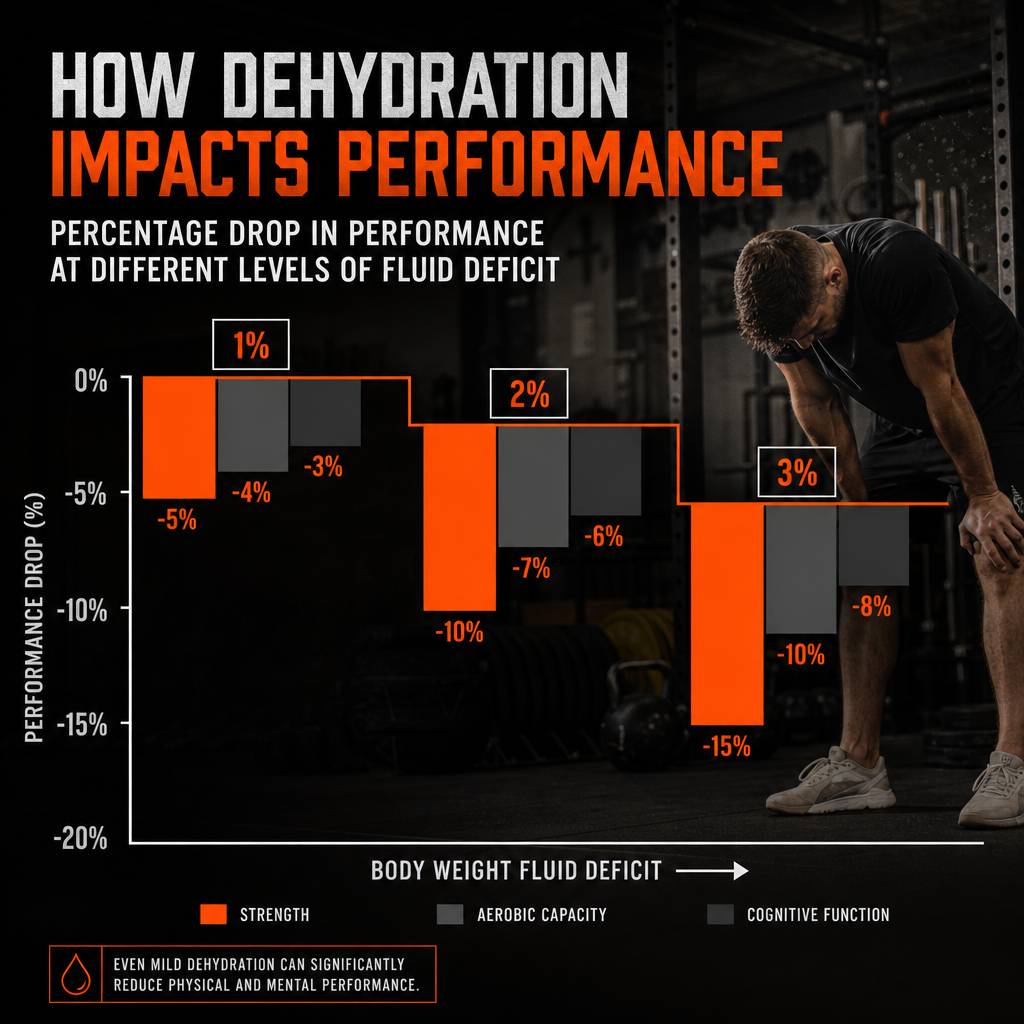
Most Australians walk into the gym already behind on fluids. You've had a coffee, maybe a small breakfast, and not much else. By the time you're three sets into your first compound movement, your body is already operating at a deficit. The problem is that dehydration doesn't feel dramatic until it's significant. A 2% drop in body water is enough to measurably impair strength output, reaction time, and focus, but it feels like a slightly off session, not a physiological crisis.
The Australian environment makes this worse. Whether you're training outdoors in a Brisbane summer or inside a poorly ventilated commercial gym in January, sweat rates here are higher than in most comparable markets. Generic hydration advice written for Northern Hemisphere audiences simply doesn't translate to the Australian context, particularly for anyone training in Queensland, Western Australia, or the Northern Territory.
This guide gives you the specifics: how much water to drink before, during, and after your session; how Australian heat changes those numbers; when electrolytes matter more than plain water; and how to set up your training environment so staying hydrated actually happens, not just in theory.
Key Takeaways
- Most adults need 35-45 ml of water per kilogram of body weight daily as a baseline, and training days require significantly more on top of that
- Australian heat and humidity can double your sweat rate compared to air-conditioned or cooler environments, which changes your hydration targets materially
- Dehydration of just 2% of body weight impairs performance; most people don't feel thirsty until they're already at that level
- Electrolytes become important when sessions exceed 60 minutes, involve significant sweating, or take place in high heat
- Signs of dehydration mid-workout include reduced strength, cramping, headache, and difficulty concentrating between sets
- Having your water bottle within arm's reach throughout your session is one of the simplest and most underrated hydration strategies
Summary Table: Hydration Targets by Workout Type and Duration
| Workout Type | Duration | Pre-Session | During Session | Post-Session |
|---|---|---|---|---|
| Light gym session (weights, low intensity) | Under 45 min | 400-500 ml (2 hrs prior) | 150-200 ml every 20 min | 500 ml per 0.5 kg lost |
| Moderate weights session | 45-75 min | 400-600 ml (2 hrs prior) | 200-300 ml every 20 min | 500-750 ml per 0.5 kg lost |
| High-intensity training (HIIT, circuit) | 45-60 min | 500-600 ml (2 hrs prior) | 250-350 ml every 15-20 min | 750 ml-1 L per 0.5 kg lost |
| Outdoor session (Australian summer) | Any | Add 200-300 ml to above | Increase by 30-50% | Increase by 30-50%, consider electrolytes |
| Endurance / long session | 90+ min | 600 ml (2 hrs prior) | 400-600 ml per hour with electrolytes | 1-1.5 L per 0.5 kg lost with electrolytes |
Why Hydration Matters More Than You Think
Water is involved in virtually every process your body runs during exercise. It regulates core temperature through sweat, transports oxygen and nutrients to working muscles, lubricates joints, and facilitates the removal of metabolic waste products. When fluid levels drop, all of these processes degrade simultaneously.
The science on this is consistent and has been for decades. Research summarised by the American College of Sports Medicine (ACSM) shows that a fluid deficit of 2% of body weight reduces aerobic capacity by around 10-20% and impairs cognitive function including focus, decision-making, and reaction time. For a person weighing 80 kg, that's a deficit of just 1.6 litres, which is entirely achievable across a warm training session if you're not actively replacing fluids.
For strength training specifically, dehydration affects muscular endurance and power output before it affects absolute strength. You may hit your one-rep max but fail earlier on working sets. You might notice you're grinding through reps that felt easier last week. Most people attribute this to fatigue, sleep, or nutrition, and they're often right, but dehydration is a common and underestimated contributor.
Deakin University exercise science researchers have highlighted that Australian athletes, recreational and competitive, are among the most under-hydrated in the developed world on a per-training-session basis. The cultural habit of grabbing a coffee before training without matching it with water, combined with a hot climate, creates a consistent deficit that chips away at performance and recovery week after week.
The recovery angle matters too. Protein synthesis, glycogen replenishment, and muscle repair all depend on adequate hydration. Training hard and then under-recovering is a frustrating cycle that better hydration habits can partially address.
How Much Water Before, During, and After Training
Before Your Session
The goal before training is to arrive at the gym euhydrated, meaning your body is in fluid balance, not trying to catch up. The ACSM recommends drinking 5-7 ml of fluid per kilogram of body weight approximately four hours before exercise, with an additional 3-5 ml per kilogram two hours before if you haven't produced pale urine by that point.
In practical terms for an 80 kg person: aim for roughly 400-560 ml about two hours before training. Don't chug it all at once. Spread it across the hour or two leading into the session so your body can actually absorb it.
Urine colour is the most accessible self-check. Pale straw yellow means you're in good shape. Dark yellow or amber means you're already dehydrated. Colourless can suggest overhydration, which we'll cover in the FAQs.
During Your Session
The goal during training is to replace sweat losses closely enough that you don't accumulate a deficit. You won't replace everything in real time, and you don't need to, but letting losses exceed about 2% of body weight is where performance starts to break down.
General guidance from Sports Dietitians Australia recommends 150-250 ml every 15-20 minutes during moderate exercise in temperate conditions. In Australian heat or high-intensity sessions, bump that to 250-350 ml per interval.
For weight training specifically, sip between sets rather than drinking large volumes infrequently. Your gut absorbs water more efficiently in smaller, regular amounts. Waiting until you're thirsty means you've already fallen behind.
After Your Session
Post-session rehydration needs to account for what you lost. The standard approach is to weigh yourself before and after training. Every 0.5 kg lost represents approximately 500 ml of fluid. Drink 1.25-1.5 times that amount over the two hours following training to account for ongoing losses and urine output.
If weighing yourself isn't practical, aim for at least 500 ml to 750 ml in the 30-60 minutes after a moderate session, and more after anything intense or held in hot conditions.
Australian Climate Considerations
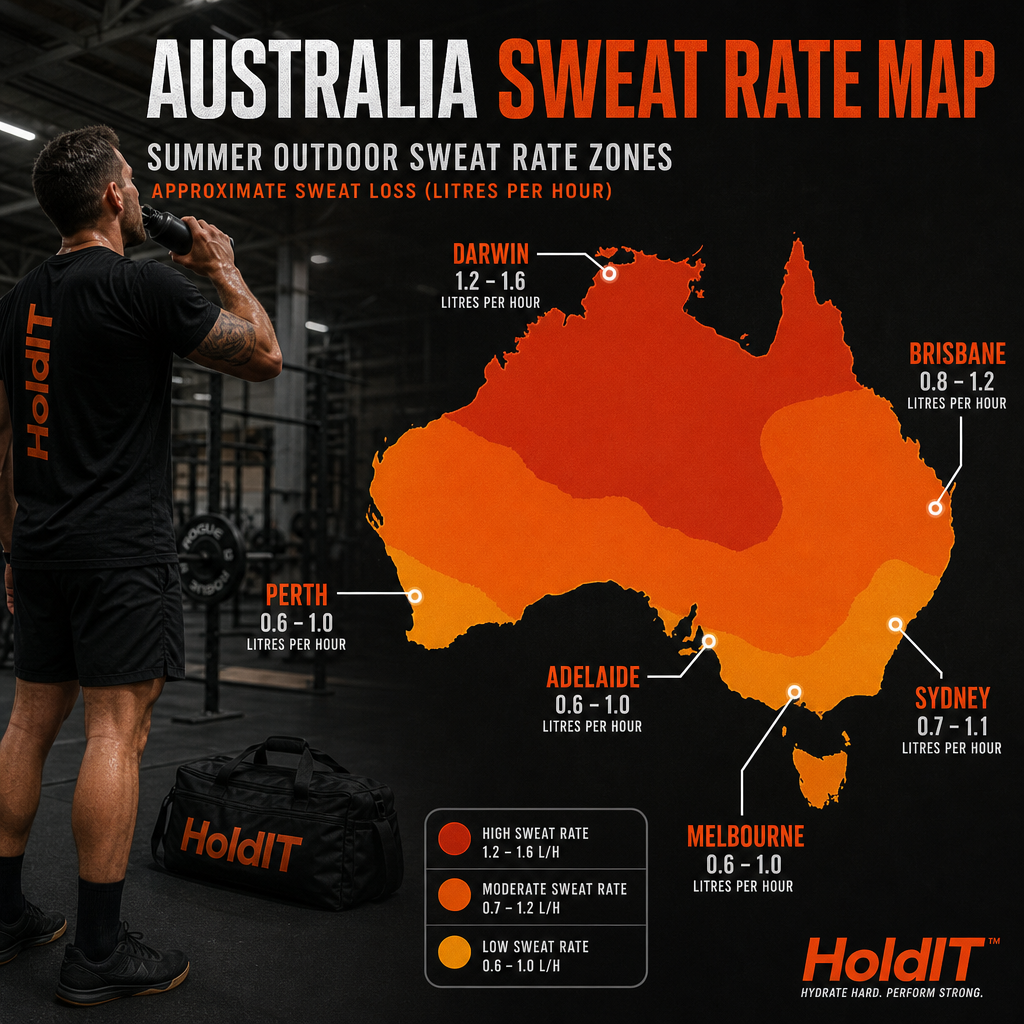
This is where Australian-specific guidance diverges meaningfully from generic international content.
Sweat rate in a comfortable 20-degree training environment might sit at 0.5-1 litre per hour for moderate exercise. In a 30-35 degree outdoor environment with humidity above 60%, that same session can produce sweat losses of 1.5-2.5 litres per hour. The Australian Bureau of Meteorology data consistently shows that major population centres including Sydney, Melbourne, Brisbane, Perth, and Adelaide experience conditions in that upper range across summer months, often for extended periods.
For outdoor training, running, cycling, beach circuits, or outdoor functional fitness sessions, Australian summer conditions can push hydration requirements well beyond what most guides recommend. A 45-minute run in Brisbane in January is not the same physiological event as a 45-minute run in Edinburgh in April.
Indoor commercial gyms vary significantly. A well-air-conditioned facility running 20-22 degrees reduces sweat rate substantially. A smaller gym or studio running 26-28 degrees with poor airflow, which is common in many suburban commercial gyms, can produce sweat rates closer to outdoor conditions. Know your training environment and adjust accordingly.
High humidity compounds everything. At high humidity, sweat evaporates more slowly, meaning your body's primary cooling mechanism is less efficient and it compensates by producing more sweat. If your gym feels muggy, your fluid losses are higher than you think.
Heat Acclimatisation
If you've recently moved from a cooler climate or are returning to outdoor training after winter, your body hasn't acclimatised to heat yet. Plasma volume expands and sweat gland efficiency improves over roughly 10-14 days of heat exposure. During that period, drink more than you think you need and pay close attention to the dehydration warning signs covered below.
Electrolytes vs Plain Water
Electrolytes are minerals that carry an electrical charge and are essential for fluid balance, nerve signalling, and muscle contraction. The key ones for exercise are sodium, potassium, magnesium, and chloride. When you sweat, you lose electrolytes alongside water, and replacing water without replacing electrolytes can actually dilute the concentration in your blood.
For sessions under 60 minutes at moderate intensity in a cool environment, plain water is sufficient for most people. Your regular diet will replace the electrolytes lost.
Electrolytes become important when:
- Sessions exceed 60-90 minutes
- You're sweating heavily (soaked clothing, dripping)
- You're training in hot or humid conditions
- You're doing back-to-back sessions with less than 12 hours recovery
- You experience cramping during or after training
Sodium First
Sodium is the most critical electrolyte for exercise hydration. It's the primary electrolyte in sweat, and it plays a direct role in retaining fluid in the bloodstream. Most Australians get adequate sodium through diet, but heavy sweaters can lose enough in a single session to create a functional deficit.
A sodium intake of 500-700 mg per litre of fluid consumed during prolonged exercise is the ACSM's guidance. Most commercially available electrolyte products in Australia land in this range.
Electrolyte Formats
In the Australian market you'll find electrolytes in powder sachets, dissolvable tablets, ready-to-drink formulas, and gel formats. Powders and tablets added to your water bottle are generally the most cost-effective and allow you to control dosing. Ready-to-drink options are convenient but tend to carry more sugar than necessary for gym-based training.
Brands widely available in Australia through major sports nutrition retailers include Hydralyte Sports, Precision Hydration, Endura, and Nuun tablets. Each has a different sodium concentration, so check the label if you're a heavy sweater or training in serious heat, as standard formulations may underdeliver.
Avoid using standard sports drinks like full-sugar Powerade or Gatorade as your primary hydration source for gym sessions. The sugar load is designed for endurance athletes at sustained high intensity. For a 45-minute weights session, you're adding unnecessary kilojoules without meaningful benefit over water with a basic electrolyte tablet.
Signs You Are Dehydrated Mid-Workout
Thirst is a late indicator. By the time you feel thirsty, you're typically already at or past the 1-2% body weight deficit threshold. Other signs to watch for during a session:
Performance-based signs:
- Reps feeling disproportionately hard relative to the weight
- Grip strength feeling reduced
- Increased heart rate for a given effort level
- Slowed recovery between sets
Physical signs:
- Headache developing during or after the session
- Muscle cramping, particularly in calves, hamstrings, or feet
- Dizziness or light-headedness on standing between sets
- Dry mouth or lips
Cognitive signs:
- Difficulty concentrating on form cues
- Reduced motivation mid-session (beyond normal fatigue)
- Irritability or a flat feeling that you can't attribute to sleep or nutrition
If you're experiencing three or more of these during a session, stop and drink. Don't try to push through significant dehydration. Add electrolytes if you have them. If symptoms include nausea, significant dizziness, or confusion, stop training and seek a cool environment.
Best Water Bottles for the Gym in Australia
The best water bottle for the gym is the one you'll actually use consistently throughout your session. That sounds obvious but it's not. If your bottle is awkward to carry between stations, difficult to open with one hand, or easy to knock over when set down, you'll drink less.
Here's what actually matters for a gym-specific water bottle:
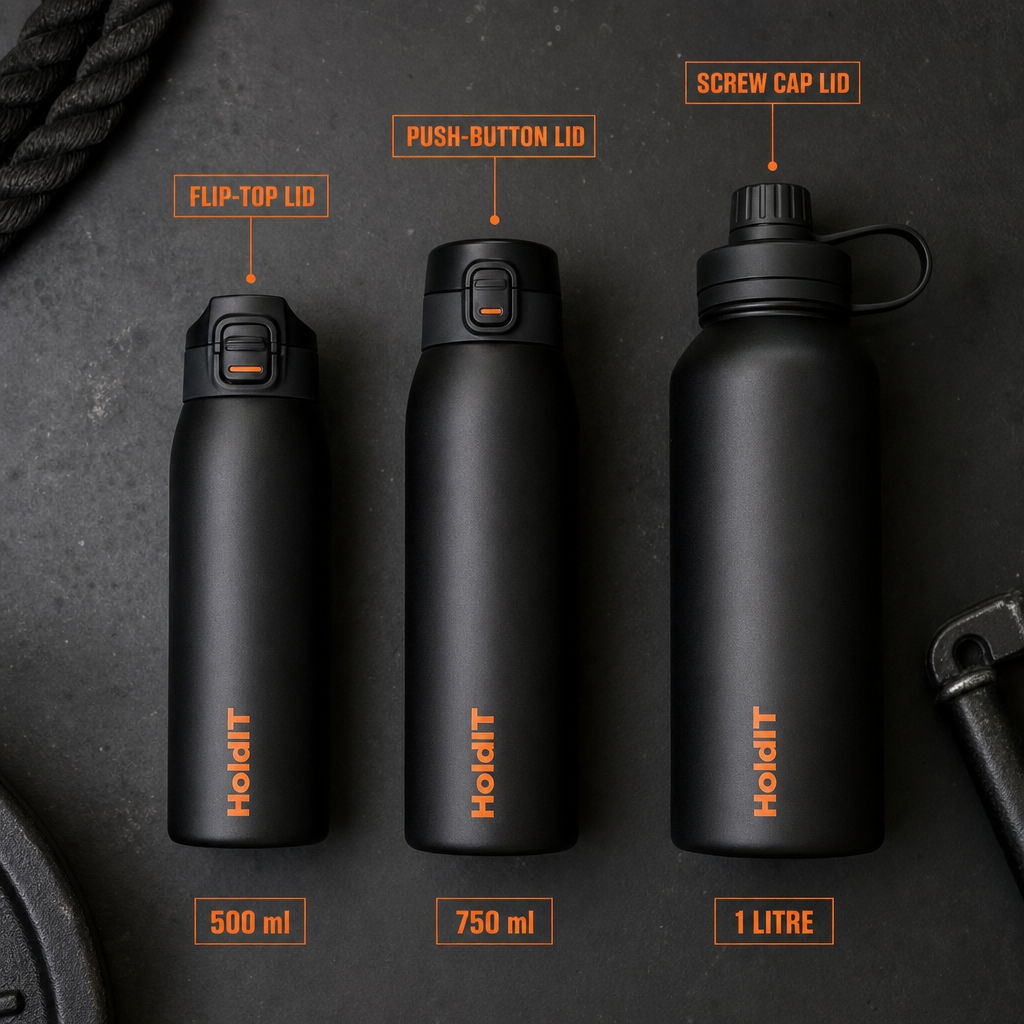
Capacity: 700 ml to 1 litre is the practical sweet spot for most gym sessions. Large enough to last a moderate session without refilling, small enough to carry or attach to your kit. A 2-litre bottle is cumbersome between sets and encourages infrequent drinking. A 500 ml bottle requires constant refilling.
Opening mechanism: One-handed operation matters when you're mid-session. A flip-top or push-button lid beats a screw cap for gym use. You want to be able to take a sip between sets without fumbling.
Insulation: A double-wall insulated stainless steel bottle keeps water cold for 12-24 hours. In an Australian summer gym environment, cold water is more palatable and you'll drink more of it. The temperature benefit is real and consistent.
Durability: Gym floors are hard. Benches are metal. Your bottle will get knocked around. Stainless steel handles this better than most plastics over time.
Leak resistance: Non-negotiable if your bottle is going in a bag alongside electronics, a towel, and lifting accessories.
For serious gym-goers, a right-sized, insulated, one-handed bottle that lives permanently in your kit, not in the car, not at the office, in your kit, is one of the cheapest performance upgrades available.
Browse the HoldIt shop for gym accessories designed to work with how serious lifters actually train.
How to Build a Hydration Habit
Knowing the numbers helps, but consistent hydration comes down to systems, not willpower.
Anchor hydration to existing habits. Drink 500 ml when you wake up, before coffee. Drink 400 ml with your pre-workout meal. Drink 200 ml on arrival at the gym before you start. These three anchors alone put most people in a much better position before they even touch a weight.
Track for two weeks. Download a hydration tracking app or use the notes app on your phone. Most people significantly underestimate how little they drink on training days until they see it written out. Two weeks of tracking is usually enough to recalibrate your intuition.
Make water the default. Keep a full bottle on your desk, in your car, and in your gym kit at all times. Environmental design beats intention. If water is available and inconvenient to avoid, you'll drink more of it.
Adjust seasonally. Australian summer requires a materially different hydration strategy to winter. Build the habit of increasing your baseline intake from October through March. A simple rule: add 500 ml to your daily target for every day the temperature exceeds 30 degrees.
Eat your water. Foods with high water content, including cucumber, watermelon, oranges, and leafy greens, contribute meaningfully to daily fluid intake. This isn't a replacement for drinking water but it supports overall hydration, particularly useful if you find large volumes of plain water difficult to drink.
Keeping Your Water Bottle Accessible
This is where the rubber meets the road. You can have the perfect hydration plan, the right electrolyte formula, the ideal bottle size, and still under-drink because your bottle is sitting in your bag on the other side of the gym floor.
I've seen this play out firsthand. Training 4-5 sessions a week, I used to leave my bag near the entrance of the gym floor, which made sense from a space-management perspective but meant my water bottle was never actually close to where I was working. A few sets in, I'd skip a drink because the walk wasn't worth the interruption. Over a 60-minute session, those skipped sips add up to a real deficit.
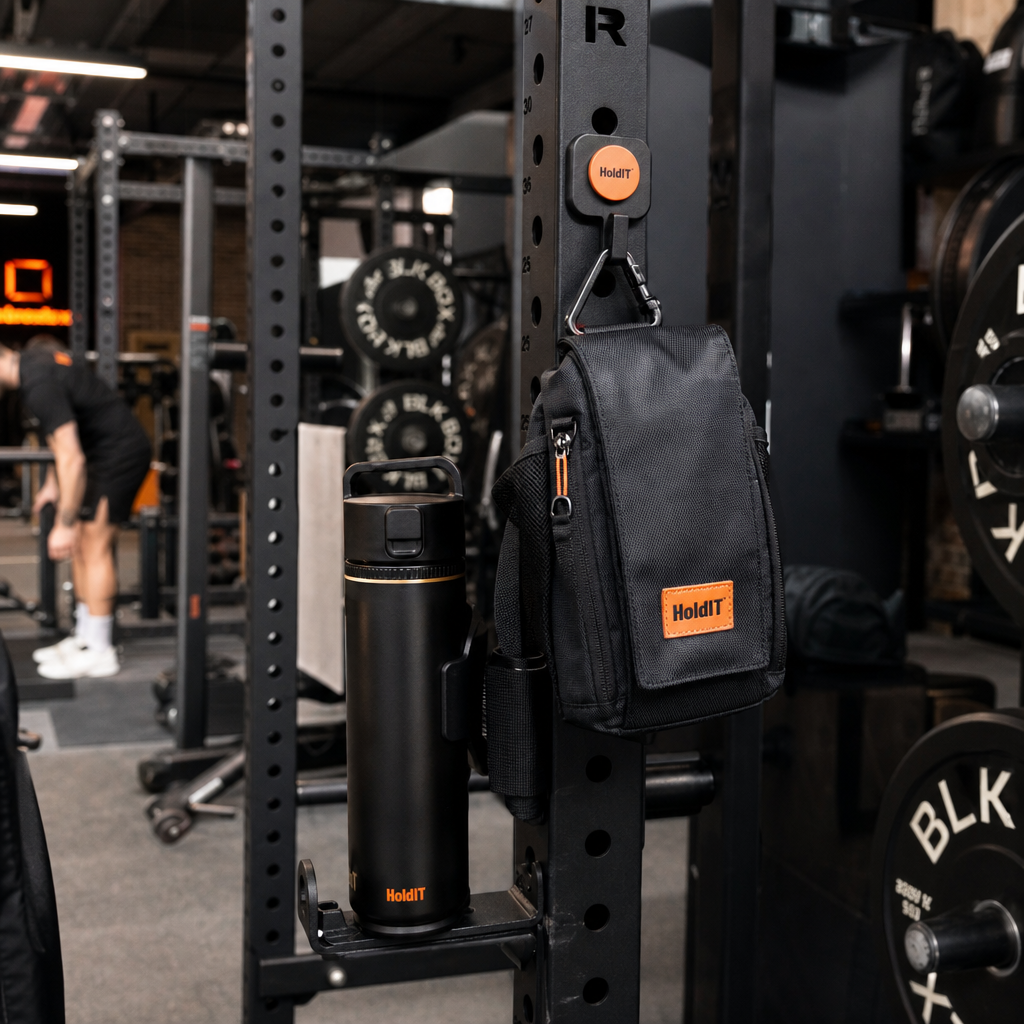
The fix was simple: keep the bag with me, elevated, at every station. Once I started using the HoldIt magnetic bag hook clipped onto the nearest rack upright or cable tower, my bottle was within arm's reach between every set. The hook snaps onto your station in seconds, keeps your kit off the floor, and means you don't have to choose between keeping your gear close and keeping the training floor clear.
I also noticed this pattern with a gym member at a commercial facility I trained at regularly. There were no dedicated bag hooks near the free weight area, so everyone's bags were piled against the wall or draped over benches. The result was people training away from their water, which compounded the dehydration problem session after session. One portable hook rated to hold up to 4 kg of load, clipped wherever you're working, solves this entirely without needing anything from gym management.
A hydration habit doesn't work if access is inconvenient. Remove the friction. Keep the bottle at the station. The HoldIt training room resources cover more on building a distraction-free session setup.
A floor bag, regardless of how good it is, doesn't solve this. It sits on the floor, which means every time you want your water bottle you're bending down, picking up the bag, unzipping it, and fishing around. That's not a system. Purpose-built gear that keeps your kit elevated and accessible is not a luxury for serious gym-goers; it's the obvious solution to a problem most people have just accepted.
The 10,000-plus members of the HoldIt crew who've rated the product 4.8 out of 5 across 895-plus verified reviews figured this out. The consistent feedback is the same: less time searching, more time training, and everything sorted exactly where it needs to be.
References
-
Sports Dietitians Australia - Fluid and Hydration in Sport. The peak professional body for dietitians working in sport in Australia. Their position statements on hydration for exercise provide evidence-based targets for fluid intake before, during, and after training, with guidance relevant to Australian climate conditions.
-
American College of Sports Medicine (ACSM) - Exercise and Fluid Replacement Position Stand. The ACSM's position stand on fluid replacement during exercise is one of the most cited documents in sports science. It provides the foundational framework for pre-, during-, and post-exercise hydration targets referenced throughout this guide.
-
Deakin University Institute for Physical Activity and Nutrition (IPAN). Deakin's exercise science research group has produced multiple studies on hydration practices among Australian recreational and competitive athletes, including findings on dehydration prevalence and its effect on exercise performance in Australian conditions.
-
Better Health Channel - Victoria Department of Health. The Victorian Government's Better Health Channel provides accessible, evidence-based consumer health information on hydration, dehydration symptoms, and fluid recommendations for Australians, including guidance specific to hot weather conditions.
-
Australian Bureau of Meteorology (BOM) - Climate Data. BOM climate and temperature records provide the basis for understanding the range of conditions Australian athletes train in across different regions and seasons, supporting the climate-adjusted hydration guidance in this article.
-
Sawka, M.N. et al. - Hyponatraemia and Fluid Balance in Endurance Athletes. Published in peer-reviewed sports medicine literature, this research provides the physiological basis for understanding both dehydration thresholds and the risks of overhydration, informing the guidance on electrolyte use and volume limits.
Get exclusive training tips & early access
Join 5,000+ athletes who train smarter.
Frequently Asked Questions
Does coffee count toward my daily water intake?
Partially. Moderate caffeine intake has a mild diuretic effect but not enough to offset the fluid content of the coffee itself. A 250 ml coffee contributes net positive fluid intake for most people. However, relying on coffee as your primary pre-training hydration is a mistake. Drink water alongside your pre-training coffee, not instead of it.
Should I drink sports drinks instead of water at the gym?
For most gym-based training sessions under 60 minutes, plain water is all you need. Full-sugar sports drinks are formulated for sustained endurance activity. For a standard weights session, a low- or no-sugar electrolyte tablet or powder added to water is a better fit than standard sports drinks like Gatorade or Powerade.
Is cold water better than room-temperature water during exercise?
Cold water is absorbed slightly more quickly than room-temperature water and is more palatable during exercise, meaning most people drink more of it. In Australian summer conditions, cold water also helps manage core temperature. An insulated stainless steel bottle that keeps water cold for 12 or more hours is worth the investment for gym use.
Can you drink too much water at the gym?
Yes. Hyponatraemia, or dangerously low blood sodium, can occur when someone drinks excessive volumes of plain water, diluting sodium concentration in the blood. For gym sessions, the risk is low if you drink to thirst and match fluid intake with actual sweat losses. For sessions over 90 minutes in heat, use electrolytes alongside water rather than forcing very large volumes of plain water.
How should I approach hydration for early morning gym sessions?
Drink at least 400-500 ml of water immediately on waking, before coffee, and ideally 20-30 minutes before leaving for the gym. Prepare your bottle the night before to remove friction. If your session is under 45 minutes at moderate intensity, pre-session hydration plus sipping during the session is sufficient.
What are the best electrolyte products available in Australia?
Well-regarded Australian options include Hydralyte Sports (available at Chemist Warehouse and Priceline), Precision Hydration (available at varying sodium concentrations), Nuun tablets (convenient and low in sugar), and Endura Rehydration. For serious summer training, look for at least 500-700 mg of sodium per litre on the label.
How do I know if my cramping is caused by dehydration or something else?
Dehydration-related cramping typically affects multiple muscle groups and tends to occur later in a session. If cramping improves after drinking water and electrolytes, dehydration was likely a contributing factor. Early-session cramping is more likely neuromuscular or fatigue-based. Persistent or severe cramping should be assessed by a sports dietitian or exercise physiologist.
Does humidity affect how much I need to drink?
Yes, significantly. High humidity reduces sweat evaporation, so your body produces more sweat to cool itself, increasing fluid losses. Training in a humid environment common in coastal Australian cities during summer produces substantially higher sweat rates. If your gym feels muggy or you're training outdoors in Queensland or Darwin conditions, increase your fluid intake by 30-50% and prioritise electrolytes for sessions over 45 minutes.
Related Articles
How to Fit the Gym Into a Busy Schedule in Australia: A Practical Guide to Training Around Work and Life
The Best Gym Bag for Functional Fitness and CrossFit in Australia
The Best Gifts for Personal Trainers in Australia: Practical and Unique Ideas
Your gear deserves better
Keep it clean, organised, and always within reach. The HoldIt bag system is built for athletes who take training seriously.