How to Clean a Gym Bag Properly: The Australian Guide to Washing and Maintaining Your Bag
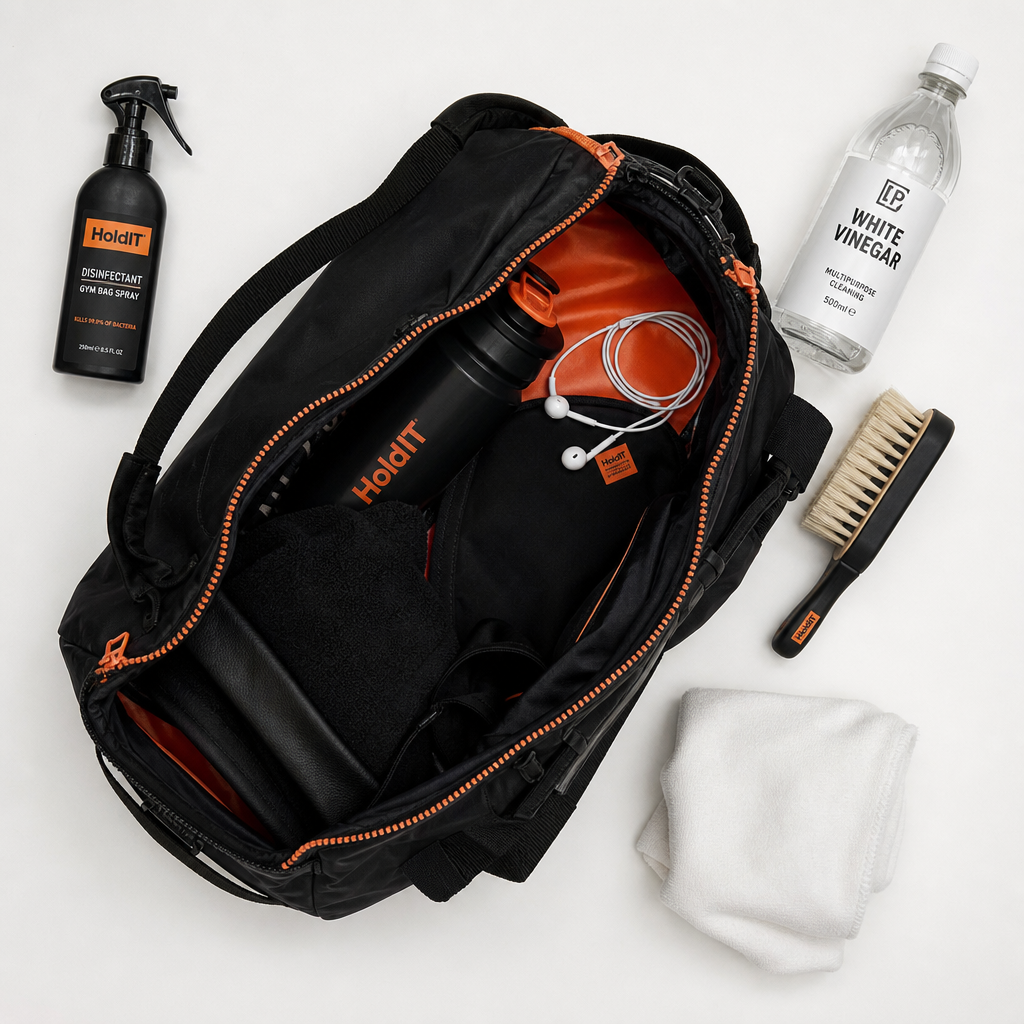
Studies have shown that the average gym bag carries more bacteria per square centimetre than a toilet seat. That is not a hypothetical. Researchers swabbing sports bags have found colony counts in the hundreds of thousands, driven by sweat-saturated fabric, damp towels, and protein-residue build-up from shakers left inside too long. Most Australians who train four or five times a week have never once properly cleaned their bag. I get it. It is not the most glamorous part of training. But a filthy bag undermines every other hygiene habit you maintain at the gym.
Here is the other thing nobody talks about: your bag sits on the floor between every set. Public gym floors are among the highest-traffic surfaces in any building, covered in chalk, sweat, foot traffic residue, and whatever else has been dragged in from outside. Every time your bag touches that floor, it picks up a fresh load of contamination. That is worth keeping in mind as we walk through how to clean your bag properly, and also why getting your bag off the floor in the first place is the single biggest hygiene upgrade you can make.
This guide covers everything: which materials can handle a machine wash, how to hand-clean without wrecking structured designs, how to disinfect without destroying fabric, how to deal with mould in Australia's humid coastal cities, and a simple maintenance schedule that keeps your bag sorted without adding a second job to your week. Let's get into it.
Key Takeaways
- Most nylon and polyester gym bags can be machine washed on a gentle, cold cycle, but leather and heavily structured bags cannot.
- Hand-cleaning with a mild detergent and a soft brush is the safest method across all materials.
- Disinfecting sprays containing isopropyl alcohol or white vinegar solution work effectively without damaging most fabrics.
- Australian humidity, particularly in Brisbane, Darwin, and coastal NSW, accelerates mould growth inside closed bags. Always dry completely before storing.
- Cleaning every two weeks is the minimum for anyone training three or more times per week.
- Keeping your bag off the gym floor dramatically reduces how quickly it gets contaminated in the first place.
Summary Table: Gym Bag Materials, Cleaning Methods and Dry Times
| Material | Machine Wash? | Best Cleaning Method | Frequency | Dry Time (Aus Climate) |
|---|---|---|---|---|
| Nylon | Yes (gentle, cold) | Machine or hand wash | Every 2 weeks | 4-6 hours |
| Polyester | Yes (gentle, cold) | Machine or hand wash | Every 2 weeks | 4-6 hours |
| Canvas | Yes (gentle, cold) | Hand wash preferred | Every 2-3 weeks | 6-12 hours |
| Leather | No | Damp cloth + conditioner | Monthly | 12-24 hours |
| Structured/Frame | No | Spot clean only | Every 2 weeks | Varies |
| Mesh panels | Yes (in laundry bag) | Machine or hand wash | Every 2 weeks | 2-3 hours |
Why Gym Bags Get Filthy Fast
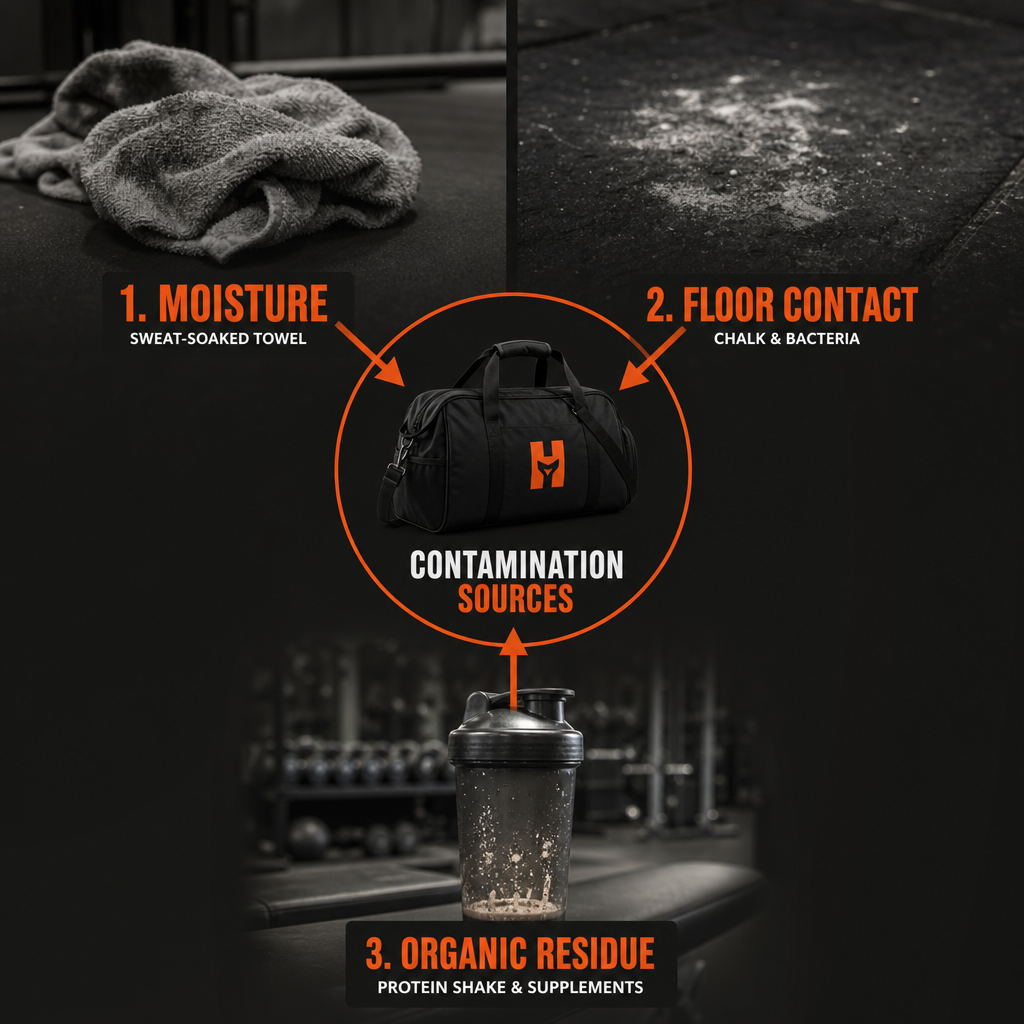
Understanding the problem makes the solution obvious. A gym bag faces a combination of conditions that almost no other bag does.
First, there is the sweat load. Even a moderately hard session produces around 1-2 litres of sweat. That sweat soaks into your towel, your clothing, and your accessories, and all of it goes into the bag. Once inside a sealed or semi-sealed environment, moisture creates the exact conditions bacteria and mould need to thrive: warmth, darkness, and a food source in the form of organic residue.
Second, there is the floor problem. The average commercial gym floor in Australia is cleaned once or twice a day, but training traffic in a busy Sydney or Melbourne gym means dozens of people walk through chalk dust, track in debris from locker rooms and carparks, and sweat onto every surface continuously. When your bag sits on the floor between your sets, it is absorbing all of that. I worked with a guy who trained at a busy inner-city gym four times a week. He told me he kept losing focus between sets because his bag would slide off benches or he would have to hunt for it on the floor near a crowded rack. The issue was not just organisation. It was that every time the bag hit the floor, it was picking up a fresh round of contamination. We sorted that with a magnetic hook that snapped onto the rack upright and kept his bag elevated and within arm's reach the whole session. Hygiene improved, focus improved, and he stopped losing five to ten minutes per session searching for misplaced gear.
Third, there is protein residue. Shakers, pre-workout sachets, and food containers left in gym bags are among the worst offenders. Even a rinsed shaker carries residue that, in a warm bag, will develop an odour within 24 hours. In Australian summer conditions, that process is dramatically faster.
The combination of these three factors means a gym bag used regularly without cleaning becomes one of the more heavily contaminated objects in a person's daily life. The fix is consistent cleaning, not occasional panic-washes when the smell becomes noticeable.
Can You Machine Wash a Gym Bag?
The short answer is: it depends on the material. Here is exactly how to approach each one.
Nylon Bags
Nylon is the most forgiving material for machine washing. Most nylon gym bags can handle a gentle cycle at cold or warm water (maximum 30 degrees Celsius). Use a mild, fragrance-free detergent. Remove any detachable straps or accessories first. Turn the bag inside out if possible, and place it in a mesh laundry bag to protect zips and hardware from catching on the machine drum.
Do not use fabric softener. Softener leaves a coating that traps odour-causing bacteria over time, which is the opposite of what you want.
Polyester Bags
Polyester handles machine washing well. Same rules apply: cold to warm water, gentle cycle, no fabric softener. Polyester dries quickly, which is a genuine advantage in humid Australian conditions where you want to minimise the time moisture sits in a bag.
Canvas Bags
Canvas can be machine washed, but hand washing is preferable. Canvas is heavier and holds more water, which means it takes longer to dry fully. Incomplete drying leads to mildew. If you machine wash canvas, use a cold gentle cycle, remove it promptly, and hang it somewhere with strong airflow. In Brisbane or Darwin humidity, canvas needs a fan-assisted drying environment or direct sun to dry completely.
Leather Bags
Leather cannot go in the machine. Full stop. Machine washing strips the natural oils from leather, causes cracking, and warps structured panels. Clean leather gym bags with a damp microfibre cloth and a small amount of saddle soap or a dedicated leather cleaner. Follow with a leather conditioner applied in small circular motions to restore suppleness. Do this monthly, or more frequently if the bag is used heavily.
Structured and Frame Bags
Bags with internal frames, rigid bases, or structured compartments should not be machine washed. The mechanical action of the drum can break down internal structure, warp frames, and damage reinforcing panels. Spot clean these bags using the hand-cleaning method described below.
Step-by-Step Hand-Cleaning Method
Hand cleaning is the safest, most effective method for all bag types. Here is how to do it properly.
What you need:
- Mild detergent or dish soap
- A soft-bristled brush (an old toothbrush works for seams and corners)
- Two clean cloths or sponges
- A basin or bathtub with warm water
- White vinegar (optional, for deodorising)
Step 1: Empty completely and shake out debris. Turn the bag upside down and shake it firmly. You will be surprised by what falls out: chalk, protein powder, grass, hair. For a thorough clean, run a handheld vacuum or a vacuum brush attachment through every compartment, including the pockets and the base.
Step 2: Check the care label. Every bag has one. The care label overrides everything else. If the label says hand wash only or spot clean only, follow that instruction regardless of material.
Step 3: Pre-treat stains. Apply a small amount of mild detergent directly to any visible stains. Work it in gently with your fingers or the soft brush. Let it sit for five minutes before washing.
Step 4: Wash the exterior. Dip your cloth or sponge in warm soapy water and work over the exterior surface methodically. Pay attention to the base (the most contaminated area), the handles, and anywhere the bag contacts your body regularly. For textured materials, use the soft brush to work into the weave.
Step 5: Clean the interior. Flip the bag open as wide as it goes. Use a fresh soapy cloth to wipe down every interior surface including pockets, dividers, and the base lining. If there is a removable base insert, take it out and clean it separately.
Step 6: Rinse thoroughly. Residual detergent is itself a problem. It attracts dirt and can irritate skin. Use a clean cloth dampened with plain water to remove all soap from the surface. For bags that can be submerged, rinse in fresh water.
Step 7: Deodorise if needed. A solution of equal parts white vinegar and water applied to interior surfaces neutralises odour-causing bacteria without harsh chemicals. Let it sit for a few minutes, then wipe down with a clean damp cloth.
Step 8: Dry completely before closing. This is the most important step. An incompletely dried bag is worse than an unwashed one. More on drying below.
How to Disinfect a Gym Bag Without Damaging the Fabric
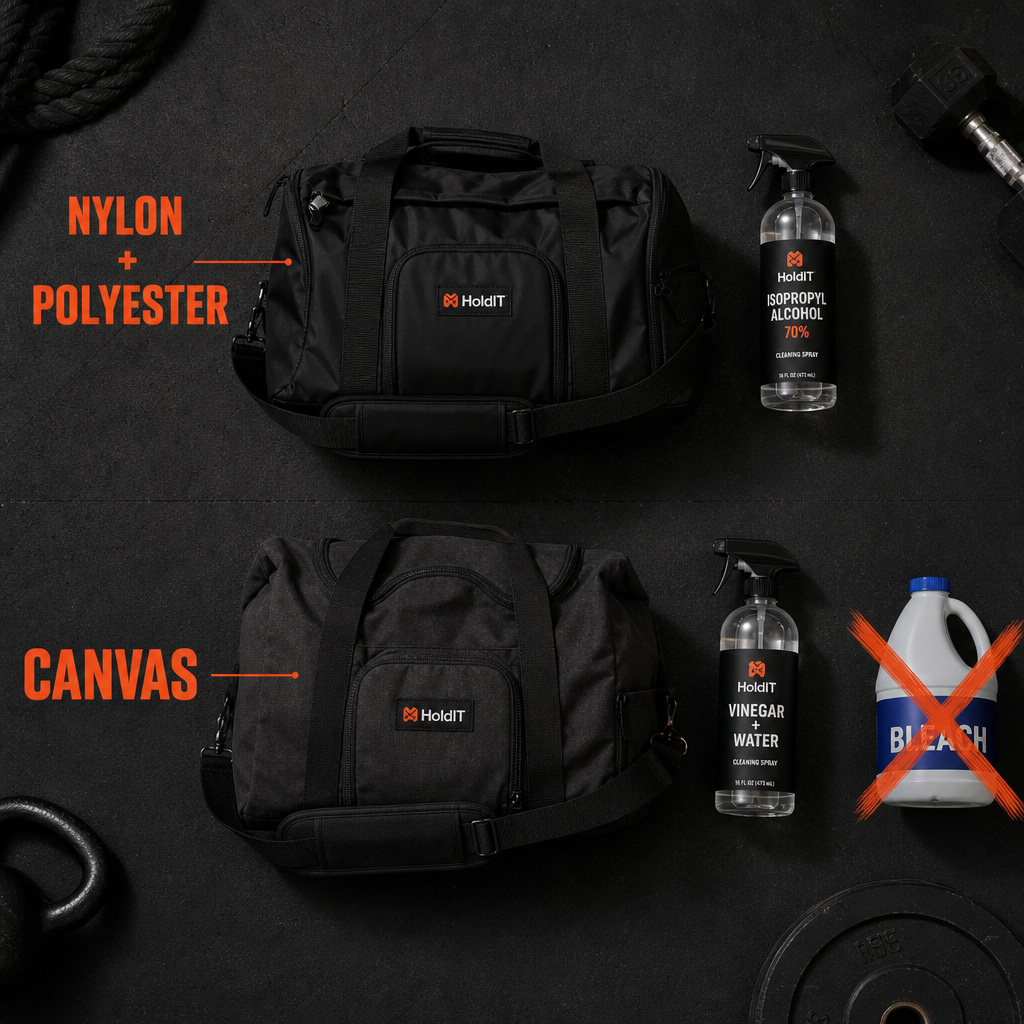
Cleaning and disinfecting are not the same thing. Cleaning removes visible dirt and organic matter. Disinfecting kills pathogens including bacteria and fungi that cause athlete's foot and skin infections.
For most nylon and polyester bags, a spray solution of 70% isopropyl alcohol is effective and dries quickly. Spray onto interior surfaces, leave for one to two minutes, then allow to air dry. Do not use undiluted bleach on any gym bag material. It degrades fabric fibres, strips colour, and leaves a chemical residue.
For canvas and natural fibre bags, a white vinegar and water solution (1:1 ratio) is a gentler option that still carries meaningful antimicrobial properties. Multiple studies have confirmed white vinegar's effectiveness against common gym-relevant pathogens including Staphylococcus aureus and E. coli.
For leather, avoid water-based disinfectants where possible. Use a leather-safe antibacterial wipe or a lightly dampened cloth with a tiny amount of isopropyl alcohol on seams and high-contact areas. Follow immediately with conditioner.
For the exterior base of any bag, which is the area that contacts the floor most often, consider a heavier-duty disinfectant wipe after every session. This is a one-minute habit that dramatically reduces the bacterial load your bag carries into your home.
Cleaning Magnetic and Structured Bags Safely
If you use a bag with magnetic closures or attachment points, the cleaning process needs one additional consideration: protect the magnets from prolonged water exposure. Strong magnets in bag hardware are typically sealed, but submerging a magnetic bag in water for extended periods can gradually affect magnet strength and the integrity of the mounting hardware.
For magnetic gym bags or accessories like the HoldIt hook, wipe down with a damp cloth and mild detergent. Do not submerge. Dry immediately and thoroughly. The magnet rated to hold up to 4kg on the HoldIt hook maintains that rating when the hardware is kept clean and dry. Residue build-up on the contact surfaces, which is something that happens with chalk-heavy gym environments, can reduce effective holding strength, so wiping the contact face after each session is a one-second habit worth building.
For structured bags with rigid internal frames, hand-cleaning is the only appropriate method. Clean around the structure rather than trying to compress or fold the bag for machine washing. Forcing a structured bag into a machine drum risks permanent warping of the internal frame.
Drying and Preventing Mould in Humid Australian Climates
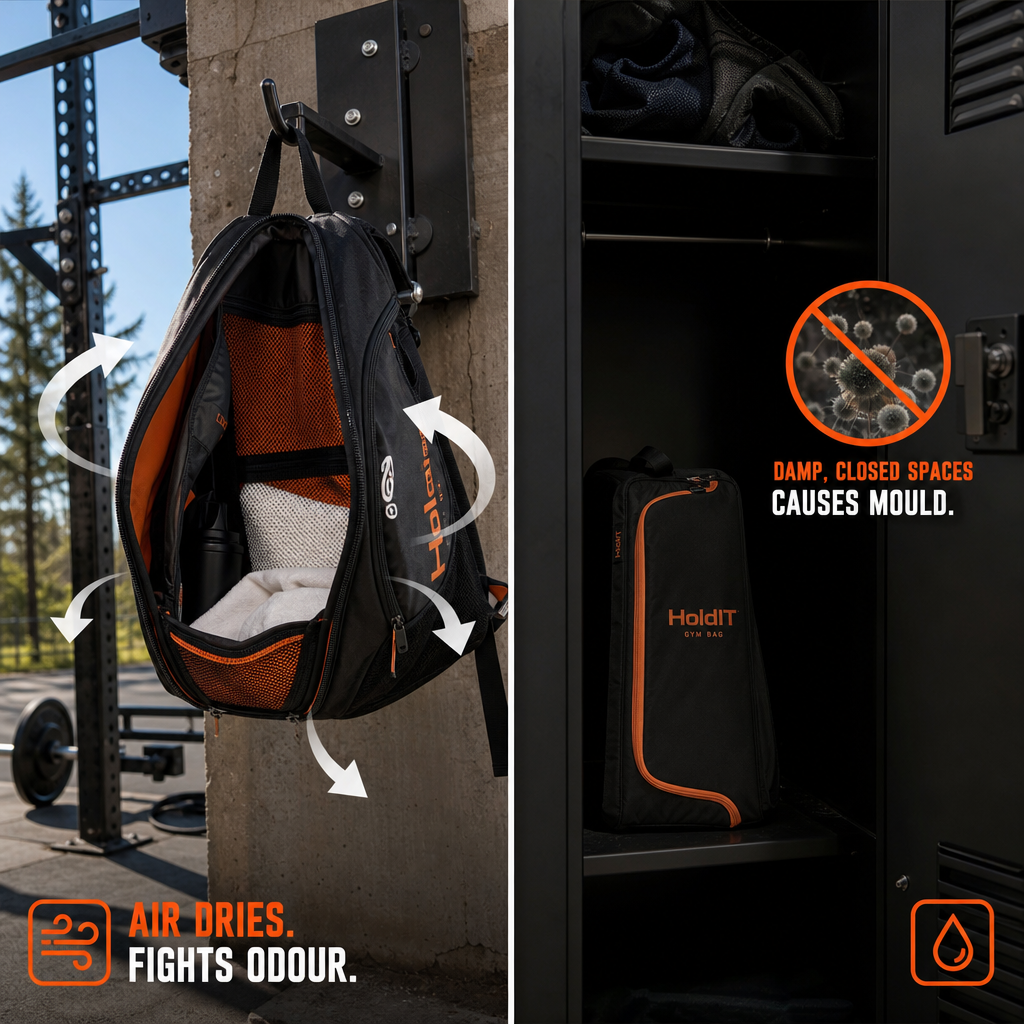
This section matters more for Australians than for most other markets. Brisbane sits at average relative humidity of around 60-70% year-round. Darwin exceeds 80% during the wet season. Coastal NSW and Queensland present similar challenges. In these conditions, a gym bag that is not fully dried before storage will develop mould within 48 hours.
Here is the drying protocol that actually works:
Air drying: Hang the bag open in a well-ventilated area. Do not close zips, buckles, or drawstrings until the bag is completely dry, including the interior lining. Position it near a fan or an open window with air movement.
Sun drying: Direct sunlight is a natural antibacterial agent and works extremely well on Australian summer days. Hang the bag in direct sun for two to four hours. The UV exposure kills residual bacteria and dries the fabric thoroughly. Note that prolonged UV exposure can fade coloured fabrics over time, so limit sun drying to what is needed rather than leaving the bag out all day.
What to avoid: Do not use a tumble dryer on gym bags unless the care label explicitly permits it. The heat damages synthetic coatings, melts adhesives in structured bases, and can warp internal frames. Do not store a damp bag in a closed locker, gym bag hook, or wardrobe. That is how black mould takes hold.
If mould has already developed: Brush off any visible mould spores outdoors (never indoors, to avoid spreading spores). Apply a solution of white vinegar and water, let it sit for 10 minutes, then scrub with a soft brush. For persistent mould, a diluted tea tree oil solution (10 drops per 250ml of water) applied to affected areas and left for 15 minutes before washing has good evidence behind it. Follow with a full hand-clean and thorough drying.
I had a customer, a lifter who trained five mornings a week at a gym near the Brisbane CBD, come to me with a bag that smelled terrible after just three weeks. The issue was not sweat load. It was that he was throwing the bag in his car boot after training in summer heat, zipped closed with a damp towel inside. His car boot was essentially a sealed humid environment at 35-40 degrees. Within days, the interior lining had started growing mould. The fix was simple: open the bag, remove the towel, and let it breathe in the carpark for even five minutes before zipping. Problem sorted within a week.
Cleaning Compartments, Straps, and Zips
The main body of the bag gets the most attention, but compartments, straps, and zips are where bacteria and grime accumulate most persistently.
Compartments and pockets: Use an old toothbrush dipped in soapy water to scrub seam lines and corners inside each pocket. These areas trap protein powder, chalk, and biological residue that a cloth cannot reach. For phone pockets lined with microfibre or suede, use a dry brush only and avoid getting these linings wet.
Straps: Straps are in constant contact with your skin and clothing. They absorb sweat directly and rarely get cleaned. Remove detachable straps and soak them separately in warm soapy water for 15 minutes. For fixed straps, scrub with a soapy brush and rinse with a damp cloth. Pay particular attention to the strap attachment points where grime accumulates in the webbing.
Zips: Clogged or stiff zips are almost always caused by residue build-up in the zip teeth. Clean zip teeth with a small brush and soapy water. Once dry, run a wax-based zip lubricant or a dry lubricant like beeswax along the teeth. This keeps zips operating smoothly and dramatically extends their service life. Do not use WD-40 on fabric zips. It attracts dirt and stains fabric.
Hardware (buckles, D-rings, clips): Wipe metal hardware with a damp cloth and dry immediately to prevent rust. On bags used near pools or in coastal environments, salt air and chlorine residue can accelerate corrosion. A light wipe with a dry cloth after each session keeps hardware looking and functioning like new.
Gym Bag Maintenance Schedule
The key to a clean bag is regularity, not intensity. Here is a simple schedule that works for anyone training three or more times a week.
After every session:
- Remove damp items (towels, sweaty clothing) immediately
- Leave the bag unzipped to air out for at least 30 minutes
- Wipe the exterior base with a disinfectant wipe if the bag sat on the floor
Weekly:
- Empty all compartments fully
- Shake out debris
- Wipe down interior surfaces with a lightly dampened cloth
- Check zips and hardware for debris build-up
Every two weeks (or after 6-8 sessions):
- Full hand-clean or machine wash (material permitting)
- Disinfect interior with isopropyl alcohol spray or vinegar solution
- Clean straps, zips, and all compartments
- Dry completely before next use
Monthly:
- Deep clean including all pockets and lining
- Condition leather elements if applicable
- Lubricate zips
- Inspect seams and hardware for wear
This schedule does not require much time. The full fortnightly clean takes 20-30 minutes. The after-session habits take two minutes. The payoff is a bag that does not smell, does not harbour pathogens, and lasts significantly longer.
The Equipment That Reduces How Often You Need to Clean
There is a practical angle that most gym bag cleaning guides miss. The single biggest driver of how fast your bag gets filthy is floor contact. Every time the bag hits the gym floor, it picks up whatever is on that surface, and it picks up a lot.
I have seen this pattern consistently: people who keep their bag elevated throughout their session, whether on a hook, a shelf, or a fixed attachment point, end up cleaning their bags far less frequently. The exterior base stays clean. The bag does not collect floor chalk and debris. The bacterial load transferred from floor surfaces to bag fabric is essentially zero.
The HoldIt magnetic bag hook was built specifically for this. It snaps onto any vertical metal surface at the gym, including rack uprights, cable towers, and dumbbell rack frames, and holds up to 4kg. Your bag stays off the floor and within arm's reach between sets, which means the bench stays clear, the floor stays clear, and your gear is exactly where you left it every time you reach for it.
With 4.8 out of 5 stars across 895-plus verified reviews and a community of over 10,000 lifters using it, the feedback is consistent: it earns a permanent spot in your kit after the first session. And if you are not sold on it after using it, we have got a guarantee that covers you. No worries.
If you want to browse the full range of training accessories alongside the hook, the HoldIt shop and grips range are worth a look. Everything is dispatched from Sydney within 48 hours.
References
-
American Society for Microbiology, research on gym equipment bacterial contamination, Peer-reviewed findings on bacterial colony counts on gym surfaces and sports equipment, including bag fabrics and locker room environments. Used to contextualise claims around bacterial load in gym bags.
-
Choice Australia, guide to fabric care and washing labels, Consumer guidance published by Choice covering Australian washing label standards, detergent selection, and material-specific care instructions. Relevant to machine washing guidelines by material type.
-
Australian Bureau of Meteorology (BOM), climate data for Australian cities, Official humidity and temperature data for Brisbane, Darwin, Sydney, and coastal Queensland. Used to contextualise mould risk and drying time guidance for Australian conditions.
-
Journal of Applied Microbiology, antimicrobial properties of acetic acid (white vinegar), Peer-reviewed research confirming the antimicrobial efficacy of white vinegar solutions against Staphylococcus aureus and E. coli. Used to support vinegar-based disinfecting recommendations.
-
Canstar Blue, Australian consumer reviews on gym accessories and sports bags (2026), Consumer sentiment and product review data from Australian audiences on gym bag usage patterns and hygiene habits.
-
Leather Conservation Centre, guidance on leather care and cleaning, Specialist resource on correct leather cleaning and conditioning methods, used to inform the leather gym bag care recommendations.
Want help finding the right training setup? Head to the HoldIt training room for more practical guides, or get in touch and we will sort you out.
Get exclusive training tips & early access
Join 5,000+ athletes who train smarter.
Frequently Asked Questions
Can you put a gym bag in the washing machine?
Yes, but it depends on the material. Nylon and polyester gym bags can generally be machine washed on a gentle, cold cycle using mild detergent. Canvas can be machine washed but hand washing is preferable. Leather bags, structured bags with internal frames, and bags with rigid bases should never go in the machine. Always check the care label first.
How often should I clean my gym bag?
If you train three or more times per week, a full clean every two weeks is the minimum. After each session, remove damp items and let the bag air out. A weekly wipe-down of the interior keeps bacteria and odour in check between full cleans. In humid Australian climates like Brisbane or Darwin, cleaning every week is advisable to prevent mould.
How do I disinfect a gym bag without damaging it?
For nylon and polyester, a 70% isopropyl alcohol spray applied to interior surfaces and left for one to two minutes before air drying is effective and safe. A 1:1 white vinegar and water solution works well for canvas and natural fibres. Avoid undiluted bleach on any material. For leather, use a leather-safe antibacterial wipe and follow with conditioner.
How do I get rid of mould in my gym bag?
Brush visible mould off outdoors to avoid spreading spores. Apply a white vinegar and water solution (1:1) to the affected area, leave for 10 minutes, then scrub with a soft brush. A diluted tea tree oil solution (10 drops per 250ml water) is effective for stubborn mould. Follow with a full hand-clean and ensure the bag is completely dry with zips open before storing.
How do I clean a leather gym bag?
Do not use water-based cleaning methods or machine washing on leather. Wipe the exterior with a damp microfibre cloth and a small amount of saddle soap or dedicated leather cleaner. Follow with a leather conditioner applied lightly to restore moisture and prevent cracking. Clean monthly, or more often if the bag is used heavily.
What causes the smell in a gym bag and how do I fix it?
Gym bag odour is caused by bacteria feeding on sweat, skin cells, and organic residue. Remove damp towels, used clothing, and food containers after every session, and clean the bag regularly. White vinegar neutralises odour-causing bacteria effectively. Baking soda sprinkled inside a dry bag and left overnight absorbs residual odour between washes.
Can I put a gym bag in the dryer?
Generally, no. Tumble dryers apply heat that can damage synthetic coatings, melt adhesives in structured bases, shrink canvas, and warp internal frames. Air drying is the correct method for almost all gym bags. Hang the bag open in a well-ventilated area or in direct sunlight for two to four hours. Do not close the bag until every surface is completely dry.
How do I clean the zips on my gym bag?
Clean zip teeth with a small brush dipped in soapy water, working along the full length of the zip. Rinse with a damp cloth and dry completely. Once dry, apply a wax-based zip lubricant or run beeswax along the teeth to keep the mechanism smooth and extend zip life. Do not use WD-40, which attracts dirt and stains fabric.
Related Articles
How to Wash Gym Clothes in Australia: A Complete Guide to Keeping Activewear Fresh and Long-Lasting
The Best Gym Bag for Functional Fitness and CrossFit in Australia
The Best Gifts for Personal Trainers in Australia: Practical and Unique Ideas
Your gear deserves better
Keep it clean, organised, and always within reach. The HoldIt bag system is built for athletes who take training seriously.