Australian Health and Fitness Trends: 2026 Statistics Report
Key Statistics Summary
- According to the Australian Bureau of Statistics (https://www.abs.gov.au/statistics/health/health-conditions-and-risks/national-health-survey/latest-release), 65.8% of Australian adults were overweight or obese in 2022, including 31.7% who were living with obesity.
- According to the Australian Institute of Health and Welfare (https://www.aihw.gov.au/reports/physical-activity/physical-activity), 37% of Australians aged 18-64 did not meet the relevant physical activity guideline in 2022.
- According to the Australian Sports Commission's AusPlay results (https://www.clearinghouseforsport.gov.au/research/ausplay/results), approximately 94% of Australian adults participated in sport or physical activity at least once during the 2022-23 reporting period.
- According to AusPlay, approximately 64% of Australian adults participated at least three times a week during the 2022-23 reporting period.
- According to the ABS National Study of Mental Health and Wellbeing (https://www.abs.gov.au/statistics/health/mental-health/national-study-mental-health-and-wellbeing/latest-release), 42.9% of Australians aged 16-85 had experienced a mental disorder at some point in their lives.
- According to the American College of Sports Medicine (https://acsm.org/education-resources/trending-topics-resources/fitness-trends/), wearable technology was the highest-ranked worldwide fitness trend for 2024.
- According to a systematic review published in The Lancet Digital Health (https://doi.org/10.1016/S2589-7500(22)00111-X), wearable activity trackers increased physical activity by an average of approximately 1,235 steps per day across the studies reviewed.
- According to the World Health Organization (https://www.who.int/publications/i/item/9789240015128), adults should complete at least 150-300 minutes of moderate aerobic activity, or 75-150 minutes of vigorous activity, each week.
Introduction
Australian health and fitness trends matter to more than gym operators. Participation patterns influence public health planning, sporting organisations, exercise professionals, equipment suppliers, app developers, employers and local councils. They also show how Australians are combining structured exercise, incidental movement, home training, outdoor activity and technology.
This 2026 report aggregates the most recent reliable evidence available at the time of preparation. Because national health and participation surveys are not published in real time, several of the strongest Australian datasets relate to 2022 and 2022-23. Their original reference years have been retained rather than relabelled as 2026 findings. The report distinguishes measured participation from trend rankings, market estimates and clinical recommendations so readers can compare like with like.
Participation and Exercise Frequency
Participation can be measured in several ways. A person who reports one walk during a year meets an annual participation measure, but that does not mean they satisfy health guidelines. Weekly frequency, exercise intensity and muscle-strengthening activity provide a more complete view.
- According to the Australian Sports Commission's AusPlay results (https://www.clearinghouseforsport.gov.au/research/ausplay/results), approximately 94% of Australian adults participated in sport or physical activity at least once during the 2022-23 reporting period.
- According to AusPlay, approximately 86% of adults participated at least once a week during the same reporting period.
- According to AusPlay, approximately 64% of adults participated at least three times a week during the same reporting period.
- According to the Australian Institute of Health and Welfare (https://www.aihw.gov.au/reports/physical-activity/physical-activity), 37% of people aged 18-64 did not meet the relevant physical activity guideline in 2022.
- According to the AIHW, 57% of Australians aged 65 and over did not meet the physical activity guideline in 2022.
- According to the AIHW, 83% of Australians aged 15-17 did not meet the guideline applying to their age group in 2022.
| Participation measure | Australian result | Reference period | Source |
|---|---|---|---|
| Adults participating at least once during the year | Approximately 94% | 2022-23 | Australian Sports Commission, AusPlay (https://www.clearinghouseforsport.gov.au/research/ausplay/results) |
| Adults participating at least once a week | Approximately 86% | 2022-23 | Australian Sports Commission, AusPlay (https://www.clearinghouseforsport.gov.au/research/ausplay/results) |
| Adults participating at least three times a week | Approximately 64% | 2022-23 | Australian Sports Commission, AusPlay (https://www.clearinghouseforsport.gov.au/research/ausplay/results) |
| People aged 18-64 not meeting the relevant guideline | 37% | 2022 | Australian Institute of Health and Welfare (https://www.aihw.gov.au/reports/physical-activity/physical-activity) |
| People aged 65 and over not meeting the relevant guideline | 57% | 2022 | Australian Institute of Health and Welfare (https://www.aihw.gov.au/reports/physical-activity/physical-activity) |
The apparent gap between broad participation and guideline compliance is not contradictory. AusPlay captures involvement in sport and physical activity, while health guidelines require a particular combination of duration, frequency and intensity. An Australian can therefore be classified as a participant but remain insufficiently active from a public health perspective.
Frequency also does not reveal the type of activity being undertaken. Walking, gym training, swimming, running, cycling, organised sport and active recreation place different demands on facilities and equipment. Practitioners should avoid using annual participation as a direct substitute for gym participation Australia data.
Applied Australian case study: a suburban commercial gym
Consider a hypothetical commercial gym in suburban Australia. AusPlay indicates that frequent physical activity is common, but the AIHW data shows that a substantial part of the working-age population still misses the guideline. A sensible programming response would be to provide both structured sessions for established exercisers and lower-barrier introductory options for less active adults.
This is an application of national evidence, not a reported outcome from an individual gym. Local demand would still need to be checked against member attendance, suburb demographics, class bookings and retention records.
Health, Weight and Wellbeing Indicators
Fitness activity sits inside a broader health picture. Weight status is not a direct measure of fitness, and mental health cannot be reduced to exercise behaviour. These indicators nevertheless help explain why sustainable movement, strength and wellbeing programmes remain prominent.
- According to the ABS National Health Survey (https://www.abs.gov.au/statistics/health/health-conditions-and-risks/national-health-survey/latest-release), 65.8% of Australian adults were overweight or obese in 2022.
- According to the same ABS survey, 31.7% of Australian adults were living with obesity in 2022.
- According to the ABS National Study of Mental Health and Wellbeing (https://www.abs.gov.au/statistics/health/mental-health/national-study-mental-health-and-wellbeing/latest-release), 42.9% of Australians aged 16-85 had experienced a mental disorder during their lifetime.
- According to the same ABS study, 21.4% of Australians aged 16-85 experienced a mental disorder during the previous 12 months.
- According to the AIHW's chronic conditions reporting (https://www.aihw.gov.au/reports/australias-health/chronic-conditions), 61% of Australians were living with at least one of the selected chronic conditions in 2022.
- According to the AIHW, 38% of Australians were living with two or more selected chronic conditions in 2022.
| Health indicator | Australian result | Population and period | Source |
|---|---|---|---|
| Overweight or obese | 65.8% | Adults, 2022 | ABS National Health Survey (https://www.abs.gov.au/statistics/health/health-conditions-and-risks/national-health-survey/latest-release) |
| Obese | 31.7% | Adults, 2022 | ABS National Health Survey (https://www.abs.gov.au/statistics/health/health-conditions-and-risks/national-health-survey/latest-release) |
| Lifetime mental disorder | 42.9% | People aged 16-85, 2020-22 | ABS National Study of Mental Health and Wellbeing (https://www.abs.gov.au/statistics/health/mental-health/national-study-mental-health-and-wellbeing/latest-release) |
| Mental disorder during the previous 12 months | 21.4% | People aged 16-85, 2020-22 | ABS National Study of Mental Health and Wellbeing (https://www.abs.gov.au/statistics/health/mental-health/national-study-mental-health-and-wellbeing/latest-release) |
| At least one selected chronic condition | 61% | Australians, 2022 | AIHW chronic conditions reporting (https://www.aihw.gov.au/reports/australias-health/chronic-conditions) |
| Two or more selected chronic conditions | 38% | Australians, 2022 | AIHW chronic conditions reporting (https://www.aihw.gov.au/reports/australias-health/chronic-conditions) |
These figures should not be interpreted as proof that one exercise format will prevent or treat every condition. Exercise professionals need to work within their qualifications, particularly when supporting people with injury, disability, cardiovascular risk or complex chronic conditions.
The health data does support a shift away from treating fitness as a short-term appearance project. Strength, aerobic capacity, mobility, balance, social connection and adherence are all relevant to long-term wellbeing. Programmes that are easy to repeat may have more practical value than demanding plans that participants quickly abandon.
Workout Preferences and Programming Trends
The American College of Sports Medicine's worldwide survey is an expert trend ranking, not a consumer participation survey. It identifies issues that fitness professionals expect to influence programming and services. It should therefore be read alongside Australian participation data rather than used as a substitute for it.
- According to the American College of Sports Medicine's worldwide fitness trends report (https://acsm.org/education-resources/trending-topics-resources/fitness-trends/), wearable technology ranked first for 2024.
- According to ACSM, workplace health promotion ranked second for 2024.
- According to ACSM, fitness programmes for older adults ranked third for 2024.
- According to ACSM, exercise for weight loss ranked fourth for 2024.
- According to ACSM, reimbursement for qualified exercise professionals ranked fifth for 2024.
- According to ACSM, mobile exercise apps ranked seventh for 2024.
| Worldwide fitness trend | 2024 rank | Data type | Source |
|---|---|---|---|
| Wearable technology | 1 | Professional trend ranking | American College of Sports Medicine (https://acsm.org/education-resources/trending-topics-resources/fitness-trends/) |
| Workplace health promotion | 2 | Professional trend ranking | American College of Sports Medicine (https://acsm.org/education-resources/trending-topics-resources/fitness-trends/) |
| Fitness programmes for older adults | 3 | Professional trend ranking | American College of Sports Medicine (https://acsm.org/education-resources/trending-topics-resources/fitness-trends/) |
| Exercise for weight loss | 4 | Professional trend ranking | American College of Sports Medicine (https://acsm.org/education-resources/trending-topics-resources/fitness-trends/) |
| Reimbursement for qualified exercise professionals | 5 | Professional trend ranking | American College of Sports Medicine (https://acsm.org/education-resources/trending-topics-resources/fitness-trends/) |
| Mobile exercise apps | 7 | Professional trend ranking | American College of Sports Medicine (https://acsm.org/education-resources/trending-topics-resources/fitness-trends/) |
Several themes connect these rankings. Fitness is increasingly monitored through devices, delivered beyond conventional gyms and adapted for specific life stages. The presence of programmes for older adults also aligns with Australia's ageing population and the AIHW finding that inactivity is more prevalent among older Australians.
The ranking for workplace health promotion indicates that exercise provision is not limited to membership-based facilities. Employers may support movement through active breaks, facilities, education or subsidised programmes. A trend ranking does not establish which intervention is effective, however, so participation and health outcomes must still be measured separately.
Exercise for weight loss remains prominent, but the ABS data shows why weight should be handled carefully. Body weight is influenced by many factors, and changes in strength, mobility, blood pressure, fitness and adherence may be meaningful even when scale weight changes slowly.
Digital Fitness, Apps and Wearable Technology
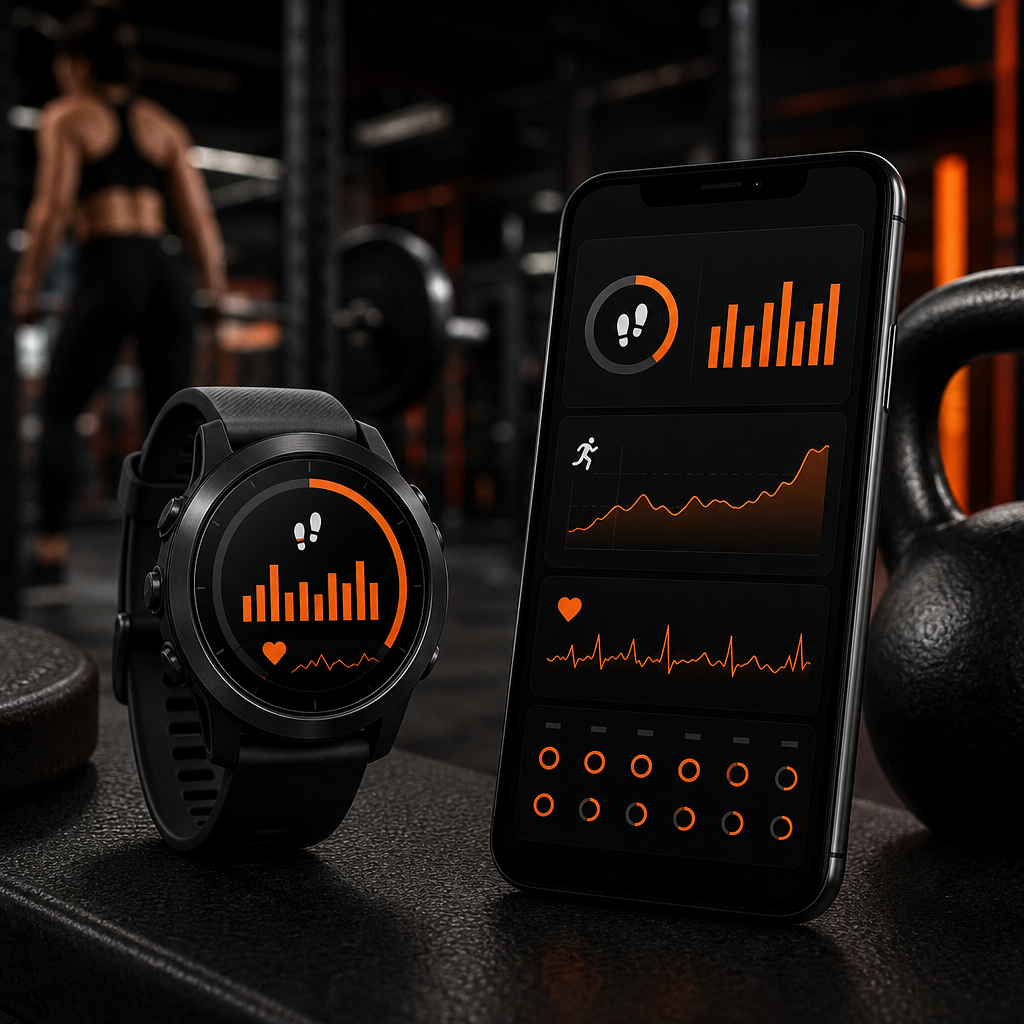
Wearables and mobile apps can record movement, heart rate, workout duration, routes and recovery indicators. Their growing visibility does not mean every measurement is clinically accurate, but research suggests that feedback and goal-setting can produce a modest increase in activity.
- According to Ferguson and colleagues' systematic review in The Lancet Digital Health (https://doi.org/10.1016/S2589-7500(22)00111-X), wearable activity trackers increased physical activity by an average of approximately 1,235 steps per day across the studies reviewed.
- According to the same review, wearables increased moderate-to-vigorous physical activity by approximately 48.5 minutes per week across the studies reviewed.
- According to the American College of Sports Medicine (https://acsm.org/education-resources/trending-topics-resources/fitness-trends/), wearable technology ranked first in its worldwide fitness trends survey for 2024.
- According to ACSM, mobile exercise apps ranked seventh in the same survey.
- According to the Office of the Australian Information Commissioner (https://www.oaic.gov.au/privacy/australian-privacy-principles), organisations covered by the Privacy Act must follow the Australian Privacy Principles when handling personal information.
| Digital fitness measure | Reported result | Evidence source |
|---|---|---|
| Average increase in daily steps associated with wearable trackers | Approximately 1,235 steps per day | Ferguson et al., The Lancet Digital Health (https://doi.org/10.1016/S2589-7500(22)00111-X) |
| Average increase in moderate-to-vigorous activity | Approximately 48.5 minutes per week | Ferguson et al., The Lancet Digital Health (https://doi.org/10.1016/S2589-7500(22)00111-X) |
| Wearable technology position in the worldwide trends survey | Rank 1 | American College of Sports Medicine (https://acsm.org/education-resources/trending-topics-resources/fitness-trends/) |
| Mobile exercise apps position in the worldwide trends survey | Rank 7 | American College of Sports Medicine (https://acsm.org/education-resources/trending-topics-resources/fitness-trends/) |
The systematic review pooled research involving different devices, populations and intervention designs. Its averages should not be read as a guaranteed result for every user. A tracker may prompt activity through reminders and visible goals, but the effect depends on whether the person continues wearing it and acts on the information.
Digital fitness also creates data governance questions. Heart rate, sleep, location and workout records can be sensitive. The Australian Competition and Consumer Commission's Digital Platform Services Inquiry (https://www.accc.gov.au/by-industry/digital-platforms-and-services/digital-platform-services-inquiry-2020-25) documents broader consumer and competition concerns associated with digital platforms. Fitness providers should establish what data is collected, why it is needed, how long it is retained and whether it is disclosed to another organisation.
Applied Australian case study: a regional hybrid programme
Consider a hypothetical exercise provider serving a regional Australian community. Face-to-face attendance may be supplemented with app-based programmes when participants cannot travel. Wearable data could help participants monitor consistency, while in-person sessions could address technique and progression.
The Lancet Digital Health review suggests that trackers can improve average activity, but it does not prove that a particular regional programme will succeed. The provider would need to examine enrolment, ongoing participation, accessibility, privacy and participant feedback. Digital access should widen participation rather than become a new barrier.
Strength Training, Equipment and Training Environments
Public Australian datasets provide much stronger information about participation and health than about ownership of individual equipment categories. Commercial reports from organisations such as IBISWorld Australia (https://www.ibisworld.com/australia/) and Statista (https://www.statista.com/) publish market estimates, but definitions, paywalls and modelled results can make direct comparisons difficult. This report does not reproduce figures that cannot be checked against an accessible methodology.
The evidence still supports several conclusions about strength training and equipment use:
- According to the World Health Organization's physical activity guidelines (https://www.who.int/publications/i/item/9789240015128), adults should undertake muscle-strengthening activity involving major muscle groups on at least two days each week.
- According to the Australian Department of Health and Aged Care (https://www.health.gov.au/topics/physical-activity-and-exercise/physical-activity-and-exercise-guidelines-for-all-australians), Australia's adult guidelines also recommend muscle-strengthening activities on at least two days each week.
- According to a systematic review and meta-analysis published in the British Journal of Sports Medicine (https://bjsm.bmj.com/content/56/13/755), muscle-strengthening activity was associated with a 10-20% lower risk of all-cause mortality and several major non-communicable diseases.
- According to the same review, the largest risk reduction was associated with approximately 30-60 minutes of muscle-strengthening activity per week, although the authors cautioned that the available evidence was limited.
- According to the WHO guidelines, adults aged 65 and over should include multicomponent activity that emphasises functional balance and strength on at least three days each week to improve functional capacity and help prevent falls.
| Guideline or evidence measure | Recommendation or finding | Source |
|---|---|---|
| Moderate-intensity aerobic activity for adults | 150-300 minutes per week | World Health Organization (https://www.who.int/publications/i/item/9789240015128) |
| Vigorous-intensity aerobic activity for adults | 75-150 minutes per week | World Health Organization (https://www.who.int/publications/i/item/9789240015128) |
| Muscle-strengthening frequency for adults | At least 2 days per week | World Health Organization (https://www.who.int/publications/i/item/9789240015128) |
| Multicomponent balance and strength activity for older adults | At least 3 days per week | World Health Organization (https://www.who.int/publications/i/item/9789240015128) |
| Lower risk associated with muscle-strengthening activity | 10-20% | British Journal of Sports Medicine systematic review (https://bjsm.bmj.com/content/56/13/755) |
| Weekly strength activity associated with the largest risk reduction in the review | Approximately 30-60 minutes | British Journal of Sports Medicine systematic review (https://bjsm.bmj.com/content/56/13/755) |
Equipment adoption should not be inferred solely from these recommendations. A person can perform muscle-strengthening activity with free weights, pin-loaded machines, resistance bands, bodyweight movements or household equipment. Likewise, ownership of equipment does not establish regular use.
Facility design affects how equipment is used. Clear circulation routes, accessible storage and uncluttered exercise areas are practical considerations in busy gyms. Personal belongings left around benches or walkways can interrupt movement, while oversized training bags can consume limited floor space. These are operational observations rather than nationally measured trends, and there is not yet a consistent Australian benchmark for training-floor storage.
The more defensible trend is that equipment choices are becoming more task-specific. Operators should evaluate an item by utilisation, accessibility, maintenance requirements, floor area and the type of training it supports. Consumers should focus on equipment that suits their actual programme rather than collecting items without a defined use.
Australian Market Statistics
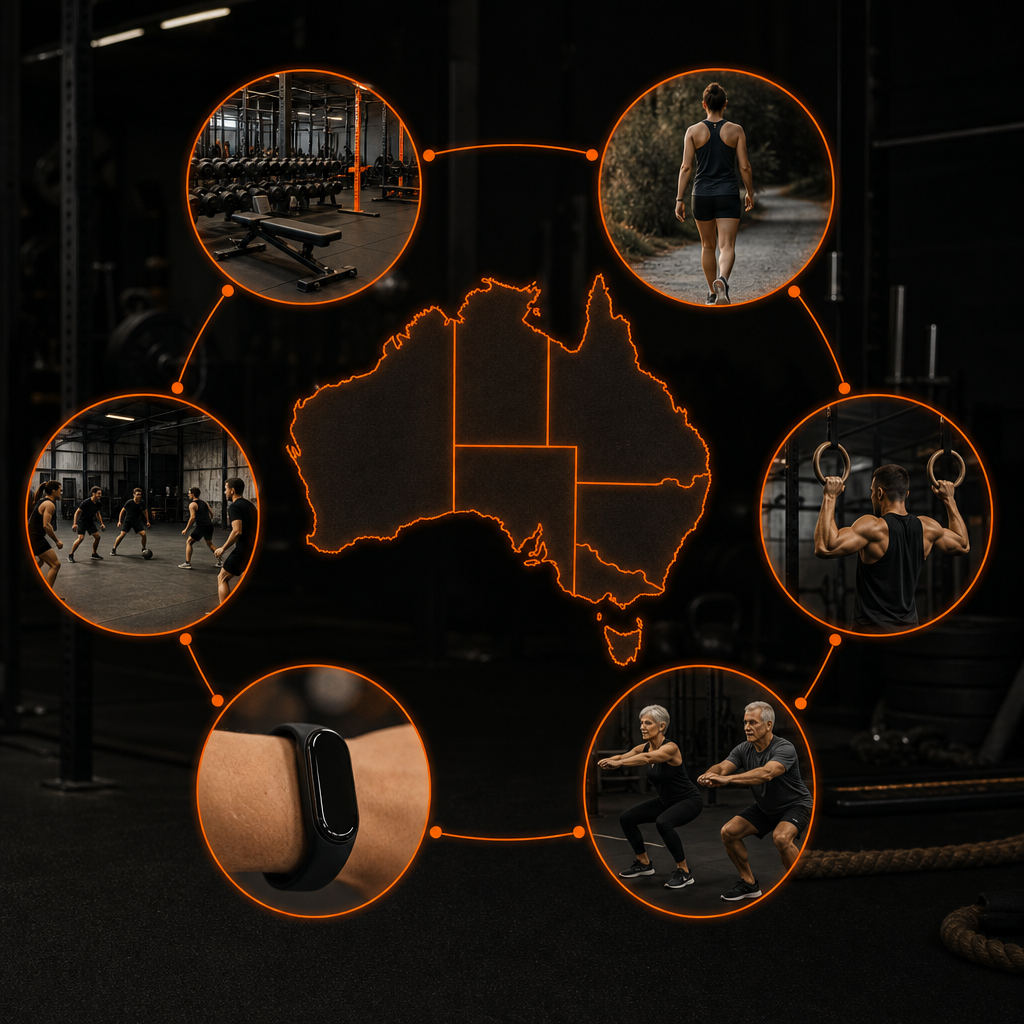
The Australian market combines high broad participation with persistent inactivity among important population groups. That mix creates demand for conventional gyms, community sport, walking infrastructure, home programmes, allied health exercise and digital services.
- According to AusPlay (https://www.clearinghouseforsport.gov.au/research/ausplay/results), approximately 94% of Australian adults participated in sport or physical activity at least once during the 2022-23 reporting period.
- According to AusPlay, approximately 64% of adults participated at least three times a week during that period.
- According to the AIHW (https://www.aihw.gov.au/reports/physical-activity/physical-activity), 37% of Australians aged 18-64 did not meet the relevant physical activity guideline in 2022.
- According to the AIHW, 57% of Australians aged 65 and over did not meet the guideline in 2022.
- According to the ABS (https://www.abs.gov.au/statistics/health/health-conditions-and-risks/national-health-survey/latest-release), 65.8% of Australian adults were overweight or obese in 2022.
- According to the ABS mental health study (https://www.abs.gov.au/statistics/health/mental-health/national-study-mental-health-and-wellbeing/latest-release), 21.4% of Australians aged 16-85 experienced a mental disorder during the previous 12 months.
The figures point to a segmented market rather than one universal Australian fitness consumer. Frequent exercisers may value programme progression, strength equipment and efficient training environments. Less active adults may need low-cost entry points, confidence, accessible facilities and support with habit formation. Older Australians may require balance, strength and function-focused programming. People managing chronic conditions may need input from appropriately qualified health and exercise professionals.
Australian market estimates also require caution. A gym membership count is not the same as the number of active members, and neither is identical to AusPlay's fitness or gym participation category. Some Australians hold more than one membership, pause attendance or train through studios, sporting clubs, community centres and workplace facilities.
IBISWorld Australia (https://www.ibisworld.com/australia/) tracks the Australian gym and fitness centre industry, while Statista (https://www.statista.com/) publishes modelled fitness market datasets. These can be useful for commercial research, but readers should inspect the market definition, reference period, currency basis and treatment of online services before comparing estimates.
Key Takeaways
-
Separate participation from guideline compliance. AusPlay records broad involvement, while AIHW and health guidelines consider frequency, intensity and activity type. A high annual participation rate does not mean Australians are active enough for health benefits.
-
Design for repeatable behaviour. The evidence for wearables suggests that feedback can increase average activity, but devices do not replace adherence. Programmes should make the next session clear and practical.
-
Keep strength training visible. Both Australian and WHO guidelines recommend regular muscle-strengthening activity. It should not be treated as a niche reserved for competitive lifters.
-
Plan for an ageing population. The inactivity rate among older Australians and the prominence of older-adult fitness in the ACSM ranking support more balance, mobility, strength and function-focused options.
-
Treat digital fitness data carefully. Apps and trackers can support monitoring, but providers need transparent privacy, consent and retention practices consistent with Australian requirements.
-
Do not overstate equipment market figures. Publicly accessible Australian evidence about specific equipment ownership is limited. Market estimates should be labelled as modelled commercial data rather than participation counts.
-
Measure local behaviour. National statistics establish context, but operators should use attendance, bookings, repeat participation and member feedback to understand their own facility or programme.
-
Keep training environments functional. Clear benches, accessible storage and equipment placed for its intended task reduce avoidable friction between sets. National datasets do not yet provide a standard benchmark for these operational details, so local observation remains important.
Methodology and Disclaimer
This report prioritises Australian government statistics, recognised public health organisations, peer-reviewed research and an established professional trend survey. Sources were selected for their relevance to participation, health, strength training, digital fitness and the Australian market.
Participation figures from AusPlay are survey estimates and may be revised. ABS and AIHW figures use defined populations and collection periods that are not always directly comparable. ACSM rankings measure professional expectations rather than consumer adoption. Systematic reviews combine studies with different participants, devices and intervention designs.
Commercial market estimates were not presented as definitive statistics where the underlying figure or methodology could not be checked publicly. No estimate was created to fill a missing year, category or table cell. Statistics sourced from publicly available research and industry reports. Verify individual figures before publishing.
Sources
- Australian Bureau of Statistics, National Health Survey: First Results. https://www.abs.gov.au/statistics/health/health-conditions-and-risks/national-health-survey/latest-release
- Australian Bureau of Statistics, National Study of Mental Health and Wellbeing. https://www.abs.gov.au/statistics/health/mental-health/national-study-mental-health-and-wellbeing/latest-release
- Australian Institute of Health and Welfare, Physical Activity. https://www.aihw.gov.au/reports/physical-activity/physical-activity
- Australian Institute of Health and Welfare, Chronic Conditions. https://www.aihw.gov.au/reports/australias-health/chronic-conditions
- Australian Sports Commission, AusPlay Results. https://www.clearinghouseforsport.gov.au/research/ausplay/results
- American College of Sports Medicine, Worldwide Survey of Fitness Trends. https://acsm.org/education-resources/trending-topics-resources/fitness-trends/
- World Health Organization, WHO Guidelines on Physical Activity and Sedentary Behaviour. https://www.who.int/publications/i/item/9789240015128
- Australian Department of Health and Aged Care, Physical Activity and Exercise Guidelines for All Australians. https://www.health.gov.au/topics/physical-activity-and-exercise/physical-activity-and-exercise-guidelines-for-all-australians
- Ferguson et al., Effectiveness of Wearable Activity Trackers to Increase Physical Activity and Improve Health, The Lancet Digital Health. https://doi.org/10.1016/S2589-7500(22)00111-X
- Momma et al., Muscle-strengthening Activities and Risk of Cardiovascular Disease, Cancer, Diabetes and Mortality, British Journal of Sports Medicine. https://bjsm.bmj.com/content/56/13/755
- Office of the Australian Information Commissioner, Australian Privacy Principles. https://www.oaic.gov.au/privacy/australian-privacy-principles
- Australian Competition and Consumer Commission, Digital Platform Services Inquiry. https://www.accc.gov.au/by-industry/digital-platforms-and-services/digital-platform-services-inquiry-2020-25
- IBISWorld Australia, Australian industry research. https://www.ibisworld.com/australia/
- Statista, health and fitness market data. https://www.statista.com/
FAQ_SCHEMA_JSON
Get exclusive training tips & early access
Join 5,000+ athletes who train smarter.
Frequently Asked Questions
What are the leading Australian health and fitness trends in 2026?
The leading evidence-backed trends include frequent participation in walking and fitness activity, strength training, wearable technology, mobile exercise apps, programmes for older adults, workplace wellbeing and hybrid delivery.
How many Australians participate in sport or physical activity?
Australian Sports Commission AusPlay data indicates that approximately 94% of Australian adults participated at least once during the 2022-23 reporting period.
How many Australian adults meet physical activity guidelines?
The Australian Institute of Health and Welfare reported that 37% of Australians aged 18-64 did not meet the relevant physical activity guideline in 2022.
Are wearable fitness trackers effective?
A systematic review in The Lancet Digital Health found that wearable trackers produced modest average increases in daily steps and moderate-to-vigorous physical activity, although individual results varied.
Is strength training becoming more important?
Strength training is increasingly important because Australian and World Health Organization guidelines recommend regular muscle-strengthening activity, including strength and balance work for older adults.
Why does a 2026 report include statistics from earlier years?
National surveys take time to collect, analyse and publish. A 2026 report may therefore use the latest dependable dataset while retaining its original reference year.
Related Articles
Your gear deserves better
Keep it clean, organised, and always within reach. The HoldIt bag system is built for athletes who take training seriously.