What to Wear to the Gym in Australia: A Complete Guide to Gym Clothing and Activewear
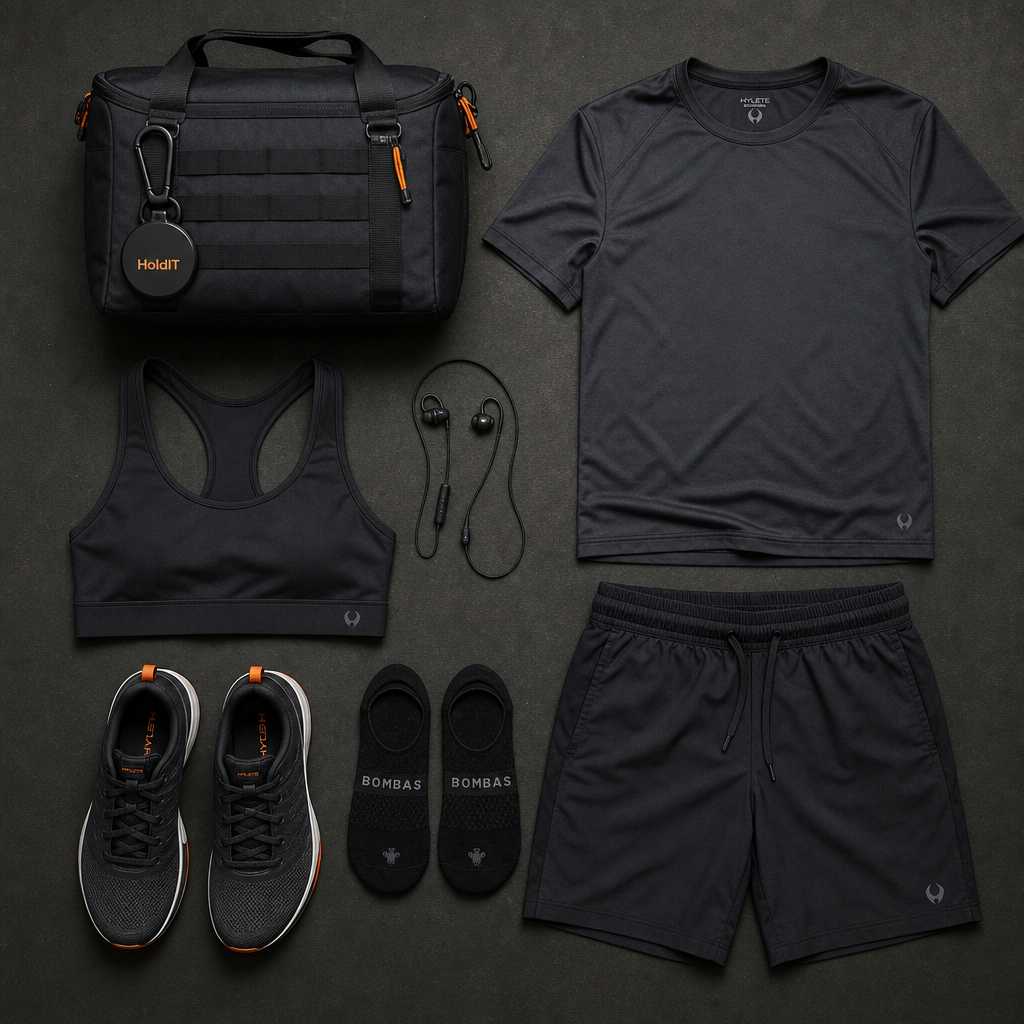
If you've never walked into a gym before, the clothing question can feel weirdly stressful. You don't want to show up in the wrong thing, sweat through a cotton t-shirt in the first ten minutes, or spend half your session adjusting shorts that won't stay in place. That anxiety is completely normal, and the good news is that it's also completely fixable.
For anyone already training regularly, the problem tends to shift. You know what you like, but you're not always sure whether you're getting the most out of your kit. Are you wearing the right fabrics for Australia's climate? Are your shoes actually suited to your training style? Is your gear helping or hindering? These are questions worth answering properly.
This guide covers everything: what to wear to the gym for the first time, what to wear for different workout styles, how Australian seasons affect your choices, dress code etiquette, budget versus premium options, and how to pack it all efficiently. No fluff. Let's get sorted.
Key Takeaways
- Moisture-wicking synthetic fabrics outperform cotton in Australian gyms, particularly in summer
- What you wear should match your workout type: weights, cardio, classes, and swimming all have different requirements
- Most Australian commercial gyms have a dress code, and it's stricter than people expect
- You don't need to spend big to train well, but purpose-built activewear genuinely outperforms repurposed casual clothing
- Seasonal layering matters more in Australia than people realise, especially for early morning sessions in southern states during winter
- How you pack and organise your gym kit affects your training focus as much as the gear itself
Summary Table: Gym Clothing by Item, Fabric, Price and Use
| Clothing Item | Recommended Fabric | Price Range (AUD) | Best For |
|---|---|---|---|
| Training shorts | Polyester/nylon blend | $30-$80 | Cardio, weights |
| Compression tights | Nylon/elastane blend | $40-$120 | Weights, yoga, HIIT |
| Sports bra | Moisture-wicking nylon | $35-$100 | All workouts |
| Training t-shirt | Polyester or bamboo blend | $25-$70 | Weights, cardio |
| Training tank | Recycled polyester | $20-$55 | Cardio, weights |
| Midlayer (zip hoodie) | Fleece/poly blend | $50-$130 | Winter warm-up |
| Training shoes | Depends on activity | $90-$200 | Activity-specific |
| Swim gear | Chlorine-resistant lycra | $40-$150 | Swimming |
| No-show socks | Moisture-wicking cotton/poly | $10-$30 | All workouts |
Why Gym Clothing Matters
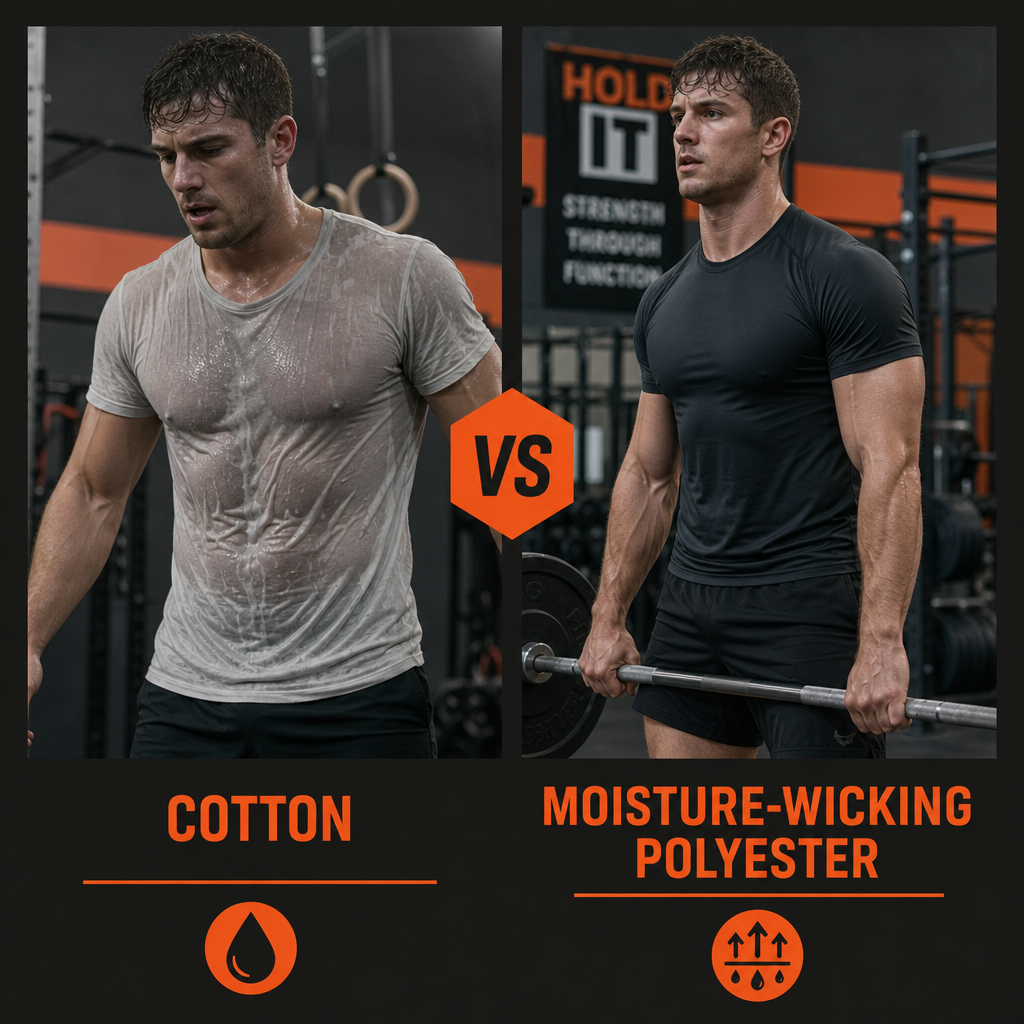
This is not about looking the part. Gym clothing affects how you perform, how you feel, and frankly, how others experience training near you. Those three things deserve a proper look.
Performance
The right clothing reduces friction, quite literally. If your shorts bunch, chafe, or restrict movement, your squat pattern suffers. If your t-shirt is soaking through after a single warm-up set, your grip on the bar is affected and your body temperature regulation is compromised. A 2022 study published in the Journal of Strength and Conditioning Research found that compression garments worn during resistance training were associated with reduced perceived exertion and improved blood lactate clearance in the recovery period. That's not a marginal gain. Over a training week, that adds up.
For Australian gym-goers, the performance argument is sharpened by climate. Training in a non-air-conditioned facility in Brisbane or Darwin in January wearing a heavy cotton hoodie is a genuine performance issue. Heat stress degrades strength output, aerobic capacity, and concentration. The right fabric choice is not vanity. It's applied physiology.
Hygiene
Gym floors, benches, and equipment are high-contact surfaces. Fitness Australia's hygiene guidelines recommend wiping down equipment before and after use, and gym operators are increasingly stringent about this. But your clothing is also part of the hygiene equation. Synthetic moisture-wicking fabrics dry faster and harbour bacteria less readily than cotton when you're moving between pieces of equipment. Wearing clothing that stays relatively dry also reduces the chance of spreading sweat across shared surfaces.
This is also why what you do with your gear between sessions matters. Damp kit left in a bag overnight becomes a hygiene problem quickly. More on packing efficiently in a later section.
Confidence
This one gets dismissed as shallow, but it isn't. Research consistently links physical self-presentation to performance in competitive and recreational exercise settings. If you walk into a gym feeling underdressed or uncomfortable in what you're wearing, you're more likely to rush through your session, skip exercises that require you to move freely, or simply train with less intensity. Feeling sorted before you walk through the door removes one more distraction. And removing distractions is what serious training is about.
Best Fabrics for Australian Gyms
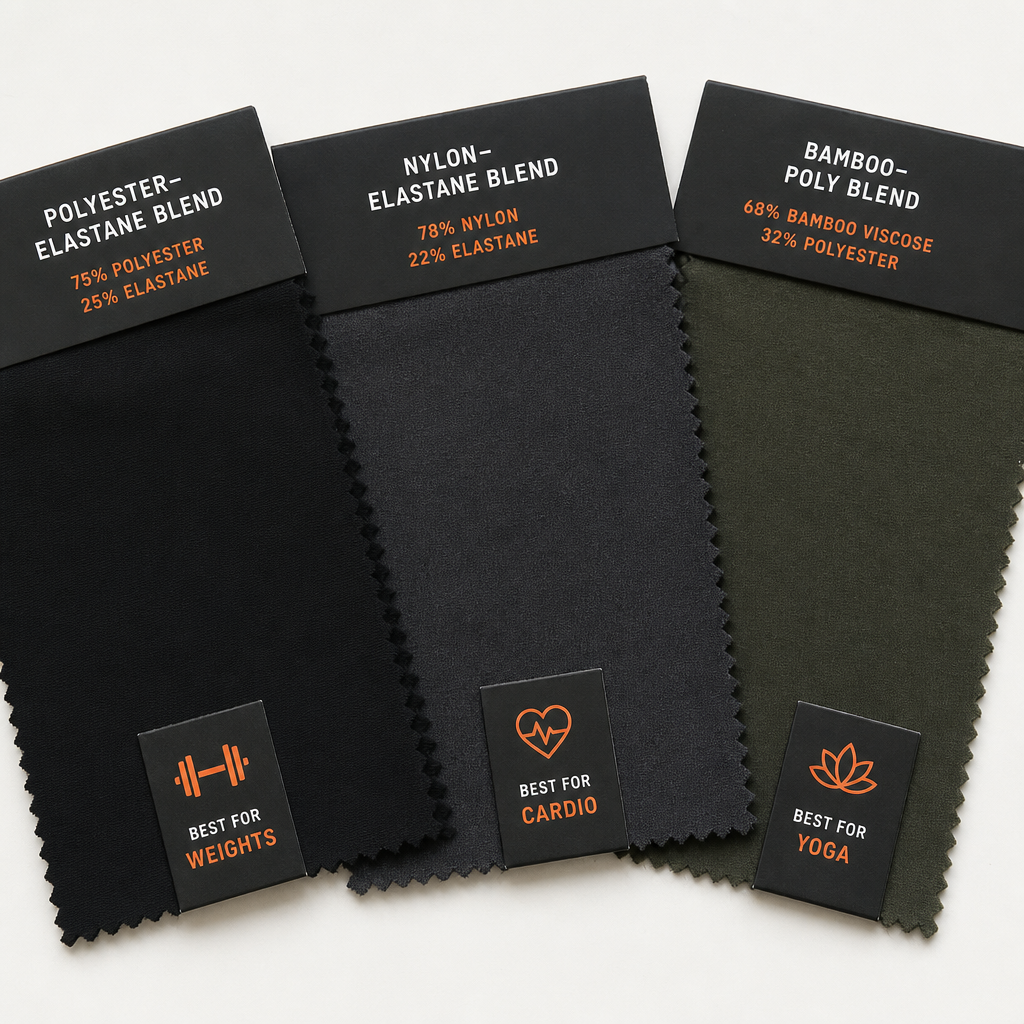
Australia's climate makes fabric choice more consequential than in most other markets. Sydney gyms can be humid even in winter. Melbourne gyms run cold in June and sweltering in February. Brisbane and Perth operate at a heat and humidity level that makes cotton activewear a liability for most of the year.
Moisture-Wicking Synthetics
Polyester and nylon blends with moisture-wicking technology are the default choice for a reason. They pull sweat away from the skin and allow it to evaporate quickly, keeping your core temperature more stable and your clothing lighter throughout a session. Most mid-range and premium activewear brands, including Australian labels like 2XU, Lorna Jane, and Nimble Activewear, build their performance range around these fabrics.
Look for garments labelled with wicking, quick-dry, or Dri-FIT equivalents. The specific technology varies by brand, but the underlying principle is the same: hydrophilic fibres on the skin-facing side, hydrophobic fibres on the outside, creating a one-way moisture transfer.
Elastane Blends
Almost all quality activewear includes a percentage of elastane (also sold under the brand name Lycra or Spandex). This adds the four-way stretch that allows full range of motion in compound movements like squats, deadlifts, and lunges. A typical performance short or tight will be 80-87% nylon or polyester and 13-20% elastane. If a garment doesn't list its elastane content or has very low stretch, it's likely not purpose-built for training.
Bamboo and Natural Blends
Bamboo-derived fabrics have grown in popularity in the Australian activewear market, partly because of their sustainability credentials and partly because of their softness. They perform well in low-to-moderate intensity sessions and yoga-style training, but they lag behind synthetic blends in moisture management at higher intensities. If you're doing heavy compound lifting or high-intensity cardio, a pure bamboo garment is going to feel wet fast. A bamboo-poly blend is a reasonable middle ground.
What to Avoid: Cotton in the Gym
Cotton absorbs moisture and holds it. A cotton t-shirt at the gym will feel heavier with every set, stick to your skin, chafe, and take hours to dry. It's also less resistant to odour over time because the moisture retention creates a better environment for bacterial growth. Cotton has its place in low-intensity movement and cool-down, but for active training in Australian conditions, it's genuinely the wrong tool for the job. This is not a premium-versus-budget argument. A $20 polyester training tee outperforms a $60 cotton tee in any gym setting.
What to Wear for Different Workouts
There is no single outfit that is optimal for every type of training. Understanding what each discipline demands means you can invest in the right pieces rather than trying to make one outfit cover everything.
Weights and Resistance Training
For lifting, the priorities are freedom of movement, grip, and stability. Training shorts or compression tights with a flat waistband that won't dig in during a deadlift are the foundation. A fitted training tee or tank allows you to check form in the mirror without excess fabric obscuring your posture. For lower body days, many serious lifters prefer tights over shorts specifically because the fabric provides a degree of proprioceptive feedback on squat depth.
Footwear matters here more than most people realise. Running shoes are designed with cushioned, elevated heels to absorb impact. That's counterproductive for squatting and deadlifting, where you want a flat, firm base. A dedicated lifting shoe, or at minimum a flat cross-trainer like a Converse Chuck Taylor or similar minimalist shoe, gives you a more stable platform. This is one of the most common mistakes first-time gym-goers make, and it's an easy one to fix.
I used to train in whatever running shoes I had at the time. After switching to flat-soled trainers for squat days, the heel-rise problem disappeared entirely, and my knee tracking improved within a couple of weeks. It's a small change with an outsized return.
Cardio and HIIT
For running, rowing, cycling, and HIIT classes, breathability and fit become the primary concerns. Loose shorts are fine for steady-state cardio but can bunch uncomfortably during high-rep movements or box jumps. A fitted short or compression short with a secure waistband is more practical. For tops, a lightweight moisture-wicking tank is the go-to for most Australian gym environments. In winter, you might start with a long-sleeve layer that you strip off after the warm-up.
Running shoes are appropriate here, unlike for lifting. Choose a shoe designed for your gait pattern and the surface you're working on. If you're exclusively doing treadmill cardio, a neutral trainer is fine for most people. If you're doing lateral movement drills, look for a cross-trainer with lateral support.
Group Fitness Classes
Yoga, Pilates, barre, spin, and bootcamp classes all have slightly different requirements.
For yoga and Pilates: high-waisted tights with a non-slip waistband, a fitted top that won't fall forward in downward dog. No zips or hardware that would press into the mat.
For spin: padded cycling shorts make a meaningful comfort difference for longer sessions. Sweat-wicking tops are essential because indoor cycling generates significant heat.
For bootcamp and functional fitness classes: the same general principles as HIIT apply. Secure fit, moisture-wicking, flat-soled or cross-training shoes.
Swimming and Aquatic Training
Chlorine destroys standard fabric. If you're training in a pool, you need chlorine-resistant swimwear specifically designed for lap swimming. Standard fashion swimwear degrades quickly under pool conditions and offers poor drag characteristics. Australian brands like Speedo (manufactured here for decades), TYR, and Arena all produce chlorine-resistant training swimwear in the $40-$150 range. A swim cap and goggles are not optional for training purposes. Most commercial gym pools in Australia require both.
Gym Dress Code Etiquette in Australia
This is the section that catches people off guard. Most Australian gyms have a formal dress code, and while enforcement varies, the rules are consistent across major chains like Fitness First, Anytime Fitness, F45, Virgin Active, and independent facilities.
Standard requirements across most Australian commercial gyms include:
- Enclosed footwear at all times on the gym floor (thongs and bare feet are prohibited in most facilities, including during weights)
- No singlets with open sides that expose the torso or undergarments
- No jeans or denim of any kind (the rivets scratch equipment)
- No clothing with offensive graphics or language
- Non-marking soles on shoes
- Appropriate coverage (particularly relevant for pool and change room crossover areas)
Some premium and boutique facilities have additional requirements. Certain CrossFit boxes, for example, prefer that members don't wear shoes with aggressive tread patterns on their wooden lifting platforms. High-end yoga studios often have a no-shoes policy inside the studio itself.
The practical upshot: if you're going to a gym for the first time, enclosed lace-up trainers, athletic shorts or tights, and a t-shirt or tank will get you through the door at any facility in Australia without issue.
Seasonal Gym Clothing: Summer vs Winter Training in Australia
Australia's seasonal extremes affect gym clothing choices in ways that people from more temperate climates don't always account for.
Summer Training (November to March)
In Queensland, the Northern Territory, and Western Australia, summer means heat and humidity that persists even inside air-conditioned gyms. The cooling load on commercial gym HVAC systems rarely keeps pace with the body heat generated by a full floor of members. Lightweight, highly breathable fabrics are non-negotiable. Compression tights in summer should be lightweight versions specifically designed for hot-weather performance, not the heavier thermal compression used for winter training or recovery.
Hydration is also more directly relevant to clothing choice than people think. Carrying a water bottle is standard, but having it accessible rather than buried in a bag on the floor is part of your setup. More on that shortly.
For outdoor training sessions, sun protection adds a layer to the clothing decision. Long-sleeve moisture-wicking UPF-rated tops are practical for outdoor HIIT, boot camp classes, or track work in Australian summer.
Winter Training (June to August)
In Melbourne, Canberra, Adelaide, and the highlands of New South Wales and Victoria, winter gym training starts with a layering challenge. If you're training at 6am and it's 4 degrees outside, you need to warm up before you work out, and that means having a layer to strip off once your core temperature rises.
A zip-up midlayer fleece or lightweight training hoodie that you can tie around your waist or pack into your bag between warm-up and working sets is practical. Thermal compression tights for lower body work provide both warmth and the circulatory benefits of compression. In Brisbane and Perth, winter is mild enough that this layering approach is less critical, though early morning sessions in those cities can still dip into single digits.
Budget vs Premium Activewear: What to Know About Australian Brands
The Australian activewear market is mature and competitive. You have access to excellent options at every price point, and the budget-versus-premium debate is more nuanced than brand marketing suggests.
Entry-Level Budget Options ($15-$50 per item)
Kmart and Target both produce surprisingly capable activewear at very accessible price points. Kmart's activewear range, in particular, uses moisture-wicking polyester blends that perform adequately for moderate-intensity training. For someone starting out or training infrequently, this tier is entirely adequate. The trade-offs are durability (budget synthetics pill and degrade faster), fit consistency, and the absence of technical features like strategic mesh panels or anti-odour treatment.
Mid-Range ($50-$120 per item)
This is where you start seeing genuine technical differentiation. Australian brands like Nimble Activewear, P.E Nation, Running Bare, and STAX produce pieces in this range that combine performance fabrics with design quality that holds up over years of regular washing and training. International brands available through Australian retailers, including Under Armour, Nike, and adidas, also sit largely in this tier. For someone training three or more sessions per week, this is the sweet spot.
Premium ($120-$250+ per item)
Lululemon, 2XU's elite compression range, and boutique performance brands occupy this space. The case for premium is strongest in two areas: compression garments, where the calibrated pressure gradient has genuine physiological backing, and training shoes, where the biomechanical fit justification is clear. A $180 pair of lifting shoes will serve you better than a $50 equivalent. A $200 pair of compression tights from 2XU has documented recovery benefits backed by peer-reviewed research. A $200 yoga top does not.
The smart move is to invest at the premium tier where performance engineering is doing measurable work and to use mid-range options everywhere else.
What NOT to Wear to the Gym
Some of these will be obvious. Some won't.
Jeans. The denim rivets scratch benches and equipment, which is why virtually every gym in Australia bans them. They also restrict movement severely and offer no performance properties.
Heavy cotton hoodies. As discussed, cotton saturates. A heavy cotton hoodie in a commercial gym environment becomes a wet, heavy distraction within one working set.
Jewellery that can catch or snag. Rings can compress fingers during gripping movements and cause genuine injury. Long necklaces and dangling earrings are hazards around cables and pull-up bars. A flat band or no jewellery at all is the practical choice.
Fashion trainers or dress shoes. No lateral support, no grip, and most gyms will turn you away at the door.
Excessively baggy clothing near cable machines or barbells. Loose fabric can catch on equipment during movement. This is not a style note, it's a safety one.
Strong fragrance. Not a clothing item, but worth including. In an enclosed gym environment, heavy cologne or perfume is genuinely unpleasant for other members and is specifically prohibited in some facilities. Deodorant is a different matter, obviously.
What to Wear to the Gym for the First Time
If you're walking into a gym for the first time, here is exactly what you need. Nothing more, nothing less.
Top: A moisture-wicking polyester t-shirt or tank. Kmart, Target, or any sporting goods store will have options under $30.
Bottom: Athletic shorts or tights in a moisture-wicking blend. Mid-thigh length shorts with an internal liner are versatile for most activities.
Footwear: Enclosed lace-up cross-trainers. If you own a pair of running shoes, they'll work for your first session while you figure out what you'll be focusing on.
Socks: Moisture-wicking ankle or no-show socks. Cotton socks are fine for a first session but upgrade them once you're training regularly.
Sports bra (if applicable): A medium-support sports bra covers most gym activities for a first session. High-impact support is needed for running and jump-heavy classes.
That's genuinely it. Don't overthink the first session. Get there in clothes you can move freely in and that you don't mind sweating through. The more refined kit decisions happen once you know what kind of training you're committing to.
How to Pack Your Gym Kit Efficiently
This is where most guides stop at "pack a bag and go." That's not good enough for anyone training seriously.
I've been in the situation where I'm mid-session, between sets at the cable machine, and my bag is sitting on the floor three metres away. I've looked over to find my phone about to slide off a bench, my keys nowhere obvious, and my water bottle rolling away from where I left it. That kind of disorganisation is more disruptive than it sounds. Five to ten minutes of lost time per session adds up to 30-plus hours a year of wasted training time if you're hitting the gym five days a week.
The fix is not a bigger bag. Most gym-goers are carrying their phone, keys, wallet, earphones, a water bottle, and maybe some lifting accessories like a belt or straps. That's not a 40L duffle situation. A right-sized gym bag with dedicated pockets for each item means you spend zero time hunting.
But the more important question is where your bag lives during your session. If it's on the floor, it's picking up whatever is on that floor. If it's on a bench, it's taking up training space and it's going to slide off. Neither is a real solution.
The reason the HoldIT magnetic bag hook earns a permanent spot in my kit is exactly this: it snaps onto any vertical metal surface at the gym, a squat rack upright, a cable tower frame, a dumbbell rack, and keeps your bag off the floor and within arm's reach between sets. The magnet is rated to 4kg, which covers everything a serious lifter actually needs to carry. The bench stays clear, your gear stays clean, and your focus stays on training. We've had feedback from over 10,000 community members who use it the same way, and the average review sits at 4.8 out of 5 across 895-plus verified reviews. The concept is simple, but the problem it solves is one that most gym-goers have just accepted as part of the experience. They shouldn't have to.
For a full breakdown of what belongs in a well-packed gym bag, the gym bag essentials guide covers it in detail. If you're also commuting to work from the gym, the gym bag for work guide is worth a read too.
You can browse the full range of HoldIT gear at the shop or head to the training room for more guides like this one.
Packing checklist for a standard session:
- Training clothes (top, bottom, socks, shoes if not worn to the gym)
- Spare underwear and towel for post-session shower
- Toiletry bag (deodorant, travel-size wash, hair ties)
- Water bottle (insulated keeps water cold longer in Australian summer)
- Earphones in a case, not loose
- Phone in an accessible outer pocket
- Keys and wallet together in a dedicated zipped pocket
- Any training accessories (belt, straps, chalk bag, resistance bands) in a base layer pocket
Everything has a home. Nothing ends up on the floor. Session focus stays intact.
References
-
Fitness Australia Industry Guidelines - Fitness Australia is the national register for fitness professionals and facilities in Australia. Their published hygiene and facility standards for commercial gyms cover equipment cleaning protocols, member requirements, and facility dress codes. Relevant to the gym dress code and hygiene sections of this guide.
-
Sports Medicine Australia Position Statements - Sports Medicine Australia publishes evidence-based position statements on topics including compression garments, heat management in sport, and injury prevention. Their compression garment guidelines informed the compression wear section of this article.
-
Journal of Strength and Conditioning Research (NSCA) - The peer-reviewed publication of the National Strength and Conditioning Association publishes research on the physiological effects of training attire, including compression garments and thermal regulation during resistance exercise. Cited in the performance section of this guide.
-
Australian Bureau of Statistics (ABS): Exercise and Physical Activity Data - The ABS conducts regular population surveys on physical activity participation in Australia, including gym attendance rates. These provide context for understanding the scale and demographics of the Australian gym market.
-
2XU Compression Science Resources - 2XU is an Australian performance compression brand that publishes technical documentation on the pressure gradient engineering used in their compression range, drawing on peer-reviewed research into compression and athletic performance and recovery.
-
Choice Australia: Activewear Fabric Testing Reviews - Choice, the independent Australian consumer advocacy organisation, has published independent testing of activewear fabric performance including moisture-wicking, durability, and value-for-money across budget and premium Australian market options.
Get exclusive training tips & early access
Join 5,000+ athletes who train smarter.
Frequently Asked Questions
Do Australian gyms have a strict dress code?
Most Australian commercial gyms do enforce a dress code, though the level of strictness varies by facility. The near-universal rules are enclosed shoes (no thongs or bare feet), no jeans or denim, and no singlets that expose the torso or undergarments. Major chains including Fitness First, Anytime Fitness, and Virgin Active all publish their dress codes on their websites and at the front desk. Independent gyms and boutique studios sometimes add requirements specific to their equipment or training style. When in doubt, call ahead or check the facility's website before your first visit.
Is cotton activewear okay for the gym?
Cotton is not the best choice for active training, particularly in Australian conditions. It absorbs moisture and holds it against your skin, which causes chafing, temperature regulation problems, and bacterial odour build-up over time. Moisture-wicking polyester or nylon blends dry faster, feel lighter during training, and maintain their shape better over repeated washing. Cotton is fine for warm-up layers, stretching, or low-intensity movement, but for any session involving significant sweat output, synthetic fabrics are a meaningfully better choice.
What are the benefits of compression wear?
Compression garments work by applying calibrated pressure to muscle groups, which supports blood circulation, reduces muscle oscillation during impact activities, and can lower the perception of fatigue during and after exercise. Research published by Sports Medicine Australia and peer-reviewed journals supports the use of graduated compression for improved recovery between sessions. Practically, compression tights are popular for lower body resistance training because they provide proprioceptive feedback, helping you feel your depth and position in compound movements.
What shoes should I wear to the gym?
The right shoe depends on your primary activity. For resistance training and lifting, a flat-soled shoe with minimal heel elevation gives you a more stable base for squats and deadlifts. For cardio and running, a cushioned neutral trainer or a shoe matched to your gait pattern is appropriate. For group fitness classes involving lateral movement, a cross-trainer with lateral support is the practical choice. Running shoes are designed for forward propulsion and impact absorption, which is counterproductive for weightlifting. If you train across multiple disciplines, it's worth having two pairs of shoes in your bag and swapping between them.
Can I wear jewellery at the gym?
Minimal jewellery is generally fine, but certain pieces create real risks. Rings can compress fingers during gripping movements and cause injury, particularly during deadlifts, pull-ups, or any heavy barbell work. Long necklaces and dangling earrings are hazards near cable machines and pull-up bars where they can snag. Stud earrings and a flat silicone or thin metal band are generally safe. Smart watches and fitness trackers are standard and widely worn. The practical approach is to remove any jewellery that could catch, snag, or compress before a session.
What should I wear to my first gym session?
Keep it simple. A moisture-wicking t-shirt or tank, athletic shorts or tights in a flexible fabric, and enclosed lace-up trainers will get you through the door and through any first session comfortably. You don't need to invest in a full activewear kit before you've established what kind of training you'll be committing to. Get one session in, see what feels restrictive or uncomfortable, and build from there. The one thing worth getting right from day one is footwear. A pair of enclosed cross-trainers you already own is fine.
How do I prevent my gym clothes from smelling?
Odour in gym clothing is caused by bacteria feeding on sweat residue in fabric fibres. The most effective prevention is washing activewear after every session, turning garments inside out before washing, using a sports-specific detergent or a small amount of white vinegar in the wash, and avoiding fabric softener, which coats synthetic fibres and reduces their moisture-wicking performance. The second most important factor is airing wet kit out immediately after a session rather than leaving it sealed in a gym bag for hours.
How many gym outfits do I actually need?
For someone training three to five sessions per week, three to four complete sets of gym clothing gives you enough rotation to wash and dry between sessions without repeating the same kit twice in a row. That means three to four tops, three to four bottoms, and enough socks and underwear to match. More than that is fine if you prefer variety, but it's not necessary. Right-sizing your kit means you're working with what you actually need rather than carrying excess that adds friction to your routine.
Related Articles
Gym Bag Compartments Explained: How to Choose a Bag That Keeps Everything Separated in Australia
Gym Bag vs Backpack: Which Is Better for the Gym in Australia?
What Size Gym Bag Do You Need? An Australian Guide to Choosing the Right Capacity
Your gear deserves better
Keep it clean, organised, and always within reach. The HoldIt bag system is built for athletes who take training seriously.