The Ultimate Guide to Gym Bag Customisation in Australia
Introduction
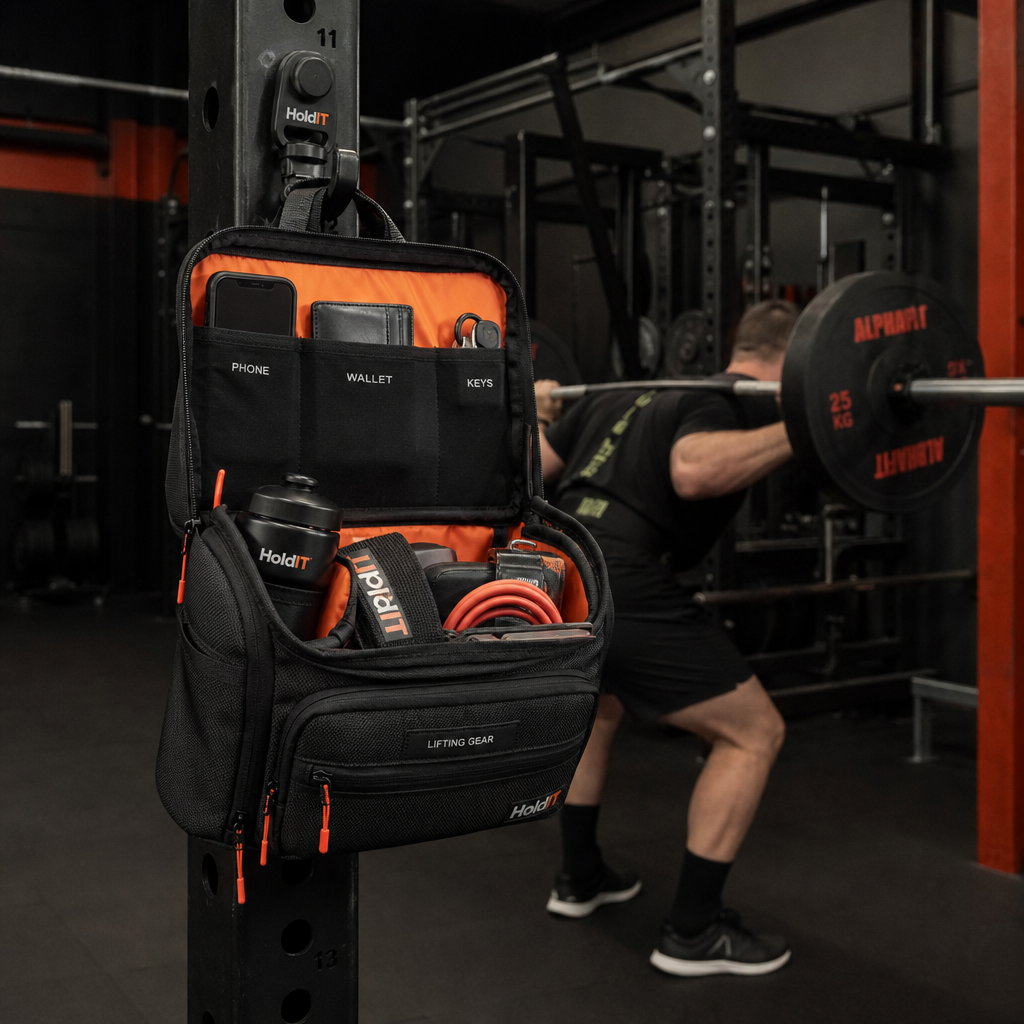
Most takes on custom gym bags start and end with a logo. That is decoration, not a system. If you train 4-5 days a week, the weak point is not whether your name is stitched on the side. It is what happens between sets when your phone, keys, and straps wander. The gym floor is not storage. A bench is for lifting, not for balancing your life on the edge of a pad.
Here is the point. Gym bag customisation in Australia should improve your session flow, protect your gear, and keep everything within arm's reach. I run 3P Digital and work closely with HoldIt. We see the same problem across Aussie gyms. Bags on the floor, clutter on benches, and training time wasted searching. The fix should be simple, immediate, and permanent. In this guide I will show you how to build a right-sized, personalised fitness bag that looks sharp and works as your training partner.
Key Takeaways
- Customisation is more than a logo. Prioritise function that keeps gear off the floor, within arm's reach, and your bench stays clear.
- Right-size the base bag. Most lifters do not need a 40L duffle. Carry what improves your training, nothing else.
- Pick decoration methods that match material and use. Embroidery for longevity, print for colour, patches for modularity.
- Add functional upgrades. A magnetic hook that snaps onto your station solves floor hygiene and access in one move.
- Plan your workflow. Map where phone, keys, straps, bottle, and towel live, then label and lock it in.
- In Australia, factor lead times, MOQs, and GST. Use suppliers who can proof, sample, and hit your deadline.
Summary Table
| Method | Best for | Durability | Typical MOQ | Typical lead time in Australia | Approx cost per unit (AUD, ex GST) | Pros | Cons |
|---|---|---|---|---|---|---|---|
| Embroidery | Logos, names on woven fabrics | High | 10-25 | 7-14 days | $8-$20 | Premium look, long lasting, wash safe | Limited colour gradients, needle holes on ultralight fabrics |
| Screen print | Bold 1-3 colour graphics | High on cotton, medium on synthetics | 25-50 | 7-14 days | $5-$12 | Cost effective at volume, sharp colours | Setup costs, not ideal for detailed gradients |
| Heat transfer vinyl (HTV) | Names, numbers, small runs | Medium | 1-10 | 2-5 days | $6-$15 | Fast, flexible placement, low MOQ | Can crack or lift if overheated or overwashed |
| Direct to film (DTF) | Full colour logos, photos | Medium to high | 1-25 | 3-7 days | $8-$18 | Full colour, good detail, works on many fabrics | Hand feel can be heavier, watch heat care |
| Sublimation | All-over prints on poly | Very high on polyester | 10-50 | 10-21 days | $15-$35 | Vivid, ink becomes part of fabric | Only for light polyester panels |
| Woven or PVC patches | Branding with texture | High | 10-25 | 7-14 days | $6-$15 | Replaceable, modular, strong identity | Needs sewing or quality adhesive |
| Laser engraving on tags | Metal zipper pulls, nameplates | Very high | 10-50 | 7-14 days | $5-$12 | Permanent, clean, precise | Limited to metal components |
| Magnetic bag hook upgrade | Functional access at the rack | Very high within 4 kg | 1 | Dispatch within 48 hours | $25-$45 | Keeps gear off the floor, within arm's reach | Must respect magnet safety near devices |
Article Body
What gym bag customisation in Australia really means
Customisation should solve a training problem. If your current bag sits on a busy floor, collects dust and sweat, and your phone drifts under the bench, a stitched monogram will not fix it. You need a layout and an attachment plan that holds position at your station.
A good custom gym bag in Australia balances three things:
- Function: a system that reduces movement between sets and keeps essentials visible, reachable, and protected.
- Fit for use: materials and construction that handle daily sessions, shared equipment, and local climate without babying them.
- Identity: your name, club, or crew mark, done with methods that survive the wash and the car boot.
Most suppliers will sell you a duffle with a logo. That can look fine, but if it still lives on the floor you have not changed your session. HoldIt takes a different view. Purpose-built beats adapted. A small bag that clips to your rack, stores what you actually use, and frees your bench is worth more than a 40L duffle that becomes a floor sponge.
Choose the right base bag size and layout
A base bag is the foundation. Get this wrong and every add-on is lipstick. I have tested setups for years and coached lifters who went from cluttered to sorted in one session by right-sizing.
Size: carry what helps, not everything you own
Most gym-goers need space for:
- Phone, keys, wallet, earphones
- Bottle
- Towel
- Lifting accessories, for example straps, wraps, belt, microplates
That load fits a compact sling or small backpack, often under 15L. Oversized bags invite junk. Then you spend time rummaging between sets. Your goal is minimal reach and zero hunt time.
Anecdote. A regular who trained 4-5 times a week kept losing track of phone and keys mid session. Their bag sat on the floor or slid off a bench. We added a magnetic hook to keep the bag clipped to the rack upright. Everything stayed within arm's reach. They reported saving 5-10 minutes of wasted movement per session and felt calmer between sets. That is real change.
Materials: pick for Australian conditions
- Recycled polyester or nylon canvas, 400D-600D, balances weight and abrasion resistance.
- Water resistant coatings help with sweaty floors and the walk to the car in summer storms.
- Mesh pockets are fine for inside, but for exterior use near chalk and steel, choose zip pockets with bartacks at stress points.
- Heavy cotton looks nice, but it scuffs on knurling and dries slower in winter.
Compartments that matter
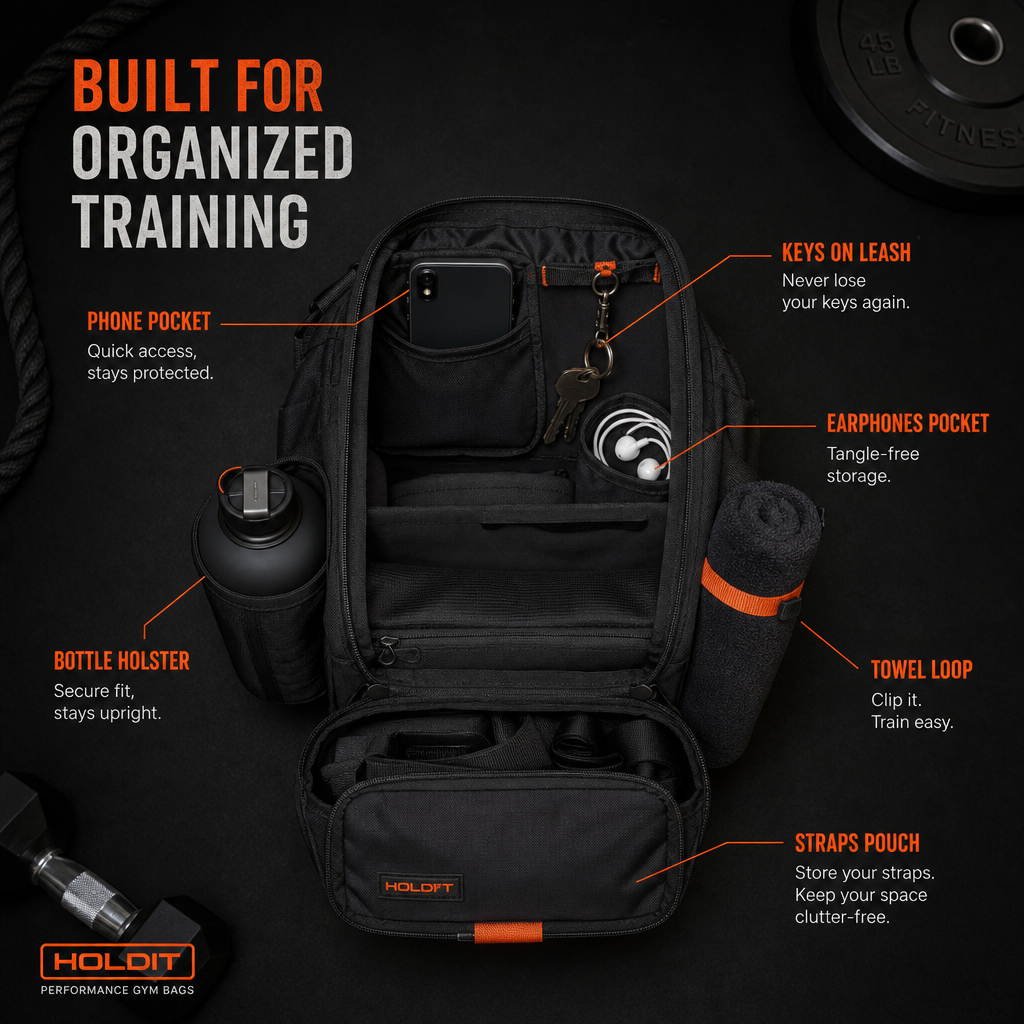
- Top quick access: phone and earphones live here. If you need three zips to reach your phone, that is wrong.
- Key leash with a clip, ideally bright colour so you see it instantly.
- Bottle holster that holds shape when empty.
- Flat pocket for membership card or small notebook.
- Belt carry, either exterior straps or a separate loop, so the belt is not crushing everything inside.
Label pockets with small tags or heat transfers. A simple PHONE, KEYS, STRAPS label removes thinking. It looks clean and works.
Decoration methods for custom gym bags
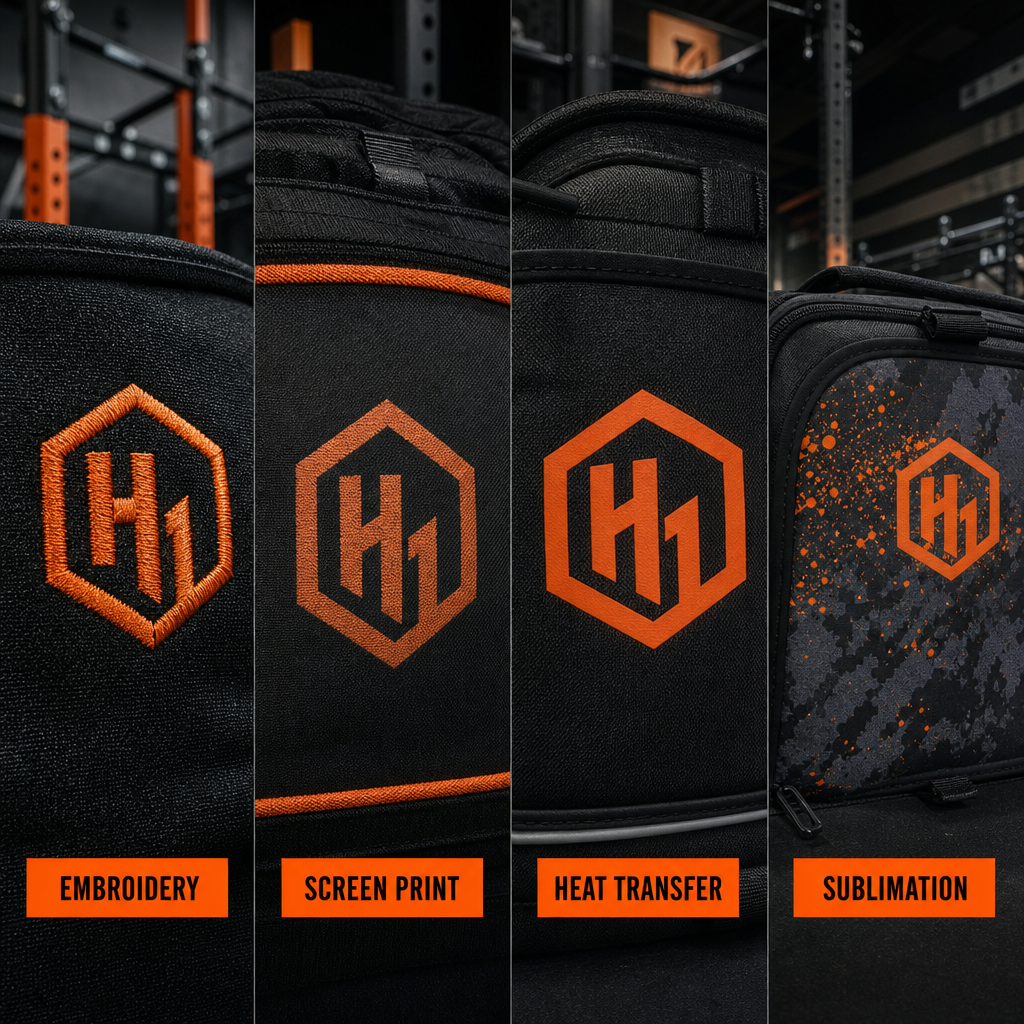
Style matters. Australians expect sharp branding that does not peel after two washes. Method choice depends on fabric, artwork, and how hard you push your gear.
Embroidery
- Best on thicker woven panels, for example polyester canvas.
- Pros: premium look, high durability, thread holds up to repeated handling.
- Cons: needle holes can weaken ultralight fabrics, limited gradients.
- Use case: club logo on side panel, your initials on a lid.
Screen printing
- Best for bold vectors in 1-3 colours.
- Pros: economical at volume, great opacity on dark fabrics.
- Cons: setup charges, not ideal for small multi-colour detail.
- Use case: gym crew name across a pouch.
Heat transfer vinyl and DTF prints
- HTV is strong for names and numbers in low quantities.
- DTF handles full colour with good wash durability.
- Pros: low MOQ, fast, flexible placement.
- Cons: thicker hand feel than print or dye, respect heat care on synthetics.
- Use case: individual names on a team order without recreating screens.
Sublimation
- For light polyester only, ink bonds into the fibre.
- Pros: vivid colour, will not crack or peel.
- Cons: material limits, cannot do dark cotton.
- Use case: all-over pattern on a polyester pouch you add to your bag.
Woven and PVC patches
- Patches add depth and can be replaced later, which is handy if your crew rebrands.
- Sew on for permanence, or use a quality adhesive backed by stitching at corners.
- Use case: modular branding, club crest on the exterior, event badge on a strap.
Laser engraving on metal components
- Clean, crisp, zero ink to wear off.
- Use case: personalised zipper pulls, small nameplates.
Compliance, safety, and wash durability
- Wash rules: cold gentle cycle for removable pouches, wipe down main bag with a damp cloth and neutral detergent. Heat is the enemy of glue-based decorations.
- Thread colours: if you require colour accuracy, ask for Pantone matched thread or closest match confirmation.
- Reinforcement: if adding embroidery to stress zones, request a stabiliser backing to prevent puckering.
Functional customisation that changes your session
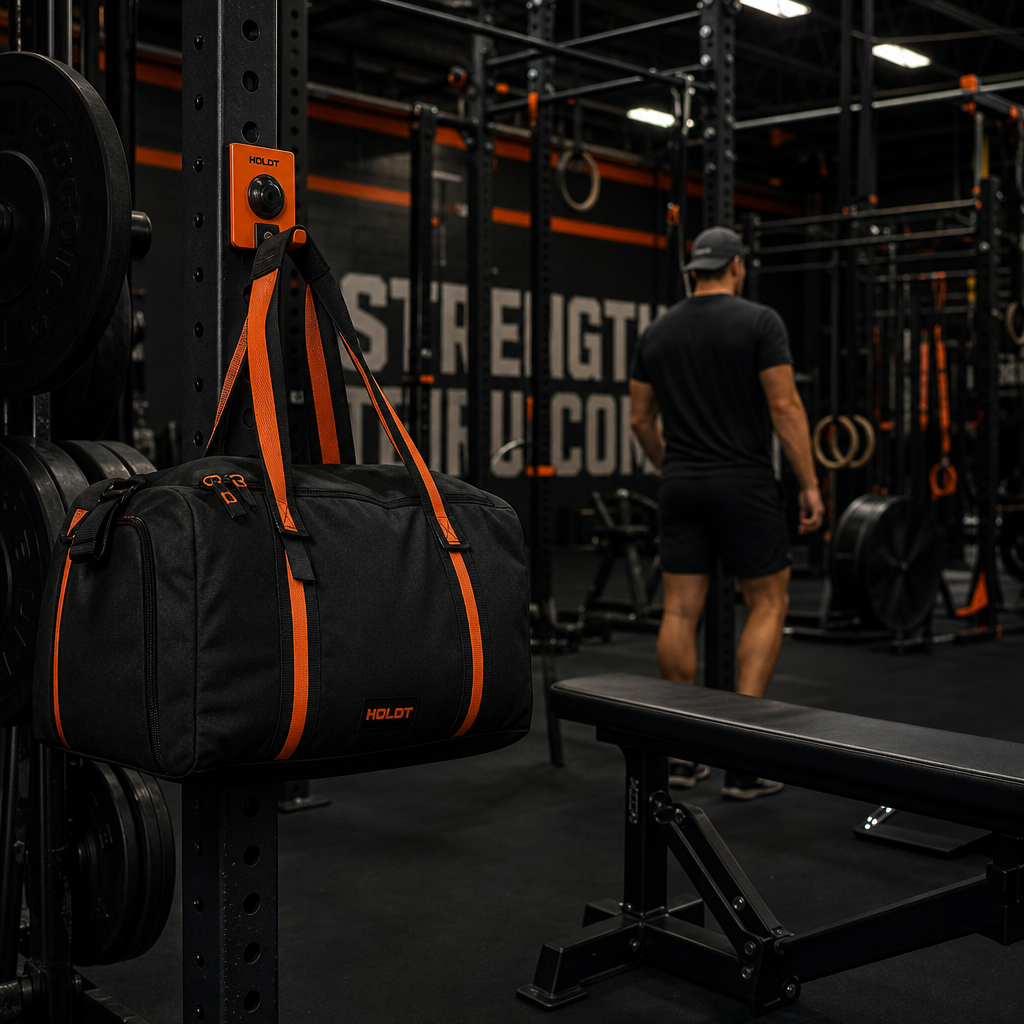
Decoration makes it yours. Function makes it useful. Here is where most people miss the mark.
Keep the bag off the floor and within arm's reach
Magnetic attachment solves hygiene and access in one move. A compact hook rated to hold up to 4 kg keeps your gear at chest height, clipped to a rack upright, cable tower, or dumbbell frame. It snaps onto your station and follows you across the gym. Your bench stays clear. Your phone is safe. You focus on training.
Another real outcome. A member at a commercial facility had no bag hooks near free weight stations. Bags piled along walls and on benches. They used a magnetic hook on vertical steel across the gym. One hook covered every station in the session, no compromises, no waiting for a spot with storage. That is a portable fix you control.
Safety notes you should respect:
- Keep strong magnets away from pacemakers and implanted medical devices.
- Avoid direct contact with magnetic stripes on older cards.
- Place your phone in a pocket that keeps it a small gap from the magnet. Modern phones handle magnets well in cases, but do not let bare magnets sit directly on the device for long periods.
HoldIt recommends a maximum working load of 4 kg. That is enough for a compact gym setup. If your bag weighs more, you are probably carrying too much.
Modular pouches and labelling
Add a flat pouch for straps and wraps, a small zip case for earbuds, and a bright key leash. Label them. The aim is zero rummage.
Use woven labels or small HTV tags:
- PHONE pocket gets a soft lining or a microfibre slip.
- KEYS go on a leash, bright tab for instant sight.
- STRAPS live in a ventilated pouch so chalk dust stays contained.
Phone safety between sets
Put your phone in a dedicated pocket with a shallow depth so you do not dig. If you film sets, mount the phone on a small clamp that lives in the bag. When the set ends, it returns to the same spot. No wandering onto the floor.
Bottle and towel access
Bottle holder should be snug, not elastic that bags out in three months. A small towel loop or carabiner keeps the towel off surfaces, which helps hygiene and reduces lost towels.
Step-by-step guide to customising your gym bag
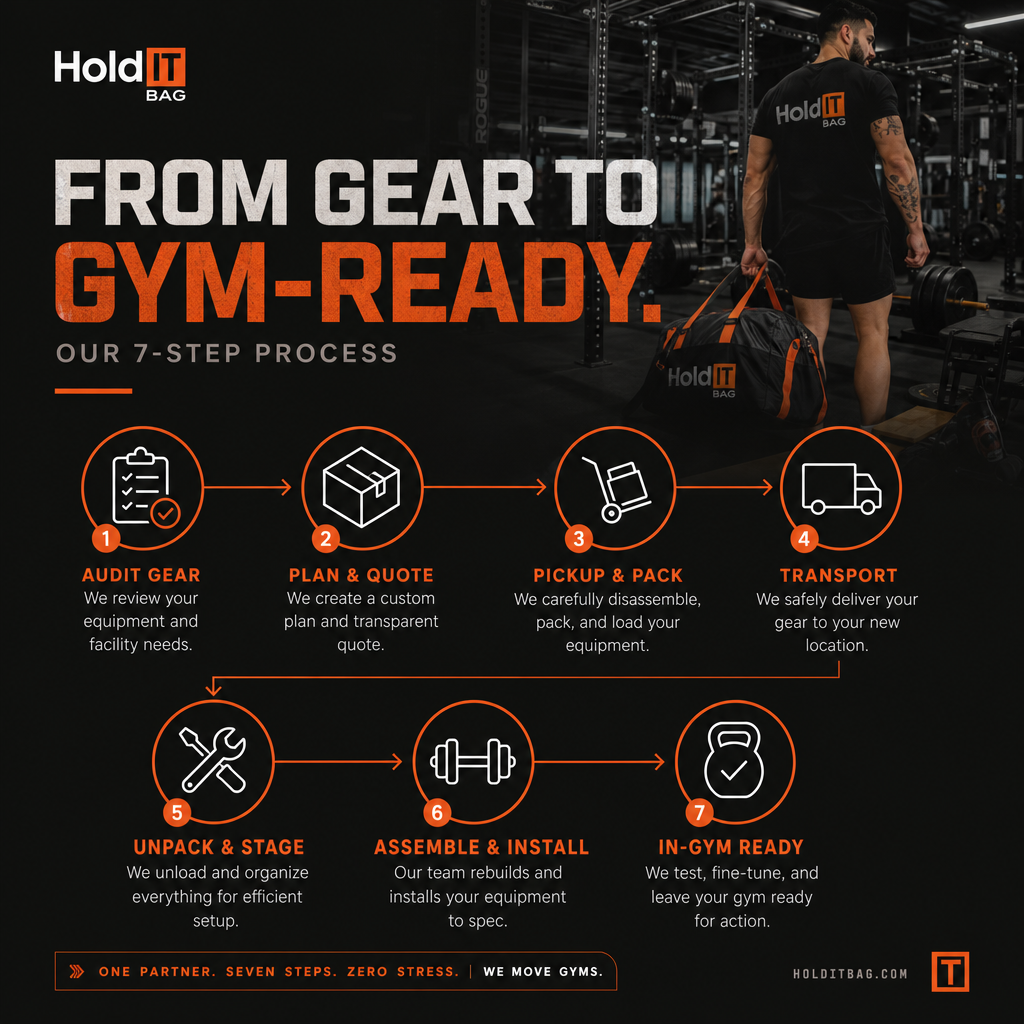
Follow this to build a setup that earns a permanent spot in your kit.
Step 1: Audit your carry
Empty your current bag onto a table. Sort into:
- Always carry: phone, keys, wallet, earphones.
- Session specific: straps, wraps, belt, chalk, microplates.
- Dead weight: anything you did not touch in the last five sessions.
Keep always carry, keep what you used in the last week, drop the rest. Most people can halve their carry in 10 minutes.
Step 2: Choose the base bag
Pick a compact sling or small backpack under 15L with:
- Quick access top pocket for phone.
- Internal zip pocket with key leash.
- Bottle holster with firm structure.
- Exterior strap or loop for belt.
- Panels suitable for your chosen decoration, for example a 600D polyester side panel for embroidery.
Step 3: Pick decoration that matches use
- Solo or small runs, names and small logos: HTV or DTF.
- Club or crew order, 25-100 units: screen print for bold marks, embroidery for premium finish.
- All-over art on poly panel pouches: sublimation.
Ask for:
- Proof with scale and placement on a photo of the exact bag colour.
- Thread or ink colour callouts, Pantone references where relevant.
- Wash and care notes in writing.
Step 4: Plan placements and workflow
Map where each item lives and label it. Example layout:
- Lid pocket: PHONE. Add a soft lining or slip.
- Interior right: KEYS on leash, WALLET in zip.
- Front panel: STRAPS pouch marked STRAPS.
- Side holster: BOTTLE.
- Exterior loop: BELT.
- Hook point: magnetic attachment ready to clip to steel.
Keep labels subtle and functional. Small woven tags or 10 mm HTV text is enough.
Step 5: Sample before you commit
For orders above 10 units, get a pre-production sample. Check:
- Stitch quality, no loose threads, no puckering.
- Print or transfer edges, no lifting or silvering.
- Colour under daylight and indoor lighting.
- Placement accuracy with a ruler, not just your eye.
Step 6: Place the order, factor Australian lead times
Typical Australian lead times in 2026:
- HTV or DTF, 1-25 units: 2-7 business days.
- Embroidery or screen print, 25-100 units: 7-14 business days.
- Sublimation on panels: 10-21 business days.
Confirm in writing:
- Unit price ex GST and inc GST.
- Setup fees, stitch counts, colour counts.
- Delivery to your suburb and courier service.
- Final artwork and approvals.
Step 7: Set up your in-gym system
- Attach the magnetic hook to your rack upright. Bag clips in, height at chest level.
- Practice the between sets routine. Phone returns to the same pocket. Keys clipped. Bottle back in holster. Bench stays clear.
- After the session, quick wipe of exterior. Weekly clean of pouches. You are sorted.
Australian buying routes and supplier checklist
You have three main paths in Australia.
Local print shop
- Pros: face to face, quick sampling, easy colour checks.
- Cons: higher unit prices at very low volumes.
- Best for: 1-50 units, fast turnarounds, small teams.
Online custom platforms
- Pros: easy uploads, templates, transparent pricing.
- Cons: variable quality, generic base bags.
- Best for: budget logo work, simple placements.
Specialist suppliers
- Pros: better base bag selection, functional add-ons, advice on workflow.
- Cons: order process can be more detailed, which is actually a pro if you value outcomes.
- Best for: teams that care about session function, not just looks.
Supplier checklist:
- Proofs and physical samples available.
- Clear care instructions and warranty terms.
- Experience with gym fabrics, not just tees and caps.
- Can source or recommend a magnetic hook rated for at least 4 kg.
Costs and GST:
- Quotes are often ex GST. Confirm the total inc GST.
- Shipping within Australia typically adds $10-$25 per carton, weight and distance dependent.
File prep:
- Vector artwork for embroidery and screen print, AI, EPS, or PDF.
- High resolution PNG with transparent background for DTF or HTV.
- Pantone references for colour matching when brand accuracy matters.
Legal and practical considerations in Australia
Using logos you do not own
If you want to put a brand or club crest on a bag, you need permission. Trade marks exist to protect logos and names. Check with IP Australia resources and get written approval before you press print. A supplier who proceeds without permission is a risk to you.
Consumer guarantees and returns
Under the Australian Consumer Law, you have rights when products fail to meet acceptable quality. For change of mind on custom-made goods, businesses are not obliged to refund. Expect fair remedies for faults, but do not plan to return a custom bag because you picked the wrong colour.
Gym etiquette and safety
- Keep your bag clipped and tight to equipment so it does not swing into walkways.
- Ask before clipping to a rack someone else owns in a private studio.
- Respect magnet safety near medical devices and do not put magnets directly on older magnetic stripe cards.
Maintenance and lifespan optimisation
Your setup should look sharp in month twelve, not just week one.
- Daily: wipe down the exterior with a damp cloth, remove chalk from pouches.
- Weekly: empty the bag, quick vacuum of interior, wash removable pouches on cold gentle, air dry out of direct sun.
- Monthly: check stitching at stress points, especially where straps or belt loops pull. Trim loose threads, add a dot of clear fabric glue if needed.
- Decoration: avoid hot dryers. Heat is what lifts transfers and weakens adhesives. Embroidery is robust, still keep wash gentle.
If a patch frays, replace it. If your routine evolves, update labels. The whole point is a system you can maintain easily, not a showpiece that needs babying.
Real outcomes: what changes when you get this right
Here is what we see in the field.
- Distractions drop. The first anecdote above is normal, not unique. When the bag snaps onto your station and everything has a spot, hunt time goes to near zero. That can be 5-10 minutes back per session, which across 200 sessions a year is real training time.
- Benches clear. You no longer balance your gear on a pad designed for lifting. You set up, lift, rack, and the bench is free for the next person. Better etiquette, less clutter.
- Hygiene improves. Your bag is off the floor, which is a high traffic, high contact surface. Less grime on your bag, less cross contact with your phone and keys.
- You look like you have a plan. Small detail, big signal. Other lifters notice when your setup is clean and efficient.
Numbers from our side. HoldIt community sits at 10,000 plus members in 2026. Our average customer review rating is 4.8 out of 5 from more than 895 verified reviews. The magnetic hook is rated to hold up to 4 kg. Orders are dispatched from Sydney within 48 hours. If you need help tailoring your setup or have a question on fit, no worries, we will sort it.
How HoldIt can help
If you want help mapping your workflow, picking the right decoration method for your fabric, or confirming magnet fit on your local gym equipment, reach out. We keep advice practical and specific to Australian suppliers and conditions.
- Questions about orders, setup, or compatibility: visit our FAQs at https://holditbag.store//faq.
- Ready to discuss a team order or want guidance before you buy: contact us at https://holditbag.store//contact. We reply fast and dispatch from Sydney within 48 hours on in-stock items.
References
- ACCC. Repair, replace, refund. https://www.accc.gov.au/consumers/consumer-rights-guarantees/repair-replace-refund
- NSW Fair Trading. Returning a product. https://www.fairtrading.nsw.gov.au/buying-products-and-services/repairs-refunds-and-replacements/returning-a-product
- IP Australia. What is a trade mark. https://www.ipaustralia.gov.au/trade-marks/understanding-trade-marks/what-trade-mark-is
- Australian Sports Commission. AusPlay. https://www.sportaus.gov.au/ausplay
FAQ_SCHEMA_JSON
Get exclusive training tips & early access
Join 5,000+ athletes who train smarter.
Frequently Asked Questions
How much does gym bag customisation cost in Australia?
For single name additions with HTV or DTF, expect $6-$18 per unit ex GST. Embroidery on a side panel lands around $8-$20 at 10-25 units. Screen print on 25 plus units runs $5-$12 per placement, excluding setup. Patches are $6-$15. A quality magnetic hook is typically $25-$45. Prices vary with stitch count, colours, placements, and the bag you choose.
What bag size is best for most gym-goers?
Under 15L covers most lifters. That fits phone, keys, wallet, earphones, bottle, towel, and a few accessories. If you carry a belt and heavy accessories every session, step up to 20L, but avoid the 40L duffle unless you genuinely need to lug extra clothing or speciality gear.
Will a magnet damage my phone or cards?
Modern smartphones tolerate magnets well, especially in a case, but do not rest a bare magnet directly on the device for long periods. Keep older magnetic stripe cards out of direct contact. If you have a pacemaker or implanted medical device, follow medical advice and keep strong magnets at a safe distance.
What decoration method lasts the longest on gym bags?
Embroidery is hard to beat for longevity on woven fabrics. Screen print is durable on cotton blends. DTF and quality HTV hold up well if you avoid high heat in washing and drying. Sublimation is permanent on light polyester panels. The right choice depends on fabric and use.
Can I return a custom bag if I change my mind?
Custom-made goods are generally not eligible for change of mind returns in Australia. You still have rights if there is a fault or the item is not of acceptable quality under the Australian Consumer Law. Confirm your supplier's policy before ordering.
How do I keep my bag clean without damaging the custom work?
Wipe the main bag with a damp cloth and mild detergent. Wash removable pouches on a cold gentle cycle and air dry. Avoid dryers and high heat. Heat is what lifts transfers and can weaken adhesives. Embroidery is robust, but still keep wash gentle.
What files do I need to supply for a clean logo?
Vector files for embroidery and screen print, for example AI, EPS, or PDF. For DTF or HTV, a high resolution PNG with a transparent background works. Provide Pantone references if brand colours must match closely.
How fast can I get a custom bag in 2026?
For low volume HTV or DTF, 2-7 business days is common. Embroidery and screen print at 25-100 units often run 7-14 business days. Sublimation on panels can take 10-21 business days. Factor courier time to your suburb and allow for approvals.
Related Articles
Australian Health and Fitness Trends: 2026 Statistics Report
The Ultimate Guide to Gym Accessories in Australia: Elevate Your Workout
45 Australian Gym Market Statistics and Growth Trends (2026 Report)
Your gear deserves better
Keep it clean, organised, and always within reach. The HoldIt bag system is built for athletes who take training seriously.