Gym Bag Materials and Durability: An Australian Guide to Choosing Tough Fabrics
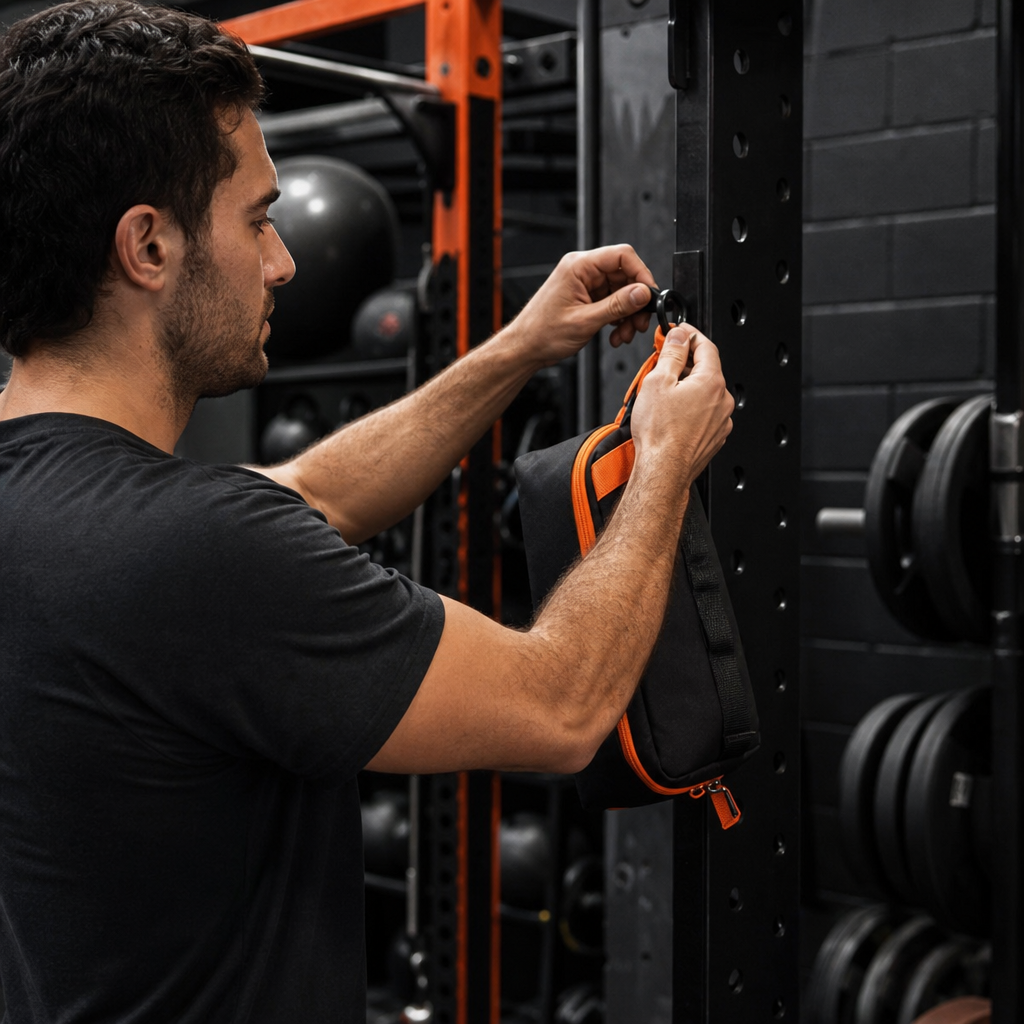
The best gym bag material for Australian conditions is a tightly woven synthetic fabric with reinforced seams, a moisture-resistant lining and hardware designed for repeated loading. Nylon offers excellent abrasion resistance, while polyester handles moisture and sunlight well. Construction quality ultimately matters more than the fabric name printed on a product page.
Cheap gym bags rarely fail because someone packed one extra shirt. They fail at stress points: handles pull away, seams open, linings trap sweat, zips jam and attachment systems weaken under repeated use.
Australian gym conditions add heat, humidity, wet change rooms and hard daily handling. This guide explains how to assess fabric, waterproofing, tear resistance and magnetic attachments before a bag earns a permanent spot in your kit.
HoldIt durability figures at a glance
These figures come from HoldIt's supplied product data, internal testing and customer records. They should not be treated as independent laboratory certifications.
| Measure | Reported result | Source |
|---|---|---|
| Maximum recommended magnetic load | 4 kg | HoldIt product data |
| Magnetic tension retained after repeated use | 98% after 10,000 uses | HoldIt Material Stress Test 2024 |
| Queensland lining trial | Zero mould build-up reported | HoldIt Queensland Climate Durability Trial |
| Average customer rating | 4.8 out of 5 from 895+ verified reviews | HoldIt customer records |
| HoldIt community | 10,000+ members | HoldIt community records |
Key takeaways
The right material is only the starting point. A durable gym bag combines suitable fabric with reinforced stitching, dependable hardware, controlled moisture and a design that avoids unnecessary floor contact. Buyers should assess the complete load path instead of choosing a bag from a single material label.
- Nylon is a strong choice where abrasion and repeated contact with racks are the main risks.
- Polyester is practical for humid conditions because it generally absorbs little moisture and handles regular use well.
- Canvas can be tough, but untreated canvas is slower to dry and less suitable for wet gym gear.
- "Waterproof" should be supported by seam, zip and fabric construction, not just a coated outer layer.
- Magnetic grip testing must consider load direction, metal surfaces and repeated attachment cycles.
- A right-sized bag kept off the floor can avoid grime, bench clutter and unnecessary movement between sets.
Gym bag material comparison
Nylon, polyester and canvas can all make durable bags, but they solve different problems. Nylon usually leads for abrasion resistance, polyester suits humid and frequently damp environments, and canvas provides a firm structure at the cost of extra weight and slower drying. Construction determines whether those advantages survive daily training.
| Material | Main strength | Main limitation | Moisture suitability | Best use |
|---|---|---|---|---|
| Nylon | Strong abrasion and tear performance for its weight | Some versions need coatings for better water resistance | Good when paired with a suitable coating and lining | Bags rubbing against racks, machines and rough surfaces |
| Polyester | Low moisture absorption and straightforward maintenance | Lower-grade weaves can feel thin and wear at stress points | Very good for humid gyms and damp clothing | Frequent training and mixed indoor or outdoor use |
| Canvas | Firm structure and resistance to general scuffing | Heavier, more absorbent and slower to dry when untreated | Fair when treated, weak when left damp | Dry environments and users prioritising structure |
| Coated synthetic fabric | Strong protection from splashes and wet surfaces | Coatings can crease, peel or trap moisture if poorly specified | High at the fabric face, dependent on seams and openings | Wet change rooms, outdoor travel and easy wipe-down cleaning |
What makes a gym bag material durable in Australia?
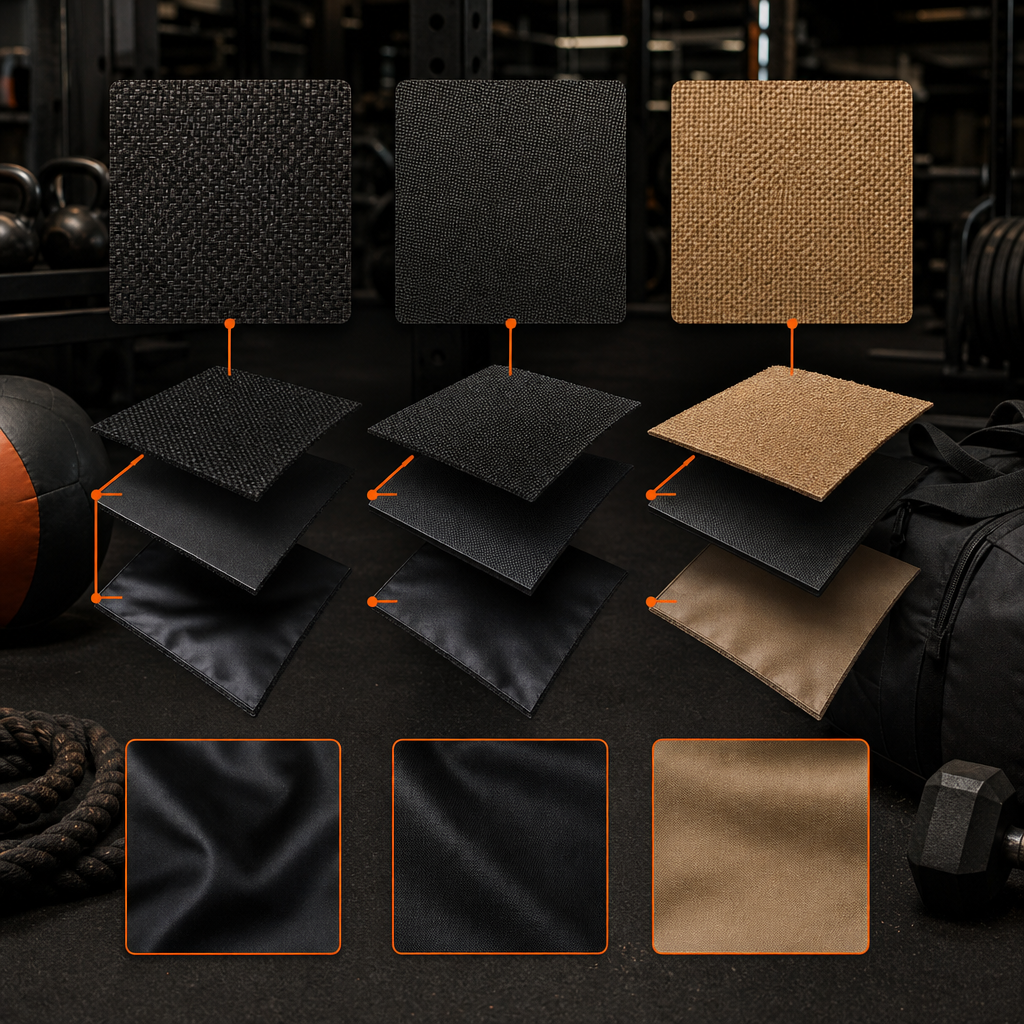
A durable gym bag for Australia must tolerate abrasion, sweat, humidity, cleaning and repeated loading without losing its shape or opening at the seams. Fabric strength matters, but durability also depends on weave density, coating adhesion, lining design, thread, zip quality and reinforcement around every handle or attachment point.
Fibre type is not a complete specification
A product description that says only "nylon" or "polyester" tells you very little. Both fibres can be woven into light, loose fabric or dense material intended for harder use. Fabric weight can help comparisons, but weight alone does not prove strength.
Look for information about:
- weave structure and density
- abrasion or tear testing
- backing or face coatings
- reinforcement at handles and attachment points
- lining material
- seam construction
- zip and buckle specifications
- care requirements
A dense outer fabric connected to weak stitching is not a durable system. The fabric may remain intact while the handle seam pulls open.
Australian conditions change the priority order
The Bureau of Meteorology's Australian climate maps show why one national material recommendation is too simplistic. Tropical humidity, coastal moisture, dry inland heat and cooler southern conditions produce different storage and drying demands.
For a Brisbane user, airflow and a lining that can be wiped dry may matter more than the bag's ability to survive heavy rain. In a dry climate, dust entry and abrasion may be more relevant. For commuters, splash resistance around openings becomes important.
The practical question is not, "What is the strongest fabric?" It is, "What combination will survive how and where I train?"
Nylon, polyester or canvas?
Nylon is often the best gym bag fabric when repeated rubbing is the main threat. A bag that regularly touches cable towers, rack uprights or rough flooring needs an outer shell that resists scuffing and localised wear.
Polyester is often the more balanced option for general Australian use. It is easy to maintain, handles moisture well and can be produced with dependable coatings. Its actual performance still varies with weave and construction.
Canvas feels substantial, but thickness should not be confused with suitability. Untreated cotton canvas can retain moisture from damp towels or humid rooms. That makes drying and storage more demanding. Coated canvas improves water resistance but adds another layer that can age independently of the base fabric.
My position is direct: choose the material around the actual training problem. Do not choose canvas because it feels rugged in a product photo, or nylon because a listing calls it "military grade" without publishing a meaningful specification.
How should magnetic gym bag attachments be stress-tested?
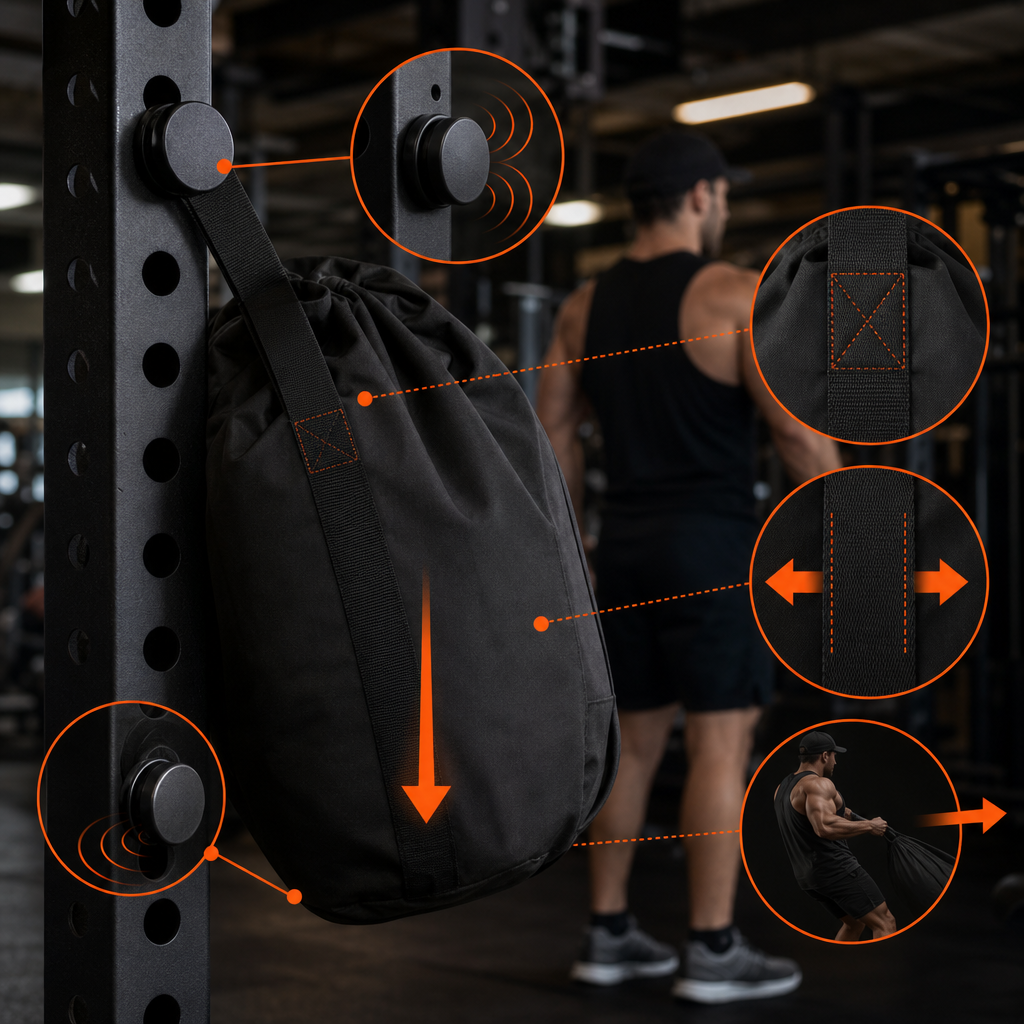
A magnetic gym bag attachment should be tested for repeated cycles, static loading, sudden movement and grip on realistic gym surfaces. Pull strength on a clean laboratory plate is not enough. The attachment must remain secure on painted rack uprights while the bag's seams and connection points carry the same load safely.
Test the full load path
A magnet does not work in isolation. Weight moves through the bag in a chain:
- Contents load the base and lining.
- The outer fabric transfers that load towards the attachment panel.
- Stitching and reinforcement spread the force.
- The attachment housing transfers it to the magnet.
- The magnet grips the steel station.
The weakest point controls the result. A strong magnet cannot compensate for a poorly reinforced attachment panel. Likewise, reinforced stitching cannot fix an attachment used above its recommended load.
HoldIt's maximum recommended magnetic load is 4 kg, according to supplied product data. That limit should guide real use, regardless of whether the magnet appears capable of holding more during an informal test.
Pull force and sliding force are different
A magnet can behave differently depending on the direction of the load. Pulling directly away from a flat steel plate is not the same as hanging a bag vertically, where gravity encourages sliding.
Gym surfaces add more variables:
- paint thickness
- powder coating
- curved or narrow uprights
- surface dust
- gaps between the magnet and steel
- non-steel machine panels
- movement caused by grabbing items between sets
That is why users should attach the bag to a clean, flat, stable steel surface and confirm the grip before letting go. A magnetic hook should not be attached to moving machine parts or positioned where it interferes with equipment operation.
HoldIt Material Stress Test 2024
The supplied HoldIt Material Stress Test 2024 reports that the magnetic grips retained 98% tension after 10,000 uses. The result addresses an important durability question: whether repeated attachment and removal noticeably weakens grip.
The supplied brief does not include the test apparatus, metal substrate, load direction or environmental controls. For that reason, the result should be presented as HoldIt's internal product test, not an independent certification or a universal prediction for every surface.
The useful buying lesson is broader. Magnetic attachments need cycle testing, not just a one-off demonstration. Gym equipment is used repeatedly, and a product intended to snap onto your station must be designed around that repetition.
Inspect the attachment before each session
A quick check takes little effort. Look for movement around the attachment housing, pulled stitches, cracked reinforcement, embedded grit and visible damage. Stop using the attachment if the housing becomes loose or the fabric begins separating.
The magnet and bag also need to be assessed together. Do not keep adding weight simply because the magnet remains attached. The bag's seams and the gym's surface still have practical limits.
How waterproof does an Australian gym bag need to be?
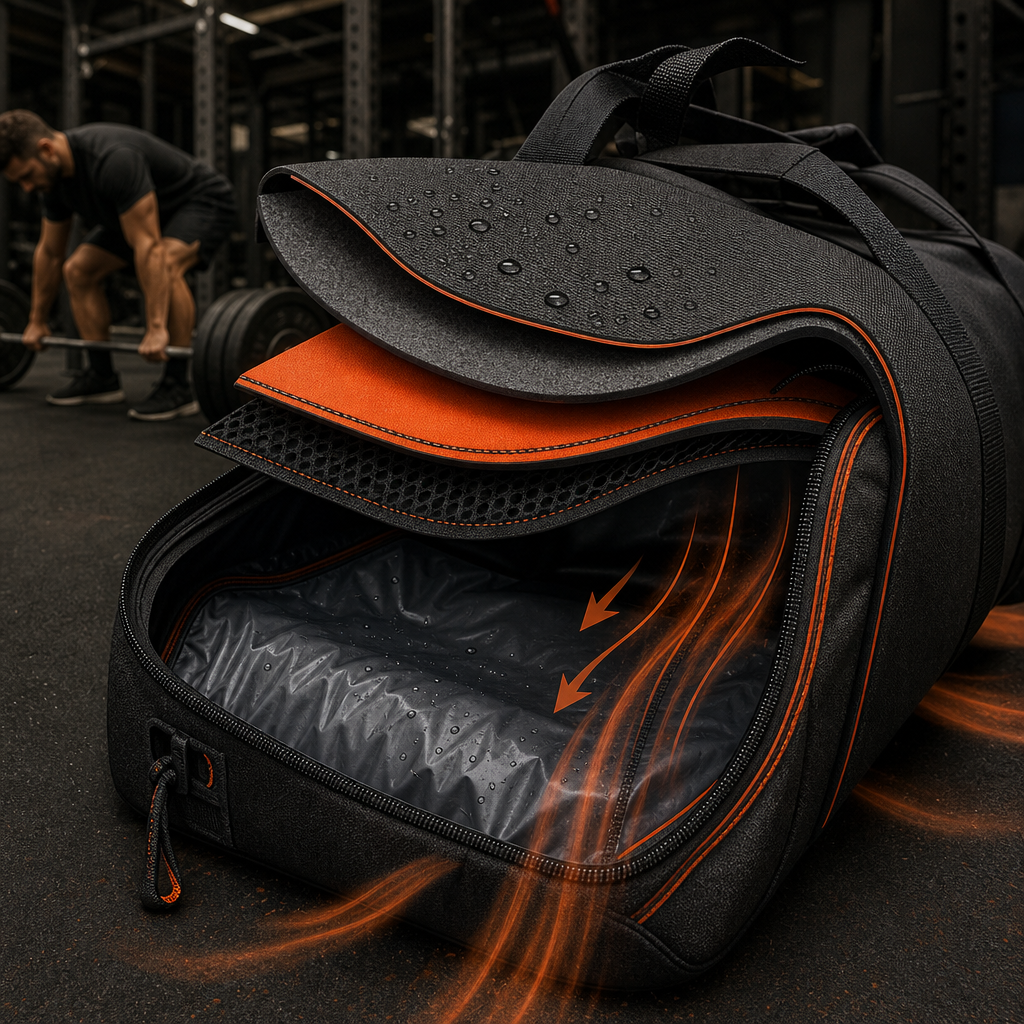
Most gym users need dependable water resistance rather than a fully submersible bag. The material should handle sweat, bottle condensation, wet change-room surfaces and brief rain exposure. True waterproof performance requires suitable fabric, sealed seams and protected openings, while an ordinary zip can remain an entry point even on a coated bag.
Water-resistant and waterproof are not interchangeable
Water-resistant fabric slows water entry. Waterproof construction is intended to prevent penetration under defined test conditions. Marketing often blurs that distinction.
ISO 811 describes a hydrostatic pressure method used to assess a fabric's resistance to water penetration. A standardised fabric test can be useful, but it still does not prove the completed bag is waterproof. Stitch holes, seams, zip tracks and openings can all allow water through.
When comparing products, ask:
- Is the claim about the fabric or the complete bag?
- Are seams taped, welded or conventionally stitched?
- Is the zip protected by a flap or water-resistant construction?
- Can moisture escape after damp gear is stored?
- Does the coating require special care?
If no test method or construction detail is provided, treat "waterproof" as a broad marketing claim rather than a guarantee of submersion protection.
Why more waterproofing is not always better
Sealing a bag aggressively can keep external water out, but it can also keep internal moisture in. A damp towel, sweaty lifting straps or a leaking bottle can create a humid enclosed space.
For normal gym use, the better design often separates priorities. The outer fabric should resist splashes and wipe clean. The lining should resist moisture and allow practical cleaning. Wet items should be removed after training rather than sealed inside for hours.
Follow the manufacturer's care directions. The Australian Government's care labelling guidance for clothing and textiles also explains the role of care instructions in avoiding damage. Whether a particular bag falls within mandatory requirements depends on its construction and intended use.
Queensland Climate Durability Trial
HoldIt's supplied Queensland Climate Durability Trial reported zero mould build-up on the antimicrobial lining. That is relevant to users training in warm, humid conditions, where damp equipment can be difficult to manage.
The supplied information does not state the trial duration, inspection method, humidity controls or whether microbial samples were laboratory analysed. The finding should therefore remain an internal trial result, not a claim that the lining can never support mould.
Antimicrobial treatment is also not a substitute for cleaning. Empty the bag, remove wet gear and let the lining dry. Our guide to cleaning a gym bag in Australian conditions covers the practical routine.
One Queensland customer, Tom R., described the real-world benefit directly: "Survives the sweat and humidity of Brisbane gyms perfectly. The material is incredibly tough."
That testimonial reflects one customer's experience. It does not replace controlled testing, but it does show what matters to the end user: the bag stays functional through ordinary sweat, humidity and repeated handling.
How do you assess fabric tear and abrasion resistance?
Assess gym bag fabric by examining how it responds to cuts, edge damage, rubbing and concentrated loads. Tear resistance concerns an existing split spreading through the material. Abrasion resistance concerns surface wear from repeated contact. Both matter because gym bags rub against equipment while carrying weight through stitched attachment points.
Tear strength is different from tensile strength
Tensile testing measures how material behaves when pulled. Tear testing examines how readily an existing cut continues through the fabric. A material can perform well under an even pull yet become vulnerable once a sharp edge creates a nick.
The ISO search catalogue identifies separate textile methods for tear properties under ISO 13937-2. When a manufacturer cites testing, check whether the method reflects tearing, tensile loading or abrasion. These terms should not be treated as interchangeable.
For gym bags, likely damage points include:
- corners that contact walls or flooring
- fabric beside zip ends
- handle attachment points
- the upper edge of bottle pockets
- magnetic attachment panels
- seams around rigid hardware
Inspect the weave and backing
Hold the empty bag and gently flex the fabric. A durable outer should recover without exposing large gaps in the weave. Check whether the inner backing creases, flakes or separates.
A coating can improve water and abrasion resistance, but poor adhesion creates another failure mode. Peeling, bubbling or a sticky surface may indicate material degradation or unsuitable care. Do not scrub coated fabric with harsh products unless the manufacturer permits it.
Seams often fail before the main panel
The centre of a fabric panel usually experiences less concentrated force than a handle or attachment seam. Look for multiple lines of stitching, reinforcement patches and smooth load distribution. Loose thread ends are not always structural, but skipped stitches, puckering and exposed seam allowances deserve attention.
A useful inspection is to load the bag normally, then watch how the fabric deforms. If a small section of stitching carries the entire load, the design is concentrating stress. Broad reinforcement spreads force across more material.
Zips and hardware are part of durability
A tough shell does not help if the zip cannot tolerate regular opening, grit or an overfilled compartment. Run the zip around corners and check whether the surrounding fabric folds into its path.
Metal hardware is not automatically better than engineered polymer hardware. The relevant questions are whether it suits the load, resists corrosion and can move without cutting into nearby fabric.
Why keeping a gym bag off the floor improves durability
Keeping a gym bag off the floor reduces contact with moisture, grit, cleaning residue and repeated foot traffic. It also prevents the bag from being kicked or dragged between stations. A magnetic attachment addresses those exposures while keeping essentials within arm's reach and leaving the bench clear for training.
This is where I disagree with standard gym bag advice. A conventional duffle may use excellent fabric, but it still accepts the gym floor as its storage system. That does not solve floor hygiene, bench clutter or the need to find a phone and keys between sets.
Purpose-built beats adapted. A bag designed to attach to suitable gym equipment changes where the material spends the session. It is no longer being dragged, stood on damp flooring or balanced on the end of a bench.
That design choice can matter as much as choosing between nylon and polyester. Durability is not only a material property. It is also the result of avoiding preventable exposure.
Most gym-goers also do not need an oversized duffle. They need a phone, keys, wallet, earphones, water bottle and perhaps lifting accessories. A right-sized setup carries what helps training without turning every station change into a relocation exercise.
The durability test most buyers miss: friction during the session
The overlooked durability test is not laboratory tear strength. It is how often the bag gets dropped, dragged, moved and searched during an ordinary workout. Reducing those interactions can protect the material while improving training flow. A strong fabric lasts longer when the bag's design removes avoidable friction from each session.
I have seen this play out with a regular gym-goer training 4-5 sessions each week. Their phone and keys kept disappearing into different pockets or ending up on benches. The bag sat unattended on the floor, then moved whenever the next exercise began.
They attached the HoldIt magnetic bag hook to a cable machine upright and squat rack. Their gear stayed off the floor and within arm's reach. They reported regaining focus in the first session and estimated they avoided 5-10 minutes of wasted movement per workout.
That figure is the user's estimate from this observed use case, not a controlled productivity study. The important point is the mechanism. Fewer searches and fewer bag movements mean fewer interruptions, fewer drops and less contact with abrasive surfaces.
I have also seen the same principle solve a facility problem without involving management. A commercial gym had no dedicated bag hooks near free weights. Bags accumulated against walls and on benches.
A member used one portable magnetic hook across rack uprights, cable towers and suitable dumbbell rack frames. The magnet's supplied maximum recommended load was 4 kg. One attachment moved with the user, so the bench stayed clear and the bag remained close throughout the session.
This is why I do not judge durability from fabric alone. The best durable gym bag in Australia should control three things:
- what the bag is made from
- how forces move through its seams and hardware
- where the bag sits while you train
Get all three sorted and the bag has a better chance of lasting. Ignore the third, and even premium material spends every session collecting wear from the floor.
Before buying, review the stated load limits, care instructions and product coverage. HoldIt's supplied customer records show an average rating of 4.8 out of 5 across 895+ verified reviews, while its community includes 10,000+ members. You can also read the HoldIt product guarantee before deciding.
If you are unsure which setup fits your training gear, contact HoldIt with what you carry and where you train. We'll sort it.
Gym bag durability checklist
A useful buying checklist should test the entire bag rather than rewarding vague material claims. Confirm the fibre, weave, coating, seams, lining, hardware and attachment system. Then compare those details with your climate, training frequency and normal load. If the seller cannot explain a durability claim, do not assume the label proves it.
Before purchase
- Identify whether the outer is nylon, polyester, canvas or a coated composite.
- Check whether waterproofing applies to the fabric or complete bag.
- Look for reinforcement around handles, straps and magnetic attachment points.
- Confirm the recommended load for any hook or magnetic system.
- Check whether the lining can be wiped and dried easily.
- Read care instructions before using cleaning chemicals.
- Review guarantee terms and Australian Consumer Law rights.
The ACCC's consumer guarantees guidance explains that products sold to Australian consumers come with rights that operate independently of an optional manufacturer warranty. The precise remedy depends on the circumstances and nature of any failure.
During use
- Keep the bag within its recommended load.
- Use magnetic attachments only on suitable, stable metal surfaces.
- Keep the bag away from moving equipment and access paths.
- Remove wet clothing after training.
- Wipe grit from the magnet and attachment panel.
- Do not force an overfilled zip.
During inspection
- Check seams for skipped stitches or separation.
- Look for coating peel, cracks or sticky areas.
- Inspect corners and zip ends for small tears.
- Confirm the attachment housing remains stable.
- Stop using damaged load-bearing components until assessed.
References
These sources provide recognised guidance on Australian climate conditions, textile water and tear testing, product care and consumer rights. Standards describe controlled methods rather than certifying any HoldIt product unless explicitly stated. HoldIt test figures and customer data in this article remain identified separately as supplied internal business information.
- Bureau of Meteorology, Australian climate maps.
- International Organization for Standardization, ISO 811 search results: textile resistance to water penetration.
- International Organization for Standardization, ISO 13937-2 search results: textile tear properties.
- Australian Competition and Consumer Commission, Consumer rights and guarantees.
- Product Safety Australia, Care labelling for clothing and textiles.
FAQ_SCHEMA_JSON
Get exclusive training tips & early access
Join 5,000+ athletes who train smarter.
Frequently Asked Questions
What is the most durable material for a gym bag in Australia?
Tightly woven nylon is usually the strongest option where abrasion and tearing are primary concerns. Polyester is often the better all-round choice for humid conditions and regular cleaning. The complete bag should also have reinforced seams, a moisture-resistant lining, dependable zips and properly supported attachment points.
Is nylon or polyester better for a gym bag?
Choose nylon for frequent rubbing against racks and rough surfaces. Choose polyester when low moisture absorption, easy maintenance and humid conditions are higher priorities. Compare weave, coatings, reinforcement and test information rather than relying on the fibre name alone.
What does waterproof gym bag material mean?
Waterproof material should resist water penetration under stated conditions, but it does not automatically make the complete bag waterproof. Stitch holes, seams and ordinary zips may still leak. Most gym users need splash resistance and a washable lining rather than submersible construction.
Can a magnetic gym bag damage gym equipment?
A clean, properly housed magnet should be used carefully on a suitable stationary steel surface. Grit can contribute to marking, while unsuitable coatings or curved surfaces may reduce grip. Follow gym rules, avoid moving machine parts and test the attachment before releasing the bag.
How much weight should a magnetic gym bag hold?
Follow the manufacturer's recommended load. HoldIt's supplied product data sets a maximum recommended magnetic load of 4 kg. Surface shape, coating, cleanliness and load direction can affect grip, so users should remain within the stated limit.
How do I prevent mould in a gym bag?
Remove damp clothing and towels promptly, empty the bag and let the lining dry with compartments open. Clean it according to its care instructions and avoid sealing wet gear inside. Antimicrobial linings do not replace cleaning, airflow and proper drying.
Related Articles
Australian Health and Fitness Trends: 2026 Statistics Report
The Ultimate Guide to Gym Accessories in Australia: Elevate Your Workout
45 Australian Gym Market Statistics and Growth Trends (2026 Report)
Your gear deserves better
Keep it clean, organised, and always within reach. The HoldIt bag system is built for athletes who take training seriously.