How to Pack a Gym Bag for Travel in Australia: A Complete Guide for Trips, Flights and Weekends Away
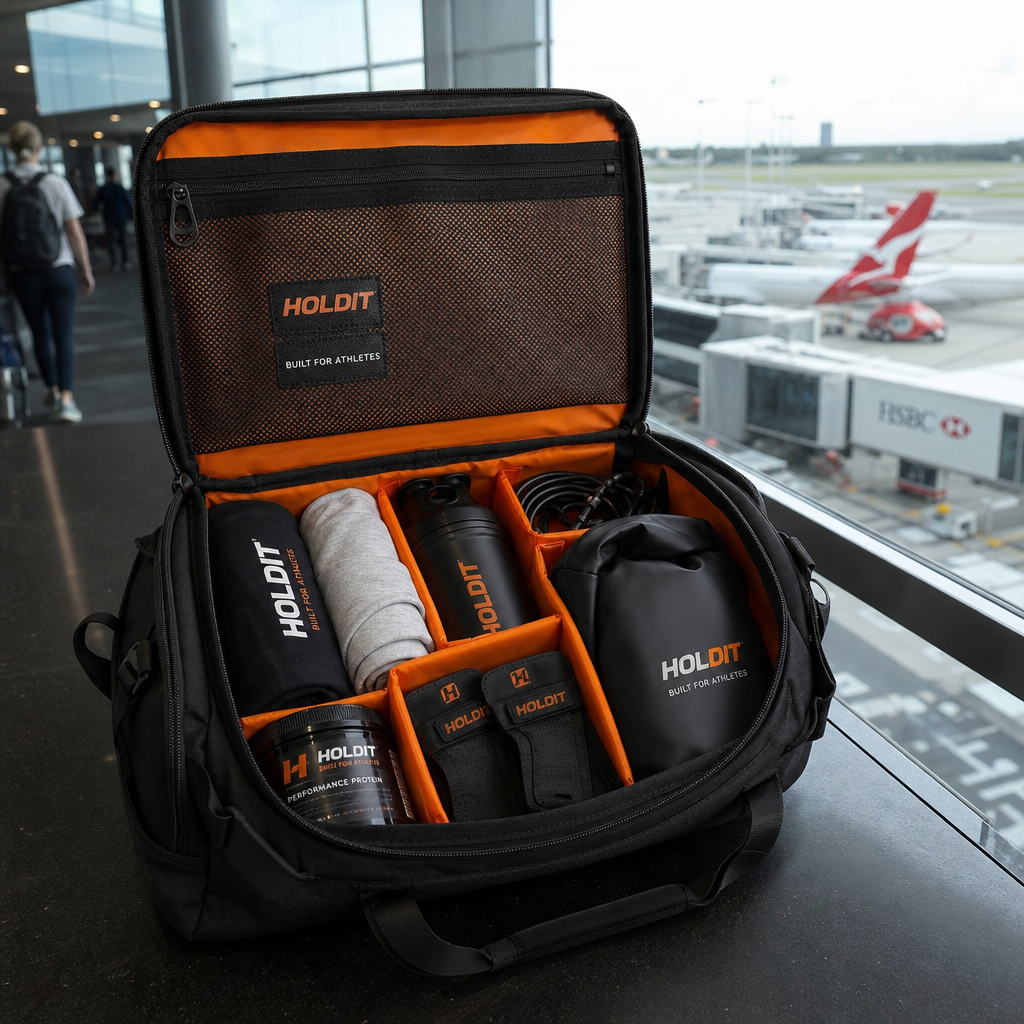
You are three days into a work trip to Melbourne, you have already trained twice, and your bag is a disaster. Damp shorts are sitting on top of your clean t-shirt, your lifting belt smells like it lost a fight, and you have spent four minutes looking for your earphones in a hotel room the size of a decent bathroom. Sound familiar? Training while travelling is one of the best habits you can maintain, but a disorganised bag turns what should be a straightforward session into an exercise in frustration before you even reach the gym floor.
This guide is for Australian gym-goers who want to keep training on domestic flights, road trips, conference travel, and weekends away without sacrificing organisation or hygiene. Whether you are heading from Sydney to Brisbane for a long weekend or flying to Bali for two weeks, the principles are the same: pack with intention, separate clean from dirty, and bring only what actually improves your training.
I have worked with thousands of lifters through the HoldIt community (10,000+ members and counting), and the single biggest complaint is not what gear people forget. It is that their bag setup lets them down. This guide fixes that.
Key Takeaways
- Carry-on size limits for Australian domestic flights sit at roughly 48 x 34 x 23 cm with most major carriers, and your gym bag must comply or go into checked luggage.
- Separating clean gear from sweaty gear is not optional if you want your clean clothes to stay that way. Dedicated wet/dry compartments or waterproof packing cubes solve this completely.
- You do not need a 40L duffle for a weekend trip. A right-sized bag with smart compartments beats a large bag packed with gear you will never touch.
- Liquids at Australian airports follow the 100ml per container rule for carry-on, including protein powder mixed into liquid form and toiletries.
- A magnetic bag attachment, like the HoldIt hook, means your travel gym bag works just as well at the hotel gym rack as it does at your home gym.
- One well-structured checklist for short trips and one for extended travel removes the guesswork entirely.
Summary Table: Packing a Gym Bag for Travel
| Item Category | Packing Tip | Why It Matters |
|---|---|---|
| Clothing and base layers | Roll, do not fold. Use compression cubes for bulk reduction. | Saves space, reduces creasing, keeps items contained |
| Shoes | Pack in a separate shoe bag or sealed outer pocket | Keeps sole dirt away from clean gear |
| Wet and sweaty gear | Use a waterproof dry bag or sealed wet compartment | Prevents moisture transferring to clean items |
| Liquids and toiletries | 100ml containers in a clear resealable bag for carry-on | Meets Australian airport (CATSA/ASA) liquid rules |
| Tech and valuables | Top-access pocket or padded sleeve, never buried | Fast access at security, reduces loss risk |
| Lifting accessories | Flat-pack where possible (grips, bands, belt last) | Grips and bands take minimal space, belt frames the bag |
| Protein and supplements | Dry powder in sealed container, pre-portioned | Avoids spills and biosecurity issues at borders |
| Footwear for non-training | Pack in addition to, not instead of, training shoes | Avoids wearing training shoes for all activities |
Carry-On vs Checked: Gym Bag Sizing for Australian Flights
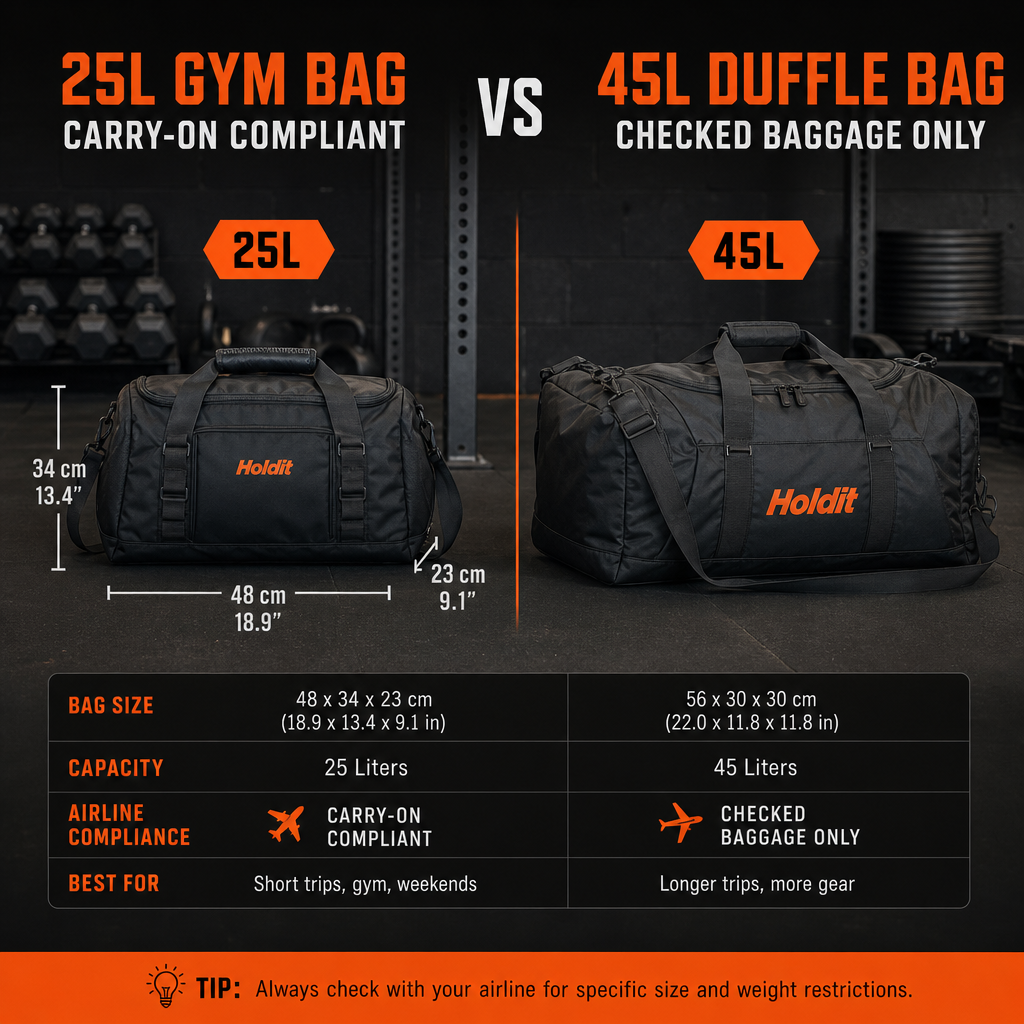
The first decision when packing a gym bag for travel in Australia is whether your bag qualifies as carry-on. This matters more than most people realise, because a bag that goes into the hold adds 20-30 minutes to your arrival time and introduces risk of loss or damage to your gear.
Domestic Airline Size Rules in Australia (2026)
Here is what the major Australian domestic carriers currently allow for carry-on baggage:
- Qantas: One carry-on bag up to 115 cm total (length + width + height) and 7 kg. A typical 25-30L gym bag generally fits within this.
- Virgin Australia: One carry-on up to 48 x 34 x 23 cm and 7 kg.
- Jetstar: Stricter. Carry-on is limited to 56 x 36 x 23 cm and 7 kg on most fares, but budget fares may restrict to a personal item only. Always check your fare conditions.
- Rex Airlines: One carry-on up to 48 x 34 x 23 cm and 7 kg.
The practical takeaway: a compact gym bag in the 20-30L range will typically meet these dimensions. A full-size 40-50L duffle will not. Check the current rules on your carrier's website before you pack, because these dimensions have been enforced more strictly since 2024.
When to Check Your Gym Bag
For trips longer than four days, or if you are carrying a lifting belt, foam roller, or heavy footwear, checking your bag is often the smarter call. A checked bag removes liquid restrictions and size pressure entirely. The trade-off is time and the small but real risk of your bag going missing. If you check, pack your training essentials (shoes, protein, tech) in a personal item you keep with you.
The Case for a Dedicated Travel Gym Bag
Most people grab whatever bag is handy and stuff gym gear into it. This is the source of most travel training frustration. A bag designed with purpose-built compartments, a separation system for wet gear, and dimensions that sit comfortably within carry-on limits will serve you far better than a repurposed weekend duffle. You can browse options built specifically for this use case in the HoldIt shop.
Packing Cubes and Compartment Strategy
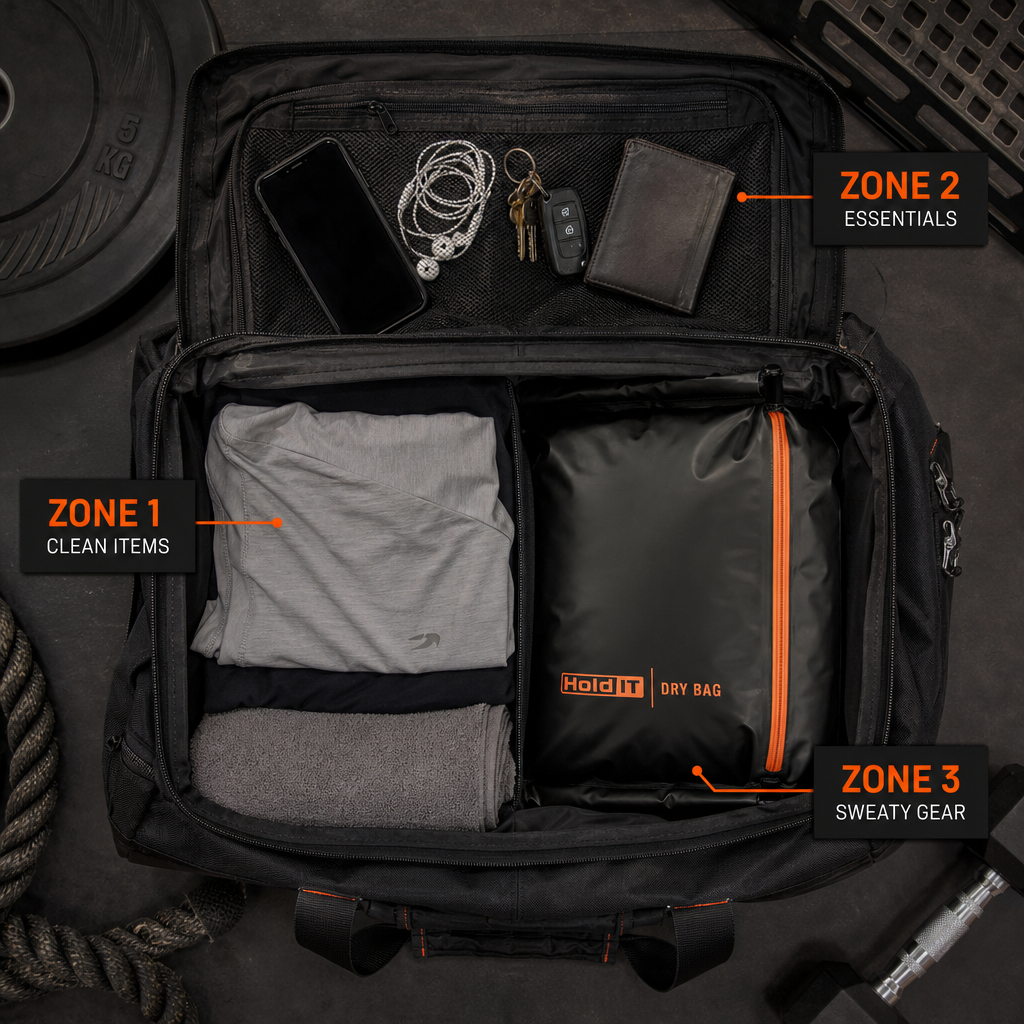
Packing cubes changed how I approach gym travel. Not because they compress gear (though they do), but because they enforce a system. When everything has a designated cube, unpacking in a hotel room takes 90 seconds and repacking after a session takes the same.
The Three-Zone System
Structure your gym bag around three zones:
Zone 1: Clean and ready to use. Clothing, fresh socks, a clean training towel, your pre-workout or supplement sachet. Everything in this zone should be accessible without disturbing anything else.
Zone 2: Active use items. Phone, earphones, keys, wallet, water bottle, lifting grips or straps. These need to be within arm's reach during a session, not buried under clothing.
Zone 3: Post-session (wet/dirty). Sweaty gear, used towels, wet swimwear if you have hit a pool. This zone must be physically separated from Zone 1. A waterproof dry bag inside your main compartment is the minimum acceptable solution. A bag with a built-in wet compartment is better.
Packing Cubes Worth Using
Not all packing cubes are equal. Look for:
- Mesh-top cubes for clothing (ventilated, fast to identify contents)
- Compression cubes for bulky items like hoodies or training tights
- A waterproof cube or dry bag specifically for post-session gear
For a weekend trip, two cubes is usually enough: one for clean training gear, one for post-session. For a week-long trip, add a third cube for general clothing separate from your gym kit.
Shoes: The Packing Problem Nobody Talks About
Training shoes are bulky and the soles are, frankly, filthy. Pack them in a dedicated shoe bag (a cheap drawstring bag or a purpose-made shoe sack both work), and place them at the base of your main compartment or in an external pocket if the bag has one. Shoes at the base add structure to the bag, which helps everything else stack neatly above them.
If you are travelling to a resort or location where you will wear casual footwear most of the time, consider whether you can use your training shoes as your airport shoes and pack casual footwear in the bag instead. This depends on the trip, but it is worth thinking through before you pack.
Protecting Clean Gear from Sweaty Gear
This is the section most generic gym bag guides skip over, and it is the one that makes the biggest practical difference.
Why Wet Gear Ruins Trips
A damp training top sitting against your clean shirt for six hours in a warm bag creates a smell problem that no amount of airing out fixes quickly. Beyond smell, moisture encourages bacterial growth on fabric, and if you are heading from the gym directly to a dinner or a meeting, a bag that smells like yesterday's session is not a good look.
The Separation System
The simplest and most effective solution is a dedicated waterproof dry bag, available for a few dollars at most outdoor gear or camping stores in Australia. After your session, your sweaty gear goes directly into the dry bag. It gets sealed. It does not come out until you are in front of a washing machine.
For bags with a built-in wet compartment, the same principle applies. Use it exclusively for post-session gear. Do not let the compartment become a general overflow space.
What to Do With a Wet Towel
A wet towel is the hardest item to manage. If you have access to a towel rail or radiator in your hotel room, hang it before packing. If you are packing immediately after a session, wring it out as much as possible and place it in the wet compartment or dry bag, not loose in the main compartment. Most travel towels (microfibre, compact) dry quickly enough that a few hours on a surface will bring them to packable condition.
Liquids, Toiletries and Australian Airport Rules
Australian airports follow the 100ml (100g) per container liquid rule for carry-on baggage, consistent with international aviation security standards. All liquids must fit in containers of 100ml or less and be placed in a single clear, resealable plastic bag no larger than one litre.
For gym travellers, this affects:
- Shampoo, conditioner, body wash: Decant into travel-size containers. Plenty of reusable 50ml or 100ml silicone containers are available from chemists and outdoor stores across Australia.
- Sunscreen: Required for anyone training outdoors or sightseeing between sessions. Pack a 100ml tube in your toiletries bag.
- Pre-workout (liquid or mixed): If you mix pre-workout before a flight, it counts as a liquid. Take it in a container of 100ml or less or drink it before security. Dry powder in a sealed container does not have the same restriction.
- Hand sanitiser: 100ml maximum for carry-on.
Important note: the Australian Border Force and the Therapeutic Goods Administration (TGA) regulate supplements and some sports nutrition products. Bringing in overseas supplements, particularly those with unapproved ingredients, can lead to confiscation at customs. If you are travelling internationally and bringing protein powder or creatine, declare it and check the TGA import rules before you travel.
Protein Powder for Travel
For domestic travel, pre-portion protein powder into small zip-lock bags or a dedicated travel container. A single serving per day of your trip keeps the container small and avoids carrying a full bag. Label the container clearly if you are travelling internationally, as customs officers do check unlabelled powder.
Tech and Valuables Security
This is where most gym bags fail travellers completely. A single large compartment with no internal organisation means your phone, earphones, and wallet end up at the bottom under everything else. At airport security, this is a time-wasting disaster. In a hotel gym, it means your valuables are buried in a bag sitting on the floor.
What Belongs in a Top-Access Pocket
Your phone, earphones, keys, wallet, and any cards should live in a dedicated top-access pocket. This serves three purposes:
- At security, you can pull the pocket contents out quickly without unpacking everything.
- During training, these items are within arm's reach without digging through clothing.
- In a hotel or gym environment, quick access to your valuables reduces the time they are unattended.
Keeping Gear Off the Floor While Travelling
This is something I feel strongly about. A floor bag, regardless of how good the bag is, does not solve the core problem that serious lifters face when training away from home: your gear ends up on a floor you have never seen cleaned, and your bench space gets taken.
I use a HoldIt magnetic bag hook when I travel. It snaps onto the upright of a cable machine, a squat rack frame, or any vertical steel surface in a hotel gym or commercial facility. My bag stays elevated and within arm's reach for the entire session. The magnet is rated to hold up to 4 kg, which covers a fully loaded gym travel bag without issue. My phone stays in the top pocket of the bag, never on the floor, never on a bench.
I started doing this after a particularly frustrating session at a gym in Brisbane where the free weights area had zero bag storage and members were stacking bags along the wall. My bag got kicked twice. After that, the hook became a permanent part of my travel kit. The HoldIt grips and accessories section covers what I carry.
I mentioned the Brisbane trip to someone in the HoldIt community recently and they said exactly what I expected: "I've been dealing with that for years and just accepted it." That is the wrong answer. Purpose-built solves problems that general-purpose bags and improvised solutions never will.
Quick Weekend Trip vs Extended Travel: Two Checklists
Weekend Trip (1-3 Nights)
Training gear:
- 2 x training tops
- 2 x training shorts or tights
- 3 x training socks
- 1 x sports bra (if applicable)
- 1 x training shoes
- 1 x microfibre towel
Lifting accessories:
- Lifting grips or straps (flat, minimal space)
- Resistance band (optional, <100g)
- Wrist wraps if you use them
Toiletries (carry-on compliant):
- Shampoo 100ml
- Body wash 100ml
- Deodorant (stick, not aerosol, for carry-on)
- Sunscreen 100ml
Tech and valuables:
- Phone and charger
- Earphones
- Wallet and keys
- Portable battery pack (carry-on only, max 100Wh without airline pre-approval)
Nutrition:
- 2-3 pre-portioned protein servings in sealed containers
- Electrolyte sachets
- Shaker bottle (empty for carry-on, or packed in checked bag)
Wet/dry separation:
- 1 x waterproof dry bag
Bag accessories:
- HoldIt magnetic bag hook
Extended Trip (4+ Nights)
Everything from the weekend list, plus:
Training gear additions:
- 1 x compression shorts or base layer
- 1 x light training jacket or hoodie
- Extra microfibre towel
- Foam roller (if checked bag, otherwise skip)
- Jump rope (compact, 100g)
Toiletries:
- Full-size items (if checked bag)
- Laundry detergent sachets (2-3) for washing gear in-room
Nutrition:
- Full protein container
- Daily supplement organiser (pill or powder)
- Snack options for long travel days
Clothing for non-training:
- Pack separately from gym kit. Mixing training gear with casual clothing is where bag organisation breaks down fastest on longer trips.
How a Magnetic Compartment Bag Streamlines Travel Packing
The reason I designed the HoldIt bag hook as a travel essential, not just a gym essential, is that hotel gyms are often worse than commercial gyms for bag storage. A hotel fitness centre is typically a small room with a few cable machines, some dumbbells, and no bag hooks in sight. Your options without a portable hook are: floor, windowsill, or the back of a treadmill. None of these are good.
With the HoldIt hook attached to any vertical metal surface in the room, your bag is elevated, your bench stays clear, and your phone is within arm's reach between sets. No compromises on where you train based on where you can stash your bag.
I trained at a gym in a hotel in Perth a few months back. The layout was tight, the racks were close together, and bag space was non-existent. I clipped the hook onto the upright of the only squat rack in the room and trained for 55 minutes without moving my bag once. Everything was sorted from the moment I walked in.
The hook packs flat, weighs almost nothing, and earns a permanent spot in your travel kit after one session. It is the one piece of kit that solves the gym bag problem that no bag design has ever fully solved: keeping gear off the floor and within arm's reach without requiring any infrastructure from the gym itself.
For anyone who does both gym-to-work transitions and travel training, the gym bag for work guide covers the commuter setup in more detail. The same compartment logic applies to both.
Real Results: Two Stories from the HoldIt Community
The Distracted Lifter Who Reclaimed 10 Minutes Per Session
I work with a gym-goer who trains four to five sessions a week, a solid commitment by any measure. The problem they kept running into was losing track of their phone and keys between sets. The bag was sitting on the floor or balanced on a bench where it kept sliding off. Every interruption cost focus, and focus is the one thing you cannot recover mid-session.
They started using the HoldIt hook on the cable machine upright and the squat rack at their gym. Within the first session, the interruptions dropped to zero. By their own estimate, they were saving five to ten minutes of wasted movement per session across the week. Over a year of training, that adds up to hours of productive training time recovered from a problem they had just accepted as part of gym life.
Solving the Floor Bag Problem in a Commercial Gym
A member at a large commercial facility contacted me because there were no dedicated bag hooks near the free weights area. Members were piling bags along the walls and on benches. It was creating trip hazards and cluttering the training floor, and gym management was not prioritising a fix.
They did not want to wait. They clipped the HoldIt hook onto every available vertical metal surface throughout their session: rack uprights, cable towers, dumbbell rack frames. The magnet holds up to 4 kg, which is more than enough for a fully loaded gym bag. Their gear stayed off the floor in every zone, and they never had to compromise on where they trained based on bag storage availability.
That portability is the point. One hook covers every station in your session. You do not need permission from gym management, you do not need permanent infrastructure, and you do not need to settle for your bag on the floor.
What HoldIt Members Say
With an average rating of 4.8 out of 5 across 895+ verified reviews, the feedback from the HoldIt community is consistent: once the hook is in the kit, it does not come out. You can read more on the HoldIt reviews page. The phrases I see most often in reviews are "never going back to floor bags" and "sorted every session". That is exactly the outcome a purpose-built solution should deliver.
Putting It All Together: The Travel Gym Bag Setup That Works
The difference between a frustrating trip and one where your training stays on track comes down to three decisions: the right bag size, a clear separation system for clean and dirty gear, and a portable hook that removes the floor problem entirely.
For most Australian gym-goers travelling domestically, a 25-30L bag with a wet compartment or a waterproof dry bag insert, packed according to the three-zone system outlined above, covers everything from a one-night work trip to a five-day holiday. For international travel or extended trips, a checked bag removes the size and liquid constraints and gives you room to pack properly.
If you want a setup that is sorted from the moment you walk into any gym, anywhere in Australia or overseas, browse the HoldIt shop for the bag hook and accessories that travel with you. All orders are dispatched from Sydney within 48 hours.
And if you want a recommendation based on your specific training setup and travel frequency, get in touch and we will sort it.
References
-
Qantas Baggage Information (Carry-on allowances for domestic and international flights), Official Qantas website, baggage policy section. Covers size and weight limits for carry-on and checked baggage on domestic Australian routes. Verified 2026.
-
Virgin Australia Carry-On Baggage Policy, Official Virgin Australia website, conditions of carriage section. Details permitted dimensions and weight for carry-on baggage on domestic Australian services. Verified 2026.
-
Australian Border Force Import Conditions for Therapeutic Goods and Supplements, Australian Border Force (ABF) official website, goods and merchandise section, cross-referenced with the Therapeutic Goods Administration (TGA) import conditions. Covers restrictions on bringing supplements and sports nutrition products into Australia.
-
Australian Government Aviation Security Liquid Rules, Department of Home Affairs, aviation security section. Details the 100ml per container liquid restriction for carry-on baggage at Australian airports, including exemptions and declaration requirements.
-
Australian Bureau of Statistics (ABS), Participation in Exercise, Recreation and Sport (PEARS) survey, Regular ABS survey series tracking Australian sport and physical activity participation rates. Referenced for context on the volume of Australians who maintain gym training habits while travelling domestically.
-
Jetstar Carry-On Baggage Conditions, Official Jetstar website, baggage allowances section. Covers fare-specific carry-on restrictions for domestic Australian flights, including differences between standard and budget fares. Verified 2026.
Get exclusive training tips & early access
Join 5,000+ athletes who train smarter.
Frequently Asked Questions
Can a gym bag be a carry-on on Australian domestic flights?
Yes, provided it meets your carrier's size and weight limits. Most major Australian domestic airlines (Qantas, Virgin Australia, Rex) allow one carry-on bag up to approximately 48 x 34 x 23 cm and 7 kg. A 20-30L gym bag typically meets these dimensions. A large duffle (40L+) usually does not. Check the specific rules for your fare type before you travel, as budget fares with Jetstar in particular can be more restrictive.
How do you pack wet gym gear when travelling?
Pack a waterproof dry bag inside your main compartment. After every session, sweaty or wet gear goes straight into the dry bag, sealed. It stays there until you are at a washing machine. Do not leave wet gear loose in a bag for more than a few hours, as moisture and bacteria spread to surrounding items quickly. If your bag has a built-in wet compartment, use it exclusively for post-session gear.
What is the best gym bag size for travel?
For most gym-goers on domestic trips, a 25-30L bag is the sweet spot. It is compact enough to qualify as carry-on on most Australian airlines, large enough for two to three days of training gear, and small enough that you are not carrying unnecessary weight. For longer trips or if you pack heavy, a 35-40L bag that goes as checked luggage is a better choice.
Are lifting grips and straps allowed in carry-on baggage?
Yes. Lifting grips, wrist straps, resistance bands, and wrist wraps are all permitted in carry-on baggage on Australian domestic and international flights. These items are not classified as restricted or prohibited. Lifting belts are also permitted but take up significant space, making them better suited to checked baggage unless they are slim enough to frame the base of your carry-on bag.
How do I stop my gym bag from smelling on a trip?
The most effective solution is strict clean-dirty separation: wet gear never sits loose in the main compartment. Pack a small mesh breathable bag for dirty clothing and add a sachet of activated charcoal or bicarbonate of soda sachets near the post-session zone. Microfibre towels dry faster than cotton and produce less smell buildup between uses. Air the bag fully between uses and wipe down internal surfaces if moisture has transferred.
Can I bring protein powder in my carry-on baggage in Australia?
Yes. Dry protein powder is not classified as a liquid and does not need to comply with the 100ml liquid rule for carry-on baggage on Australian domestic flights. Pre-portion powder into a sealed container or labelled zip-lock bags. For international travel, declare protein powder and supplements at customs. The TGA regulates supplement imports, and some products with unapproved ingredients may be confiscated at the Australian border.
What is the best way to organise a gym bag for a weekend trip?
Use the three-zone system: Zone 1 for clean gear, Zone 2 for active-use items (phone, keys, earphones, wallet), and Zone 3 for post-session wet and dirty gear. Pack shoes at the base of the bag in a drawstring shoe bag. Put valuables in a top-access pocket. A magnetic bag hook travels flat and weighs almost nothing, ensuring your bag stays off the floor at whatever gym you end up at.
Do I need a special bag for gym travel or will any bag work?
Any bag will technically hold your gear. The question is whether it holds your gear well. A general-purpose bag pressed into service for gym travel has no separation system for wet gear, no dedicated pocket for valuables within arm's reach during a session, and no solution for keeping your bag off the floor. Purpose-built beats adapted every time, particularly on multi-day trips where the accumulated cost of a disorganised bag adds up quickly.
Related Articles
Australian Health and Fitness Trends: 2026 Statistics Report
The Ultimate Guide to Gym Accessories in Australia: Elevate Your Workout
45 Australian Gym Market Statistics and Growth Trends (2026 Report)
Your gear deserves better
Keep it clean, organised, and always within reach. The HoldIt bag system is built for athletes who take training seriously.